Overcoming the Limits of Traditional ADAS: The Importance of Real-Time Grip Detection
Lead Paragraph
As the automotive industry accelerates toward higher levels of autonomy, a critical gap has emerged in the reliability of Advanced Driver-Assistance Systems (ADAS): their inability to detect and respond to low-grip road conditions in real time. In January 2026, as regulatory bodies push for more rigorous “real-world” testing protocols and autonomous vehicle deployment enters critical commercial phases, the question is no longer whether ADAS can function—but whether they can function safely when it matters most. The answer, increasingly supported by crash data and technical analysis, reveals a fundamental limitation of vision-based sensor architectures that threatens to stall the transition to fully autonomous mobility.
What Happened: The Persistent Failure of Vision-Based ADAS
Recent data paints a sobering picture of ADAS performance under adverse conditions. According to research from AAA, active driver assistance systems experienced malfunctions on average every 8 miles during comprehensive road tests, with performance degrading significantly in rain and snow. These failures stem from a core architectural limitation: cameras, LiDAR, and radar—the foundational sensors of modern ADAS—are designed to perceive what they see, not what the vehicle feels.
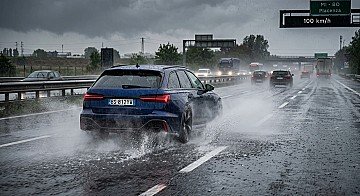
This distinction becomes critical during aquaplaning, icy conditions, or when thin water layers reduce tire grip. Visual sensors can detect rain on a windshield or puddles ahead, but they cannot measure the friction coefficient (μ) between tire and asphalt—the parameter that determines whether a vehicle will stop, turn, or slide. As detailed in technical literature from the MDPI Sensors Journal, optical systems estimate surface appearance through reflection and texture analysis, but lack the tactile feedback required to predict grip loss before it occurs.
The consequences are measurable. NHTSA crash data links ADAS to hundreds of incidents annually, with a notable concentration in scenarios where sensors were challenged by glare, heavy rain, or rapid transitions between dry and wet surfaces. Traditional Electronic Stability Control (ESC) systems, while effective, are fundamentally reactive—they intervene after slip is detected, leaving milliseconds where control has already been compromised. According to European Road Safety Observatory data, aquaplaning remains a leading cause of loss-of-control accidents, precisely because it manifests faster than optical sensors can process and react.
Adding to these challenges is the phenomenon of “sensor blindness.” Research published by SAE International demonstrates that heavy rain, fog, or spray from surrounding vehicles can render LiDAR and camera-based systems unreliable for surface classification. Radar, while capable of penetrating weather, lacks the resolution necessary for the granular surface texture analysis required to estimate grip.
Why It Matters: The Roadblock to L3/L4 Autonomy
The implications extend far beyond consumer vehicles experiencing occasional skids. For Level 3 and Level 4 autonomous systems—where the vehicle, not the driver, assumes responsibility for dynamic driving tasks—the inability to predict grip loss represents an existential safety challenge. Autonomous systems must not only react to hazards but anticipate them with sufficient lead time to adjust speed, trajectory, or control algorithms.
Low-grip surfaces remain what engineers call a “perceptual blind spot” for autonomous architectures. While an autonomous vehicle can detect a pedestrian at 100 meters or classify lane markings in darkness, it cannot yet reliably sense that the next corner harbors a thin ice layer or that standing water ahead will trigger aquaplaning at current speed. This gap creates scenarios where autonomous systems, operating under the assumption of normal grip, can initiate emergency maneuvers (hard braking, sharp steering) that exceed available traction—turning a manageable situation into a loss-of-control event.
The transition of control back to the driver during these failures is equally problematic. Data shows that the handover period—when ADAS disengages and alerts the driver to resume control—creates a dangerous window where neither automated system nor human is fully in command. In adverse weather, this window narrows to seconds.
Key Data: Quantifying the Performance Gap
The numbers underscore the urgency:
- Malfunction Frequency: ADAS systems fail, on average, every 8 miles under mixed real-world conditions, according to AAA testing.
- Crash Attribution: NHTSA links hundreds of ADAS-involved crashes annually to conditions where sensors were impaired by weather or lighting.
- Sensor Limitations: Vision-based systems can estimate surface wetness but cannot calculate real-time friction coefficients, as documented in peer-reviewed sensor research.
- Reactive vs. Predictive Gap: Traditional ESC systems respond only after detecting slip, leaving critical milliseconds where control is already degraded.
Regulatory Context: The Push for Real-World Resilience
Regulatory frameworks are evolving to address these gaps. The Euro NCAP Safety Assist explicitly emphasizes scenario-based testing that replicates real-world complexity—including adverse weather, mixed-surface conditions, and low-grip scenarios—moving beyond the controlled-environment testing that has historically characterized safety validation.
Similarly, NHTSA continues to expand Automatic Emergency Braking (AEB) requirements, demanding that systems function reliably at higher speeds and in degraded visibility. These mandates push the technological envelope, requiring sensors to maintain accuracy despite rain, reflections, and environmental noise.
The message from regulators is clear: ADAS and autonomous systems will be judged not by their performance in ideal conditions, but by their resilience when conditions deteriorate.
What to Expect: The Rise of Predictive Safety Technologies
The automotive industry is responding by pivoting from active safety (reacting to hazards) to predictive safety (anticipating hazards before they materialize). According to McKinsey’s Center for Future Mobility, Road Surface Monitoring (RSM) is emerging as the “missing link” in this transition—enabling vehicles to adjust behavior before entering dangerous low-grip zones.
The technological solution increasingly centers on virtual sensors: software-based systems that infer road conditions from vehicle dynamics, wheel behavior, and existing sensor fusion, rather than relying solely on visual perception. As Automotive News reports, OEMs are seeking these solutions to avoid the cost and complexity of adding new hardware, instead leveraging data already generated by the vehicle’s existing architecture.
This is where platforms like Easyrain’s DAI (Virtual Sensor Platform) become strategically relevant. DAI represents a hardware-free approach to real-time road surface detection, analyzing vehicle dynamics to identify aquaplaning, snow, ice, and irregular terrain in milliseconds—without requiring additional physical sensors. By introducing what Easyrain describes as a “haptic sense” to complement visual perception, DAI addresses the fundamental gap: it detects grip loss before slip occurs, providing ADAS and autonomous systems with the predictive intelligence required to adjust speed, trajectory, or control calibration.
Complementing this detection capability, Easyrain’s AIS (Active Safety System) takes intervention a step further. As the first active system designed to restore grip before control is lost, AIS uses intelligent fluid spraying ahead of the tires to eliminate the water layer that causes aquaplaning, effectively transforming a dangerous loss-of-control scenario into a manageable event. With documented performance gains including a 20% reduction in braking distance on heavy wet surfaces and a 225% increase in lateral traction during aquaplaning conditions, AIS demonstrates how active physical intervention can bridge the gap left by passive sensor architectures.
At the fleet and infrastructure level, Easyrain’s ERC (Cloud Platform for Road Intelligence) aggregates real-time road condition data across vehicle networks, creating dynamic road maps that highlight low-grip zones, worn surfaces, and emerging hazards. This cloud-based intelligence layer enables not only individual vehicles to anticipate danger, but entire fleets and traffic management systems to optimize routing, maintenance, and safety protocols based on continuously updated road intelligence.
Together, these technologies exemplify the predictive paradigm: systems that don’t wait for sensors to see a problem, but instead feel the road through the vehicle’s own dynamics, anticipate hazards through data fusion, and intervene—whether through calibration adjustments or active grip restoration—before loss of control occurs.
The Path Forward
The evolution from vision-based reactive ADAS to predictive, dynamics-aware safety systems is not merely an incremental improvement—it represents a fundamental architectural shift in how autonomous and semi-autonomous vehicles perceive and respond to their environment. As regulatory standards demand real-world resilience and autonomous deployment scales toward L3 and L4 responsibility levels, the ability to detect and respond to low-grip conditions in real time will determine which technologies succeed and which remain confined to ideal-weather demonstrations.
For the industry, the question is no longer if predictive safety becomes standard, but how quickly OEMs, suppliers, and regulators can align on the validation frameworks, data standards, and integration architectures required to deploy it at scale. The vehicles that navigate this transition successfully will be those that combine the best of visual perception with the tactile intelligence of vehicle dynamics—systems that don’t just see the road, but feel it.