In January we submitted our annual contribution to the European Commission’s consultation ahead of this year’s Rule of Law report. Our submission includes expert input of our member organisations in 8 countries: Belgium, Bulgaria, Hungary, Kosovo, Poland, Romania, Slovakia and Slovenia.
The submission touches upon rule of law issues faced by LGBTI persons, human rights defenders and organisations such as:
- Barriers in access to justice;
- Non-implementation of domestic and supranational court judgements;
- Lack of or inadequate public consultation for preparing laws;
- Tabling and adoption of anti-LGBTI legislation running contrary to EU law and the ECHR;
- Funding restrictions against civil society organisations;
- Negative narratives and smear campaigns against LGBTI organisations;
- Attacks and intimidation against LGBTI organisations and human rights defenders;
- Captured media producing consistent anti-LGBT propaganda;
- Concerns regarding media pluralism.
2025 saw a rapid escalation of attacks against civil society organisations and human rights defenders across Europe, and a proliferation of anti-LGBT legislation both tabled and adopted. Negative narratives, disinformation and smear campaigns against LGBTI persons are more acute during electoral periods. Anti-democratic forces continue to implement a playbook of undermining the independence of the judiciary and media, whilst scapegoating minorities.
While we see attacks against fundamental rights of LGBTI persons (such as freedom of expression and assembly) as part of a broader dismantling of fundamental freedoms, it is still important for the European Commission to name the specific targeting of LGBTI persons and organisations, as these attacks are underpinned by discrimination against LGBTI persons.
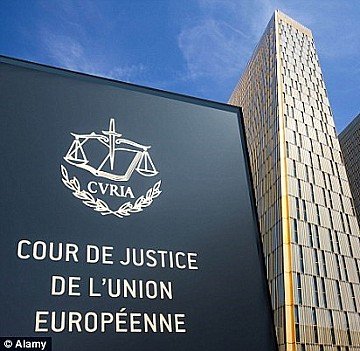
In this context, the importance of democratic institutions and independent courts, such as the EU’s Court of Justice, cannot be understated. Key CJEU judgements continue to ensure that the rights of LGBTI persons are enshrined in EU law, and advance rights at a time when they are most under attack. The European Commission, as the guardian of the Treaties, must reflect the interlinkages between EU case law and rights of LGBTI persons in its Rule of Law reports.
In particular, on 21 April 2026, a ground breaking CJEU judgement (Case C-769/22) found Hungary in violation of Article 2 of the Treaty of the European Union (TEU) and numerous EU laws for its “anti-LGBT propaganda” law adopted in 2021. The Court found that the “anti-LGBT propaganda” law “infringes the rights of non-cisgender persons, including transgender persons, or non-heterosexual persons, as well as the values of respect for human dignity, equality and respect for human rights, including the rights of persons belonging to minorities within the meaning of Article 2, such that it is contrary to the very identity of the Union as a common legal order in a society characterised by pluralism”.
This judgement highlights how the breaches of EU law are a result of a horizontally discriminatory approach towards LGBT persons, such that for the first time in the history of the EU a breach of Article 2 TEU was found. Therefore the Court has elevated the rule of law issue of anti-LGBT legislation to the level of the Treaties, and the Commission has a duty to reflect this in its future analyses of anti-LGBT legislation in the Member States, as part of the rule of law report’s chapters and recommendations, in particular in cases of non-implementation of CJEU judgements.