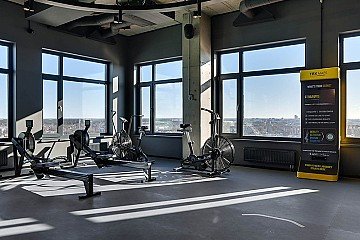
Most people notice the equipment first. The racks, the rigs, the machines, the lighting, the energy of the room. But in training facilities, one of the most important decisions sits under everything else: the floor.
Performance flooring is not just there to cover concrete. It shapes how a space feels, how it sounds, how it supports movement, and how well it stands up to demanding daily use. In high-level environments, where training quality, durability and athlete experience go hand in hand, the floor stops being a background element and becomes part of the system. That shift in perspective, from surface to performance tool, is what separates facilities that are well equipped from those that are genuinely well designed.
From surface to performance platform
A standard floor is expected to survive activity. Performance flooring is expected to do more than that. It must help manage impact, offer reliable grip, support stability under load and contribute to a more controlled training environment overall.
That difference matters because the demands in these spaces are higher. Sessions are more intense, equipment is heavier, traffic is constant and the margin for error is smaller. If the floor is too hard, it increases fatigue and discomfort over time, affecting how athletes move and recover across a full training week. If it is too soft, it reduces confidence and control, particularly under heavy loads or during fast lateral movements. The right solution creates a more predictable response underfoot, one that athletes can trust and operators can rely on session after session.
Why facilities need more from flooring
Top-level training spaces are rarely built around a single activity. They need to support strength work, functional movement, group sessions and high daily traffic, often within the same club, which is why the floor should never be chosen as a one-size-fits-all finish. Different zones have different demands, and the right flooring choice for each one makes a measurable difference:
The real advantage: durability without sacrificing comfort
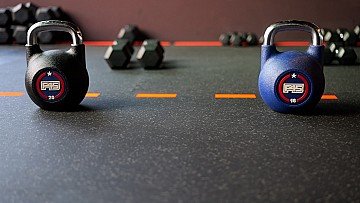
One of the biggest advantages of rubber gym tile flooring is that it solves a common trade-off. Many surfaces are either durable but uncomfortable, or comfortable but too fragile for daily commercial use. Rubber tiles provide a more balanced solution.
- Group-X studios require comfort, elasticity and controlled grip. Movement quality in these spaces depends on a surface that responds predictably under dynamic, fast-paced activity. Motion is designed precisely for this, supporting varied movement patterns with a consistent, responsive underfoot feel that keeps participants moving with confidence.
- Strength and weightlifting areas call for a different set of priorities entirely. Resistance to impact, protection of the subfloor and long-term surface durability are what matter here, where heavy, repetitive loading is the daily reality rather than the exception. Products like Endurance or Extreme are built to meet these demands without compromising stability or longevity.
- Heavy-load areas expose the floor to repeated impact, vibration and constant pressure from equipment. In these zones, the surface must help absorb shock, protect the subfloor and maintain stability under demanding use. Solutions like Endurance S&S and Extreme S&S are designed for this type of environment, combining long-term durability with shock and sound absorption for free-weight zones and heavy lifting areas.
Getting the zoning right from the outset is one of the decisions that has the greatest long-term impact on both training quality and facility maintenance costs. A floor that is wrong for its zone does not just underperform, it creates problems that are expensive and disruptive to fix.
Design is part of performance
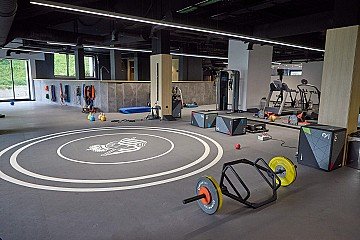
In training facilities, the visual role of the floor should not be treated as separate from its technical performance. A well-planned flooring layout helps organise the space, define training zones and make movement flows easier to understand for both users and staff. When the floor supports the way the facility is used, it contributes to a more intuitive and efficient training environment.
Aesthetics and personalisation also help reinforce the identity of the space. Colours, markings and custom designs can guide users, highlight specific areas and create a stronger connection between the training concept and the overall look of the facility. For operators, this means the floor becomes more than a resistant surface underfoot. It becomes a tool to improve the experience, strengthen the brand and make the space feel purposeful, professional and distinctive.
Operational performance matters too
The best floors perform before opening time and after the last session of the day, not only during the workout itself. This is where material quality becomes a practical, everyday concern rather than a specification detail.
Impermeable, non-porous rubber is easier to clean, does not absorb sweat or spills and resists marks and staining better than more porous alternatives. Over time, that translates into lower maintenance demands, more consistent hygiene standards and a surface that continues to look and perform well years into its life cycle. In high-traffic facilities, the cumulative difference is significant.
That operational advantage is often underestimated at the planning stage. Yet in spaces where brand perception and training standards are closely linked, the floor has to support both the athlete experience and the day-to-day reality of running a professional facility efficiently.
The floor as a competitive asset
What makes performance flooring essential is not any single property — not thickness alone, not durability, not aesthetics. It is the combination: better movement support, impact management, acoustic control, subfloor protection and simplified maintenance, working together and delivered consistently over time.
For facilities competing at the highest level, that changes the role of the floor completely. It is no longer a finishing touch applied at the end of a fit-out. It becomes part of the training experience, part of the operational strategy and part of what allows a space, and the people in it, to perform at their best.