The ICGEB Arturo Falaschi Fellowship Programme continues to strengthen its global impact in 2025, supporting a growing international community of young scientists and advancing scientific capacity-building worldwide.
Aligned with the UN 2030 Agenda and Sustainable Development Goal 4 on Quality Education, the Programme provides opportunities for researchers to undertake advanced training and research in ICGEB laboratories through Predoctoral, Postdoctoral and Short-term Fellowships.
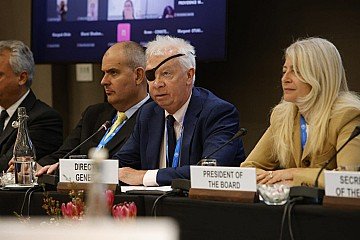
Presenting an overview of the Programme at the recent Board of Governors session, ICGEB Director-General Lawrence Banks highlighted the continued expansion of fellowship activities and the increasing international demand for ICGEB training opportunities. Calls for applications are issued twice annually, in March and September, and Member States were encouraged to continue promoting these opportunities through national scientific networks and Liaison Officers.
In 2025, ICGEB hosted 560 Fellows worldwide, with women representing 60% of participants, reflecting the Organisation’s ongoing commitment to gender balance, inclusion and scientific capacity development.
The Director-General also highlighted the growing success of the Scientific Mobility for Advanced Research Training (SMART) Fellowships, with 19 fellowships currently active. The initiative continues to strengthen scientific mobility, South-South cooperation and international research partnerships facilitated through ICGEB.
While an average of 30 fellowships are supported annually through core funding, the majority of additional fellowships are made possible through external funding and collaborative partnerships, including the ICGEB Host Governments and the China National Center for Biotechnology Development (CNCBD).
Demand for ICGEB Fellowships has risen significantly, with applications increasing more than twofold in the latest call, demonstrating growing international recognition of the Organisation’s training and research programmes.
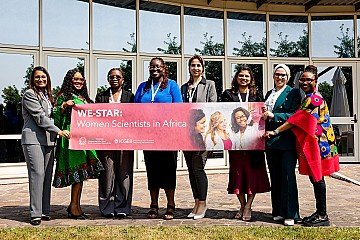
The breadth and long-term impact of ICGEB activities were further underscored through the Organisation’s engagement across the African continent over the past two decades. During this period, ICGEB has contributed to expanding scientific capacity through increased membership, specialised training courses, collaborations and scientific publications. Notably, 350 Fellowships have been awarded to African scientists, supporting research excellence and innovation across the region.
Through its expanding Fellowship Programme, ICGEB continues to invest in the next generation of scientists, fostering international cooperation, scientific mobility and sustainable development worldwide.