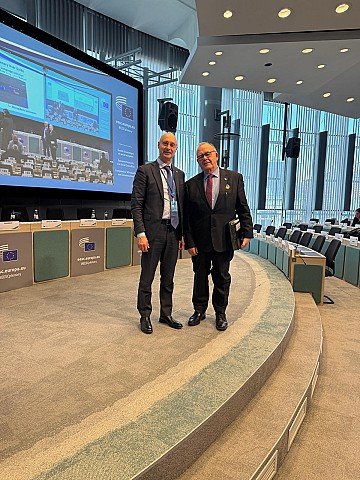
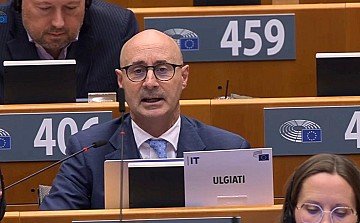
CESE: INTERVENTO DEL CONSIGLIERE ULGIATI ALLA SESSIONE PLENARIA
La settimana scorsa (17-18 Giugno) si è tenuta a Bruxelles, presso la Commissione Europea, la 606^ Sessione Plenaria del Comitato Economico e Sociale Europeo (CESE) che ha avuto all’ordine del giorno lo svolgimento di interessanti dibattiti e l’adozione di importanti Pareri fra cui quello relativo alla semplificazione della legislazione in materia di trasporti (TEN/881), in merito al quale ha preso la parola il Consigliere Ulgiati. La Commissione Europea ha chiesto al CESE di formulare un Parere esplorativo per valutare le possibilità di rendere più semplici ed efficienti le procedure amministrative nel settore dei trasporti mantenendo al contempo standard elevati per quanto riguarda le norme sociali, la sicurezza, gli obiettivi ambientali e climatici, i diritti dei consumatori, la trasparenza e l’accessibilità. I trasporti costituiscono, fin dall’inizio del processo di integrazione, un ambito di competenza del livello europeo ed il ruolo della UE al riguardo consiste nel fare in modo che il settore europeo dei trasporti agevoli il buon funzionamento del mercato interno e contribuisca alla coesione territoriale, economica e sociale, nonché al miglioramento della competitività del settore stesso, mediante un accesso sicuro ed a prezzi abbordabili per i cittadini. Nel Parere viene sottolineata l’importanza del dialogo sociale, in quanto le Parti Sociali si trovano nella posizione migliore per individuare norme inutili e sproporzionate e per proporre semplificazioni concrete nel quadro di un dialogo settoriale strutturato, salvaguardando al tempo stesso sia l’attività delle imprese che le norme sociali. «Il settore dei trasporti – ha dichiarato Ulgiati – è determinante per ciò che produce in Europa, sia in termini economici che di sostegno all’integrazione, generando il 5% del Pil ed un’occupazione di oltre 10 milioni di lavoratori. Oggi viviamo nell’era digitale – ha proseguito – e durante il G7 appena conclusosi un tavolo di discussione è stato dedicato all’Intelligenza Artificiale. È chiaro che queste nuove tecnologie impattano anche sul settore dei trasporti al fine di contribuire a creare efficienza, risparmio energetico e tutela dell’ambiente. È necessaria, pertanto, una semplificazione ed un’uniformità delle norme che regolano il settore in tutti i Paesi Europei, ma servono anche responsabilità solidali che sappiano considerare i diritti dei lavoratori, le criticità proprie delle lavoratrici, i subappalti che possono causare dumping contrattuali. Infine – ha concluso Ulgiati – occorre tenere presente il tema sociale dei diritti dei passeggeri: diritto di usufruire di servizi efficienti e di qualità, diritto ad avere rimborsi veloci e semplificati».
UE, APPROVATO REGOLAMENTO SUI RIMPATRI
A pochi giorni dall’entrata in vigore del Patto per le migrazioni e l’asilo (12 Giugno) il Parlamento Europeo ha approvato, in seduta Plenaria a Strasburgo il 17 Giugno, il nuovo Regolamento europeo sui rimpatri con 418 voti a favore, 218 contrari e 30 astensioni. L’atto normativo comunitario, la cui votazione ha spaccato la tradizionale maggioranza centrista (decisivo l’asse tra Ppe e destre), tende ad armonizzare pratiche nazionali che, nel quadro della “Direttiva rimpatri” (Direttiva 2008/115/CE), si erano progressivamente differenziate. Sia la Commissione che il Parlamento europeo hanno evidenziato che a livello europeo solo il 20% dei rimpatri viene effettivamente eseguito. Il Regolamento fornisce quindi un nuovo quadro giuridico per il rimpatrio di cittadini di Paesi terzi il cui soggiorno nell’Unione Europea è irregolare. Il testo legislativo comunitario mira, pertanto, ad accelerare le procedure di rimpatrio nel rispetto dei diritti fondamentali e del diritto internazionale, incluso il principio di non respingimento ed il divieto di espulsioni collettive, nonché a prevenire contemporaneamente abusi e movimenti non autorizzati all’interno della Ue. Con le nuove norme, chi è soggetto ad un ordine di rimpatrio è obbligato a lasciare il territorio ed a cooperare con le autorità. In caso contrario può essere trattenuto fino a 24 mesi, con possibilità di proroga. Il Regolamento, poi, apre alla possibilità di trasferire i migranti in centri situati fuori dall’Unione Europea, in Paesi terzi disposti ad accoglierli sulla base di accordi bilaterali, sul modello dei centri italiani in Albania. Si tratta di «un traguardo storico che permette di voltare pagina su un sistema vecchio di vent’anni» ha dichiarato la Presidente della Commissione Europea, Ursula von der Leyen. Le nuove regole, prima di entrare in vigore, dovranno essere formalmente adottate dal Consiglio Ue e poi pubblicate nella Gazzetta Ufficiale.
EN
EESC: STATEMENT BY COUNCILLOR ULGIATI AT THE PLENARY SESSION
Last week (17–18 June), the 606th Plenary Session of the European Economic and Social Committee (EESC) was held in Brussels, at the European Commission, which featured a programme of interesting debates and the adoption of important Opinions, including one on the simplification of transport legislation (TEN/881), on which Councillor Ulgiati took the floor. The European Commission asked the EESC to draw up an exploratory Opinion to assess the possibilities for making administrative procedures in the transport sector simpler and more efficient, whilst maintaining high standards in terms of social standards, safety, environmental and climate objectives, consumer rights, transparency and accessibility. Since the beginning of the integration process, transport has been an area of competence at European level, and the EU’s role in this regard is to ensure that the European transport sector facilitates the smooth functioning of the internal market and contributes to territorial, economic and social cohesion, as well as to improving the sector’s competitiveness, through safe and affordable access for citizens. The Opinion emphasises the importance of social dialogue, as the Social Partners are best placed to identify unnecessary and disproportionate regulations and to propose concrete simplifications within the framework of a structured sectoral dialogue, whilst safeguarding both business activity and social standards. «The transport sector – said Ulgiati – is crucial to Europe’s output, both in economic terms and in terms of fostering integration, generating 5 per cent of GDP and providing employment for over 10 million workers. We are now living in the digital age – he continued – and during the recently concluded G7 summit, a round-table discussion was dedicated to Artificial Intelligence. It is clear that these new technologies also have an impact on the transport sector, helping to create efficiency, energy savings and environmental protection. We therefore need to simplify and harmonise the regulations governing the sector across all European Countries, but we also need a sense of shared responsibility that takes into account workers’ rights, the specific challenges faced by female workers, and subcontracting arrangements that can lead to contractual dumping. Finally – concluded Ulgiati – we must bear in mind the social issue of passengers’ rights: the right to efficient, high-quality services, and the right to swift and simplified refunds».
EU APPROVES RETURN REGULATION
Just a few days before the Migration and Asylum Pact came into force (12 June), the European Parliament approved the new European Return Regulation during its Plenary Session in Strasbourg on the 17th of June, with 418 votes in favour, 218 against and 30 abstentions. This EU legislative act, the vote on which split the traditional centrist majority (with the alliance between the EPP and the right-wing Parties proving decisive), aims to harmonise national practices which, within the framework of the “Return Directive” (Directive 2008/115/EC), had gradually diverged. Both the Commission and the European Parliament have highlighted that, at European level, only 20 per cent of returns are actually carried out. The Regulation therefore provides a new legal framework for the return of third-Country nationals whose stay in the European Union is irregular. The EU legislative text thus aims to speed up return procedures whilst respecting fundamental rights and international law, including the principle of non-refoulement and the prohibition of collective expulsions, whilst at the same time preventing abuses and unauthorised movements within the EU. Under the new rules, anyone subject to a return order is obliged to leave the territory and to cooperate with the authorities. Failure to do so may result in detention for up to 24 months, with the possibility of an extension. The Regulation also opens up the possibility of transferring migrants to centres located outside the European Union, in third Countries willing to host them on the basis of bilateral agreements, modelled on the Italian centres in Albania. This is «a historic milestone that allows us to turn the page on a twenty-year-old system», said the President of the European Commission, Ursula von der Leyen. Before coming into force, the new rules must be formally adopted by the EU Council and then published in the Official Journal.
UGL NEWS dall'EUROPA n. 179 del 19 Giugno 2026
EN - UGL NEWS from EUROPE n. 179 - 19nd of June 2026
Post Views: 7