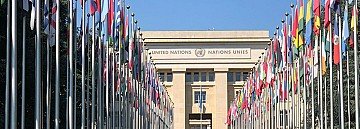
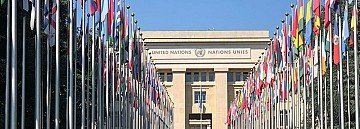
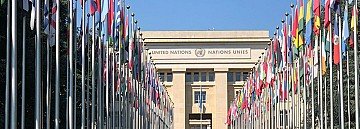
On 28 September 2026, the International Federation for Human Rights (FIDH) delivered a statement at the 63rd session of the United Nations (UN) Human Rights Council during the Interactive Dialogue for the adoption of Singapore’s Universal Periodic Review (UPR). The statement expressed criticism of the Singaporean government’s failure to accept key recommendations on the death penalty and freedom of peaceful assembly. Read the statement below.
Mister President,
We are once again disappointed that the Singaporean government missed an opportunity to address international concerns over the human rights situation in the country and to accept important UPR recommendations.
The government has regurgitated its false claim that Singapore’s “outcomes” are largely consistent with the objectives of international human rights treaties. In fact, the government cherry picks only the parts of human rights treaties that fit its own political agenda, while leaving out the parts that are inconvenient.
For example, when it comes to the death penalty, the government has repeated its false claim that in Singapore capital punishment is reserved only for the most serious crimes. However, the inclusion of drug trafficking among such crimes is inconsistent with the authoritative interpretation of international human rights law, according to which, while drug trafficking may be a serious crime, it is not one of “the most serious crimes.”
The government has stated that it imposes the death penalty “with a heavy heart.” It’s hard to reconcile these words with the reality in Singapore. Since 2025, 36 individuals have been executed in the country – the highest documented number in Southeast Asia over this period. This year alone, 19 have been executed - the highest annual number in more than two decades.
When it comes to the right to freedom of peaceful assembly, the government again referred to international human rights law. It said those who exercise such right should respect the rights of others, conveniently omitting the fact that permissible restrictions to this right under international human rights law must be necessary and proportional. This is certainly not the case in Singapore, where peaceful protesters, including human rights defenders, face unnecessary and disproportionate restrictions, including criminal penalties. Just over the past few weeks, 11 people have been charged under the repressive Public Order Act for participating in small, symbolic peaceful gatherings.
We call on the government to immediately end the use of the death penalty, bring Singapore’s legal framework into line with international human rights standards, and ratify all core international human rights treaties.
Thank you.