FESI and Younited Belgium bring EU decision-makers, sports brands and people experiencing vulnerability together on the pitch as part of the European Week of Sport
What happens when the people shaping European policies on sport and inclusion put their suits aside and step onto the football pitch alongside people experiencing social vulnerability? They meet, talk, play, and learn from each other.
As part of the European Week of Sport 2026, the Federation of the European Sporting Goods Industry (FESI) and Younited Belgium, a football-based social inclusion organisation, with the support of Royale Union Saint-Gilloise, joined forces for a special day of inclusive football, bringing together EU decision-makers, sports brands and people experiencing vulnerability through the power of sport.
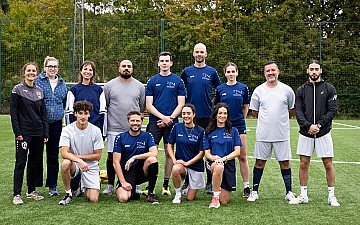
Hosted at the Barca Stadium in Brussels, the event brought together 10 gender-mixed teams, with Younited players joining representatives from the European Commission, FESI member brands and the FESI Secretariat. European Commissioner for Sport Glenn Micallef also took part in the tournament, alongside former Belgian international footballer Mbo Mpenza, who joined the event and addressed participants.
But the day was about more than football. It was about creating a space where people who do not always meet in their everyday lives could meet on equal terms as teammates. Participants played together, spoke with one another, shared a meal and exchanged experiences, creating connections across very different backgrounds.
Younited Belgium uses football to support people experiencing social vulnerability, including people facing or having faced homelessness, social isolation, precarious living conditions, migration-related challenges, addiction or mental health difficulties. Through regular football teams supported by social workers and coaches, Younited creates a safe and welcoming environment where participants can rebuild confidence, develop relationships and regain a sense of belonging.
By bringing Younited players together with EU decision-makers and representatives of the sporting goods industry, the event offered something that cannot be replicated around a meeting table: first-hand experience of what inclusion through sport looks and feels like on the ground. For those working on European sport and social policies, it was an opportunity not only to talk about participation, inclusion and access to sport, but to experience these principles directly and to listen to the people those policies are ultimately intended to support.
“For European institutions and stakeholders, taking part was also about practising what we preach: getting active, meeting people where they are, listening to their experiences and seeing first-hand how sport can break down barriers. These encounters are essential to ensuring that the realities experienced on the ground are brought back into European discussions and translated into concrete, people-centred policy action.” – Jérôme Pero, FESI Secretary General.
The event took place in the context of the European Week of Sport, the European Commission’s annual campaign promoting sport and physical activity across Europe under the #BeActive banner, and perfectly reflected its spirit. By bringing people from different backgrounds together on the pitch, the event demonstrated in practice how sport can break down barriers, create connections and make everyone feel part of a team. FESI has been a partner of the campaign since its creation more than 15 years ago, supporting its ambition to encourage people across Europe to get active and experience the positive impact of sport.
“The European Week of Sport is about getting Europe moving but also about showing what the sporting community can achieve when it acts together. Today, that solidarity reaches Ukraine. I thank FESI and its members for supporting sporting activities in Ukraine and I hope their example inspires more sport organisations across Europe.” – Glenn Micallef, European Commissioner for Intergenerational Fairness, Youth, Culture and Sport.
The day also marked the culmination of a FESI charity initiative to collect sporting goods from its member brands. More than 3,000 sporting goods items were collected thanks to contributions from Decathlon, adidas, Nike, Fanatics, Atomic, On and PUMA.
The equipment will support Younited teams and communities experiencing vulnerability in Belgium, while part of the donations will be distributed to communities in Ukraine.
“For our players, football is much more than a game. It is a place to rebuild confidence, find belonging and feel part of something. Having access to good-quality sporting equipment may seem like a small thing. But in reality, it can strengthen self-esteem, foster a sense of belonging and ensure that all players have the opportunity to play on an equal footing.”— Marine Poliart, Younited Belgium Coordinator.
The donation ceremony provided a fitting conclusion to a day in whichsport was not simply discussed as a tool for inclusion : it was used to create inclusion in practice.Because sometimes the best way to understand what sport can do for people is not to talk about it, but to play and #BeActive together.
“Sport can bring together people who may seem worlds apart. It is then up to us to turn that encounter into respect, trust and action. More than sport, a way of life.”— Mbo Mpenza, Former Belgian International Footballer.