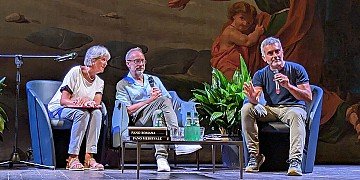
In a recent interview with Corriere della Sera Wikipedia founder Jimmy Wales discussed one of the fundamental differences between Wikipedia and generative AI.
AI systems can produce answers that are fluent and convincing but factually wrong. The problem, Wales explains, is that these errors rarely sound absurd. They tend to sound plausible – which makes them harder for users to recognise.
Wikipedia is far from error-free, something Wales is careful to acknowledge. But its model is fundamentally different. Articles are expected to rely on verifiable sources, follow a neutral point of view and remain open to scrutiny and correction by the community. For companies and business leaders, that distinction is becoming increasingly relevant.
Wikipedia’s influence no longer stops at Wikipedia
For many years, Wikipedia’s importance for corporate reputation was relatively straightforward. Its articles ranked prominently in search results and were often among the first sources people encountered when looking for information about a company, institution or senior executive. AI is changing how that information reaches users.
Wikipedia is extensively used by AI systems, both as part of training datasets and as a source when systems retrieve information from the web. Wales himself discusses this relationship in the Corriere interview, noting both Wikipedia’s widespread use by AI and the decline in some of the short, informational visits that previously came through search engines.
The important point for companies is therefore no longer only how many people visit their Wikipedia article. Information contained there can be incorporated into search summaries and AI-generated answers, sometimes without the user ever visiting Wikipedia itself. An incomplete biography, an outdated corporate description or an unsupported statement may therefore have effects well beyond the original page.
This is something we have already observed in our work on corporate reputation and Wikipedia: the encyclopedia increasingly forms part of the information base through which automated systems interpret companies and their leaders. [https://lundquist.it/2026/03/11/wikipedia-and-ai/]
Why shortcuts become more expensive
The growing relevance of Wikipedia can understandably increase pressure on companies to intervene. But Wikipedia cannot be approached as a corporate website, a social media profile or another channel in the communications mix. Companies do not control their articles. Nor does the existence of a company or CEO automatically justify a Wikipedia page. Content must satisfy the encyclopedia’s rules on notability, sourcing, neutrality and conflicts of interest, and editorial decisions ultimately belong to the Wikipedia community.
Attempts to bypass this process can create a second problem on top of the original one. Direct promotional editing, undisclosed conflicts of interest, weak sourcing or efforts to force content onto a page may result in edits being reverted, warnings being added, accounts being blocked or disputes opening between editors. Wikipedia’s edit histories and discussion pages also make much of this activity publicly traceable.
As our recent research on Italian CEOs, about to be published, will show, deletions, warnings and editorial disputes can themselves become part of a leader’s visible Wikipedia history. This is why promises of fast results should be treated with caution. A poorly handled intervention today can make legitimate work considerably harder tomorrow.
What companies can do instead
We have worked with companies on Wikipedia for 18 years. Our work starts from a simple premise: the objective is not to control Wikipedia, because companies cannot and should not control it. Instead, we help organisations understand their position and decide how to act within the rules. This approach matters because on Wikipedia the method used to address a problem can have as much impact as the content itself.
A source companies need to understand
Wales’ interview comes at a useful moment. AI may be changing the way people access Wikipedia, but it is not making the encyclopedia irrelevant. Its information is increasingly consumed indirectly, through other systems that select, summarise and redistribute it.
For communicators, this gives Wikipedia a wider reach and makes the quality of the information surrounding an organisation more important. It also makes a proper understanding of the encyclopedia’s rules more valuable.
Companies cannot decide what Wikipedia says about them. They can, however, understand what is there, make sure they have reliable information and sources available, identify risks early and engage with the community correctly when intervention is justified. That is the work we believe companies should be doing now.