23 November 2026
Human Technopole’s Facilities will contribute to PROPHESCI, a €10 million European project combining live imaging and artificial intelligence to improve stem cell and organoid models for biomedical research.
Human Technopole is part of the consortium selected for funding through Horizon Europe’s Research Infrastructures 2026 call for PROPHESCI, a project that aims to predict how stem cells and organoids develop and respond to drugs. Coordinated by France’s Centre National de la Recherche Scientifique (CNRS), the project will bring together expertise in cell biology, advanced imaging and artificial intelligence to pursue a shared goal: enabling predictive biology through non-invasive imaging, making cellular models more reliable and their behaviour more predictable.
HT will contribute through three Facilities, connecting the generation of cellular models with imaging and computational analysis. The National Facility for Genome Engineering and Disease Modelling will lead HT’s contribution, working alongside the National Facility for Light Imaging and the National Facility for Data Handling and Analysis.
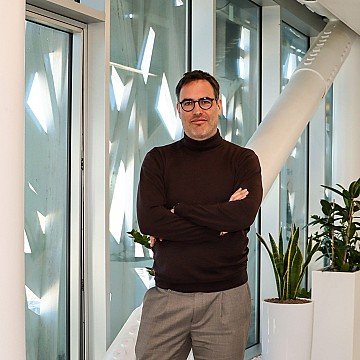
“Understanding how stem cell-derived models develop in vitro means connecting what we see under the microscope with what is happening at the molecular level. Through PROPHESCI, we will bring together our National Facilities’ expertise in cellular models, imaging and data analysis to help make those connections predictive. Our aim is to give researchers more reliable tools to study human biology and investigate responses to potential treatments” says Giovanni Fagá, Head of the National Facility for Genome Engineering and Disease Modelling.
Stem cells and organoids offer ways to investigate human biology and disease in the laboratory. Organoids are three-dimensional cellular models that reproduce some features of tissues, helping researchers study their development and test responses to potential treatments. Yet variability between cultures, lengthy preparation and difficulties in monitoring living samples can limit their reproducibility and usefulness.
PROPHESCI aims to tackle these limitations through non-destructive, label-free imaging: observing living cells and organoids without adding fluorescent markers or disrupting the models being monitored. By linking these images to detailed molecular measurements, the consortium will train AI models to recognise biological states and predict what happens next.
The goal is to turn images into tools that can help researchers detect early changes, follow the emergence of different cell types and anticipate developmental trajectories or responses to drugs. These capabilities could support better culture protocols and more consistent selection of samples for experiments.
At HT, the National Facility for Genome Engineering and Disease Modelling will generate stem cell and organoid models; the National Facility for Light Imaging will contribute advanced imaging; and the National Facility for Data Handling and Analysis will develop computational pipelines to analyse the images. Together, they will help develop, implement and validate methods designed to improve the quality, reproducibility and efficiency of cellular models.
The consortium includes Euro-BioImaging and EU-OPENSCREEN, connecting technology development with European research infrastructures and supporting the wider dissemination of the methods developed. Potential applications include drug screening, regenerative medicine and bioproduction, with the project’s immediate focus on developing and validating the underlying research tools.
For HT, PROPHESCI brings together two closely connected commitments: understanding biological mechanisms relevant to human disease and equipping the scientific community with advanced technologies. By linking complementary expertise across its Facilities and with partners across Europe, HT will help build more reliable models for research, contributing to the shared effort to shape the future of human health.