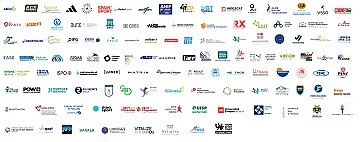
Brussels, 8 December 2025 – The Federation of the European Sporting Goods Industry (FESI) has co-signed a major Joint Statement alongside 116 organisations from across the European sport and physical activity ecosystem. The statement calls on EU institutions to prioritise sport and physical activity in the upcoming Multiannual Financial Framework (MFF 2028–2034) and in the future Erasmus+ Programme. FESI also co-signed a similar paper in May 2025, highlighting the sector’s ongoing engagement with EU policymakers.
The Multiannual Financial Framework (MFF) is the EU’s seven-year budget plan, setting overall spending ceilings and defining how resources are allocated across key policy areas. On 16 July 2025, the European Commission presented its first full proposal for the MFF 2028–2034, outlining a budget designed to modernise EU investment, streamline funding tools, and support priorities such as competitiveness, resilience, cohesion, education (including Erasmus+), and external action. In light of this proposal, FESI has joined forces with a coalition of stakeholders to ensure that sport and physical activity are appropriately recognised and supported within the EU’s future funding priorities.
A unified voice for sport in Europe
The Joint Statement reflects the diversity and commitment of Europe’s sport ecosystem, including national and European federations, fitness and health organisations, universities, research centres, grassroots initiatives, NGOs, local authorities, and industry partners. Signatories emphasise that sport and physical activity are essential to Europe’s social, economic, and health resilience.
The sector generates significant economic value—€627.5 billion in GDP and over 6 million jobs[1]—while supporting healthier lifestyles and reducing long-term healthcare costs. Beyond economics, sport and physical activity foster community engagement, promotes inclusion, strengthens skills, and embodies European values such as solidarity and cooperation. The coalition calls on EU policies and funding programmes to reflect these contributions and ensure sustainable support for the sector.
Key recommendations for the next MFF
The Joint Statement outlines practical steps to strengthen sport and physical activity at EU level:
- Increasing the overall Erasmus+ budget while maintaining a clear and visible identity for sport;
- Earmarking at least 5% of the Erasmus+ budget specifically for sport and physical activity to ensure predictable, long-term support;
- Ensuring balanced governance through strong EU-level coordination and dedicated funding at National Agency level;
- Simplifying funding procedures and improving transparency, especially for smaller organisations and newcomers;
- Reinforcing links between sport, health, education, and inclusion through expanded mobility opportunities;
- Encouraging sustainability, innovation, and public–private partnerships;
- Extending cooperation with neighbouring regions through Erasmus+;
- Fully integrating sport and physical activity across all relevant EU funding streams.
FESI’s perspective
Commenting on the statement, FESI Secretary General Jérôme Pero said:
“Sport and physical activity are proven catalysts for health, education, social inclusion, innovation, and economic growth. By prioritising them in the next Multiannual Financial Framework, the EU can strengthen a healthier, more cohesive, competitive, and resilient Europe. Supporting this sector is not a luxury, it is a strategic investment in the well-being and future of Europe’s citizens.”
FESI remains committed to working closely with EU institutions, Member States, and partners across the sport ecosystem to ensure these recommendations are considered in the next MFF negotiations. Strengthening the visibility and sustainability of sport and physical activity within EU policymaking remains a core priority for the federation.
[1] hemistoklis Kokolakakis et al., EU Sport Satellite Account: Research into Estimating the Economic Value of Sport in the EU, 2025, Eurostat (based on 2019 data), https://ec.europa.eu/eurostat/documents/3888793/22121382/KS-01-25-041-EN-N.pdf/c8266460-9f1a-affd-f288-d2669de405d2?version=1.0&t=1756987715084
***
About FESI: Founded in 1960 FESI – the Federation of the European Sporting Goods Industry represents the interests of approximately 1.800 sporting goods manufacturers (85% of the European market) through its National Sporting Goods Industry Federations and its directly affiliated member companies. 70-75% of FESI’s membership is made up of Small and Medium Sized Enterprises. In total, the European Sporting Goods Industry employs over 700.000 EU citizens and has an annual turnover of some 81 billion euro.
Contact: Ariane Gatti, FESI Senior Communication & Policy Manager / [email protected] / +32 274 08 94