FBK Aula Piccola
Fondazione Bruno Kessler - Polo delle Scienze Umane e sociali
FBK Aula Piccola
Fondazione Bruno Kessler - Polo delle Scienze Umane e sociali
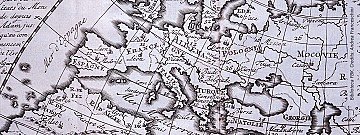
Governments worldwide spend millions addressing regional inequalities, a crisis rooted in uneven connectivity and infrastructure investment. In Portugal today, the gulf between vibrant coastal hubs and the vulnerable interior persists. MOVE confronts this crisis, arguing that these imbalances are not accidental but the quantifiable legacy of the early modern period. MOVE replaces the conventional narrative, asserting that friction, not politics, was the primary structural barrier to market integration, dictating the limits of state power and economic reach. The project performs a spatial historical archaeology by analysing how geographical constraints, transportation technology, and state/fiscal policies created pervasive “friction” in the movement of people, goods, and information. It combines a wide range of archival sources (tax records, notarial deeds, travel accounts, military logistics) with spatial analysis to achieve three core objectives: 1) calculate the economic cost of distance for different travellers and commodities, 2) produce historical maps showing the evolution of communication networks, identifying and tracking “highly-connected” and “peripheral” regions, and 3) determine the correlation between historical accessibility and key indicators (urbanization rates, market integration, and the diffusion of innovations). MOVE will demonstrate how high movement costs created poverty traps and uneven regional development and offer a data-driven framework for modern infrastructure planning (SDG 9) and the pursuit of inclusive growth (SDG 10).
Lisbeth RODRIGUES | Universidade do Porto
Coordinamento scientifico:
Anna Clara Basilicò (FBK-ISIG)
Irene Fattacciu (FBK-ISIG)
Alessandra Quaranta (FBK-ISIG)
Massimo Rospocher (FBK-ISIG)
Sandra Toffolo (FBK-ISIG)
Ciclo di seminari: “Tavola ovale di storia moderna“
ISIG è soggetto accreditato o qualificato a realizzare attività formativa a favore del personale della scuola trentina.
Evento in lingua inglese.
La presentazione avverrà in presenza in Aula Piccola – FBK fino ad esaurimento posti e in modalità online.
È obbligatoria la registrazione entro il giorno 17 giugno 2026 alle ore 12.00.
***
Immagine: D 861569 – s-ar 1 B 30
Relatori
-
Lisbeth Rodrigues - Relatore ospite
Universidade do Porto
Lisbeth Rodrigues is Assistant Professor at the Faculty of Arts of the University of Porto, Portugal, and a researcher at CITCEM. She has been involved in several national and international research projects on material culture, welfare institutions and credit markets. She is adjunct editor-in-chief of the journal “Ler História” and has published widely on early modern welfare institutions, Portuguese capital markets, the use of justice, and women’s participation in the labour market. Among others, she is co-editor of “The Confraternities of Misericórdia and the Portuguese Diasporas in the Early Modern Period” (Brill, 2023) and has published in journals such as “Explorations in Economic History”, “Journal of Iberian and Latin American Economic History”, “The Journal of Interdisciplinary History”, and “Journal of Iberian Medieval Studies”. She is currently developing the project “GrowingOLD: Welfare, Retirement and Support Systems for the Elderly in Portugal (1500-1820)”.
Registrazione
La registrazione a questo evento è richiesta.
RegistratiContatti
Organizzatori
L'iniziativa è stata realizzata anche grazie al contributo della Direzione generale Educazione, ricerca e istituti culturali del Ministero della Cultura.
Avviso sulla privacy
Ai sensi e ai fini del Regolamento UE n. 2016/679 - Regolamento generale sulla protezione dei dati (GDPR) e come descritto nell'Informativa sulla privacy per i partecipanti all'evento di FBK, si informa che l'evento potrebbe essere registrato e divulgato sui canali istituzionali della Fondazione. Per non essere ripresi o registrati, si potrà sempre disattivare la webcam e/o silenziare il microfono durante eventi virtuali oppure informare anticipatamente lo staff FBK che organizza l'evento pubblico.