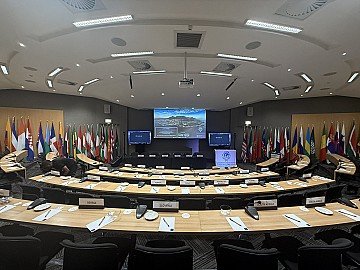
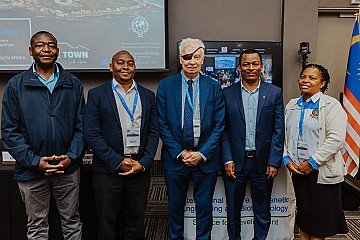
The ICGEB has emerged from its 32nd Board of Governors meeting in Cape Town with a strong mandate for global expansion, scientific momentum, and renewed commitment to science diplomacy, innovation, and sustainable development.
Celebrating 20 years of impact in Africa through its Cape Town Component, ICGEB highlighted extraordinary growth across fellowships, collaborative research, technology transfer, and scientific partnerships. Since its establishment in South Africa, the organisation has awarded 350 Fellowships and 110 Collaborative Research Programme (CRP) grants to African scientists, helping build a vibrant and interconnected scientific community across the continent.
The Board praised ICGEB’s “excellent science, diplomacy, and funding,” while recognising the South African Component as “inspirational” in its continental impact and global reach.
A major highlight of the meeting was the Board’s unanimous decision to launch the formal process for establishing a new ICGEB Component in Latin America – a strategic expansion aimed at strengthening scientific cooperation and biotechnology innovation across the region. A formal international call for bids to host the new Component will open in June 2026.
The organisation also reported unprecedented demand for its training and research programmes. Fellowship applications increased dramatically in 2025, while CRP research grant applications reached a record 847 submissions for 2026 – underlining the growing importance of ICGEB as a global platform for scientific capacity building.
In a significant move to strengthen local research ecosystems, the Board approved a new measure allowing up to 30% of CRP funding to support local students and postdoctoral researchers in Member States.
Technology transfer and innovation featured prominently throughout the session, with ICGEB showcasing successful industrial collaborations spanning biopharmaceuticals, agriculture, and biotechnology manufacturing. Projects in Ethiopia, Kenya, South Africa, Serbia, Iran, Algeria, and China demonstrated how ICGEB research is being translated into real-world solutions with direct societal impact.
The organisation also announced that external funding exceeded EUR 13.2 million in 2025 – the highest level achieved in recent years – reflecting growing international confidence in ICGEB’s scientific excellence and partnership model.
Scientific achievements across the Trieste, Cape Town, and New Delhi Components were widely applauded, including breakthroughs in antimicrobial resistance, drought-resistant crops, bioethanol production, genome editing, space biotechnology, and advanced disease models.
The Board also welcomed five new countries – Mozambique, Nicaragua, Tajikistan, Uganda, and Uzbekistan – into the formal ICGEB membership accession process, signalling the Organisation’s expanding geopolitical relevance and role as a bridge for international scientific cooperation. While Botswana, Togo and Ghana also updated the Board on the progress they are making towards Membership.
Closing the session, Board President Dr Jelena Begovic reaffirmed the importance of protecting and nurturing science “as a force for peace, prosperity, and international cooperation.” The Governors collectively praised ICGEB’s growing global impact and ambitious vision for the future.
The Thirty-third Session of the Board of Governors will be held in Trieste, Italy, on 18-19 May 2027.