Summary
- Conversational SMS marketing means every reply routes somewhere, gets tracked, and can trigger a next action, not just a blast that ends when the message sends
- Two-way text messaging for business only scales once you script the full reply tree, including compliance language and 10-digit long code (10DLC) registration, before you automate anything
- Most SMS marketing best practices for 2026 still treat replies as an afterthought, which is exactly where retention teams lose revenue and customer trust
- Artificial intelligence (AI) can triage incoming replies, but it needs explicit handoff rules to a human agent, not a vague promise of automation
- Insider One’s Two-Way SMS is powered by Insider One AI™, which handles both shopping and support intents at one entry point and retains conversation memory across web, WhatsApp, and Instagram
- RCS and MMS extend the same conversation into carousels, rich media, and tappable actions inside native messaging apps, with no app download required
- The platforms that win at conversational commerce SMS connect texting to a unified customer data layer, so a reply updates the same profile every other channel reads from, and in Insider One, that profile and the agents run on one system, not two joined by an export
Making it work requires three things: a scripted reply tree for every message type, 10DLC registration and opt-in language that covers two-way consent, and a shared data layer where a reply updates the same profile email, push, and on-site personalization read from.
Conversational SMS marketing is the practice of running SMS campaigns that expect, route, and act on customer replies instead of treating text as a one-way broadcast.
This article is for lifecycle, retention, and customer relationship management (CRM) marketers at mid-market and enterprise retail brands who already send SMS but have never scripted what happens after someone texts back.
You’ll get a working definition of what a functioning conversational SMS program looks like, the structural reasons most programs stall at “reply-to-unsubscribe,” and a practical framework for scripting, automating, and measuring real conversations without adding a new operational mess.
The gap is rarely creativity. It’s architecture. Teams write compelling promotional copy, then have no system for the moment a customer texts “what sizes do you have left” back to a marketing number.
That single unscripted reply is usually where conversational SMS marketing quietly fails.
What conversational SMS marketing looks like when it actually works
A working program treats every outbound text as the first line of a thread, not the whole message.
The customer can reply with a question, a size request, or a complaint, and the system routes that reply to a scripted branch, a live agent, or an automated next step, based on intent rather than guesswork.
The execution standard is simple to state and hard to build: script the reply tree before you build the send. A cart reminder message that only says “your items are waiting” is a broadcast. A cart reminder that anticipates “still in stock?” or “can I get free shipping?” and answers both automatically is a conversation.
Retailers running conversational commerce at scale design for the reply first, then work backward to the initial send, because the reply is where the actual buying decision happens.
In Insider One, that reply is answered by Insider One AI™, the same agent layer that runs on the web, WhatsApp, and Instagram, so a stock question in a text thread is resolved against the live product catalog rather than a static FAQ.
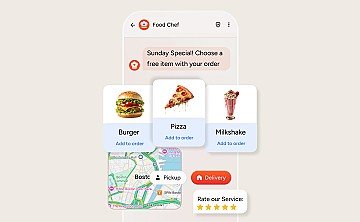
It is also worth deciding early how rich the thread should be. Plain SMS carries the reach; MMS adds images, video, and audio; and RCS delivers carousels, branded sender identity, suggested replies, and tappable buttons inside the customer’s native messaging app with no additional download.
Running all three from one platform means the conversation upgrades to the richest format a handset supports and falls back cleanly when it doesn’t, rather than forcing a choice between reach and experience.
Where execution breaks down for conversational SMS marketing
Most programs break down in two predictable places: compliance and routing.
Both get treated as legal or IT problems instead of marketing design problems, which is exactly why they resurface every time a brand tries to scale two-way text messaging for business beyond a pilot list.
The compliance gap nobody scripts for
Ten-digit long code registration, known as 10DLC, governs how business texting moves through carrier networks in the United States, and it directly shapes what your opt-in language can say and how fast your messages deliver.
Skipping proper registration doesn’t just risk penalties, it throttles delivery so replies never reach the customer in a useful window.
Opt-in language also has to explicitly cover two-way texting, not just promotional consent, or your reply-handling program sits on shaky legal ground before a single conversation starts.
Compliance is not only a registration exercise, though. Timing and sender identity carry just as much risk at scale.
Insider One handles that governance inside the platform: Silent Hours support multiple configurable quiet periods and respect each recipient’s own time zone rather than area code alone, campaigns can be scheduled against local time so a message never lands at 3 a.m. for a travelling customer, and multi-sender management lets a brand operate several numbers and providers across markets from a single panel to meet country-specific requirements.
Campaign approval workflows add role-based sign-off before anything goes live.
The reply-routing black hole
The second failure point is simpler and more common: nobody owns the inbox. A customer replies to a promotional blast, and that reply lands in a queue nobody monitors, or worse, triggers an unsubscribe because the system can’t tell a question from an opt-out.
Without branching logic mapped to intent, every reply becomes a support ticket or a dead end, and customers learn fast that texting your brand back doesn’t get them anywhere.
The data and orchestration layer teams usually miss
Conversational SMS marketing depends on the same customer profile updating in real time whether the interaction happens by text, email, or on-site.
Without that shared layer, a reply about a return request never reaches the agent handling that customer’s email thread, and the customer repeats themselves across channels. This is a customer data management problem before it’s a texting problem.
The connection between data and customer impact is direct: a unified profile means a reply to an SMS cart reminder can update loyalty status, suppress a duplicate email, and trigger a personalized follow-up, all from the same event.
A customer data management layer that ingests SMS replies alongside browsing and purchase history lets journey orchestration treat a text reply as a real signal, not an isolated event sitting outside the customer’s broader history.
Architecture decides whether that is genuinely possible. Where the agent layer sits above a data warehouse, every reply requires an external round trip to fetch context, which is slow and expensive at conversational volumes and leaves the agent blind to anything that happened before implementation.
Insider One’s agents run directly on the native Unified Customer Database, so full lifecycle history is available at decision time without an export, and the interaction data flows straight back into the same profile that Architect journeys read from.
Slazenger’s move toward coordinated, cross-channel personalization shows what happens when a brand stops treating each channel as its own silo and starts building from one customer view.
The same principle applies to SMS: a reply is only as useful as the system that remembers it happened.
How to fix conversational SMS marketing without adding more channel chaos
The fix isn’t a new tool bolted onto an already fragmented stack. It’s fixing the root causes: unscripted replies and disconnected data, in that order.
Start by mapping every promotional and transactional message type you already send, then script the three or four most likely replies for each one before building any new automation.
Every campaign type, from a welcome message to a cart reminder, needs a documented reply tree. If a welcome text invites a customer to reply with a size or style preference, script what happens for each plausible answer, including “none of these” and silence.
This turns a single SMS message into a structured conversation with a defined start and a measurable outcome, rather than a one-shot promotional blast.
Pre-built agent templates shorten the work considerably: rather than authoring every branch from scratch, you start from a tested product-discovery or support flow and adapt the logic, the tone, and the escalation rules to your brand.
Set clear artificial intelligence (AI)-assisted triage and human handoff rules
Artificial intelligence can read incoming replies, classify intent, and answer routine questions such as order status or store hours, at meaningful speed.
It should not be trusted to resolve complaints, refund disputes, or anything emotionally charged without a defined escalation point.
Set explicit rules: which intents AI handles end to end, which get answered by AI with a human review step, and which route straight to a live agent, so no reply falls into an ownership gap.
- Route order-status and shipping questions to automated, data-backed replies pulled from the same profile used across other channels
- Escalate refund, complaint, or sentiment-flagged replies to a human agent within a defined response window, with the full conversation history carried across so the customer never repeats themselves
- Log every reply as an event in the shared customer profile so email, push, and on-site messaging stay in sync
- Use location-aware handling for “where is my nearest store” or delivery-coverage replies, so the agent can trigger an API-backed answer instead of escalating a question that has a factual answer
- Review AI-handled conversations continuously rather than by manual sampling, topic-level insight and resolution-rate tracking surface misclassified intents before they become churn signals, and an agent evaluation suite scores accuracy, tool calls, policy compliance, and tone over time
- Catch abandoned conversations in orchestration: when a customer drops out mid-thread, Architect can re-engage them across any of 12+ channels with a product reminder or a feedback request rather than letting the thread simply end
One structural advantage is worth calling out here. Many conversational tools handle shopping or support, not both, which forces customers into the wrong queue the moment a product question turns into a returns question.
Agent One™ covers both at a single entry point, so a shopper asking about sizing and then about a refund stays in one thread with one memory of the relationship.
A workable triage matrix looks like this:
| Reply intent | Who handles it | What the system does next |
|---|---|---|
| Order status, shipping, store hours | AI agent, end to end | Answers from the live profile and catalog; logs the reply as a profile event |
| Product, sizing, stock, recommendation | AI Shopping Agent | Answers against the real-time catalog and returns tappable product options via RCS or MMS |
| Store location, delivery coverage | AI agent with API action | Uses smart location detection to trigger a factual, API-backed response |
| Returns, refunds, billing disputes | AI triage, human resolution | Escalates within a defined response window with full conversation history attached |
| Complaint or negative sentiment | Human agent | Routes straight to a live agent; flags the thread for topic-level review |
| Silence or abandoned thread | Architect journey | Re-engages across any of 12+ channels with a reminder or feedback request |
| STOP or opt-out language | Compliance logic | Suppresses immediately and updates consent status across every channel |
KFC’s approach to conversion-focused personalization illustrates the payoff of this kind of structured, intent-driven messaging: when the system responds to what a customer actually wants instead of a generic script, conversion follows naturally.
What to evaluate before choosing a platform
Choosing a platform for conversational SMS marketing comes down to whether it treats replies as first-class data, not whether it can send a large volume of outbound messages.
Most platforms can blast. Fewer can route, log, and act on a two-way conversation without manual patchwork.
Evaluate any platform against these criteria before committing:
- Native reply routing with branching logic driven by intent, not just keyword-triggered auto-replies
- Built-in 10DLC registration support and opt-in language templates that cover two-way consent
- Multi-sender and multi-provider management from one panel, so multi-country operations meet local requirements without a separate deployment per market
- A shared data layer connecting SMS replies to the same profile used by email, on-site, and other channels, and specifically whether the agents read that profile natively or fetch it through an external query
- Configurable AI triage with explicit, editable human handoff rules rather than a black-box automation
- Agents that handle both shopping and support intents, with memory that persists across SMS, web, WhatsApp, and Instagram
- Rich-format support RCS and MMS with graceful fallback, so the conversation is not capped at 160 characters of plain text
- Governance controls that scale: Silent Hours by user time zone, global and channel-level frequency capping, campaign approval workflows, and subscriber analytics that show which campaigns drive unsubscribes
- Attribution you can trust, including centralized UTM settings for SMS so conversational revenue is reported consistently rather than reconstructed later
Each of these ties directly to scale. A brand running SMS for a few thousand subscribers can survive manual reply monitoring. A brand running it across a full customer base cannot, and the platforms built for omnichannel marketing rather than single-channel sending are the ones that hold up as volume grows.
Levi’s scaled personalized product discovery across channels using Eureka and Smart Recommender, a useful reminder that the same underlying data and orchestration logic that powers on-site personalization is what makes conversational texting viable past the pilot stage.
Conclusion
Conversational SMS marketing works when replies are treated as structured data, not noise.
The brands seeing real revenue from texting have scripted their branches, registered their sender IDs properly, chosen the right rich format for each moment, and built explicit rules for where artificial intelligence stops and a human agent starts.
Everything else, including the platform you choose, follows from getting that architecture right first.
If your SMS program can send but can’t listen, the next step isn’t a bigger list, it’s a better system underneath it. See how Insider One’s