Article
August 24, 2026
By Alexander Lyall
Do not ask how AI can make your work faster. Do not ask AI to help you draft a better holding statement. Instead, ask yourself how you make a judgement call?
A language model can draft a plausible statement in seconds. But crisis counsel begins well before the statement. It begins with deciding what happened, what remains unknown, who is affected, which risks are material, what the organization must do and whether speaking publicly will improve or worsen the situation.
Much of that reasoning has never been formally documented. Crisis communications remains an apprenticeship profession. Practitioners learn by watching experienced colleagues separate signal from noise, identify the real issue beneath a media inquiry, weigh legal and reputational concerns, and recognize when an organization should speak, prepare privately or act before communicating at all.
AI is forcing the profession to make that expertise visible through a defined operating system.
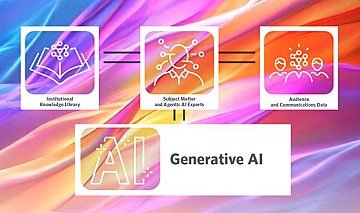
The real opportunity is not to ask technology to imitate the final output of an experienced counselor. It is to map the reasoning that precedes that output, then determine where AI can make the process faster, more rigorous and more consistent.
That work changes the role of the counselor. The AI-era crisis counselor must become an architect.
An architect does not simply produce an answer. An architect designs the system that produces better judgment. That means defining what information is required, which questions must be asked, where decision points sit, when escalation is necessary, what can be accelerated and where human accountability must remain.
We encountered this directly while building AI-enabled crisis and risk solutions at FleishmanHillard. Leveraging the technology was a challenge, but the harder work was documenting how experienced counselors think.
Before building an AI-supported risk assessment, we had to define how a counselor determines whether a potential risk is material. Volume alone is not enough. A widely shared social post may be inconsequential, while a low-visibility employee concern or regulatory inquiry may signal a much larger problem.
Before building an adaptive crisis simulation, we had to identify what makes an exercise useful. Realism matters, but the real test is whether leaders are forced to define the problem, prioritize stakeholders, make decisions with incomplete information and experience the consequences of those decisions.
Before using AI to support message development, we had to reinforce a basic principle: messages express the strategy, they aren’t the strategy.
An organization must first decide how it intends to respond, what action supports that position and what affected stakeholders need. Only then should it choose the words.
Experienced crisis counselors rarely begin by drafting. They begin by diagnosing.
What happened? What is confirmed? What remains unknown? Who is directly affected? Who can shape the consequences? What is the organization doing? What do employees need? What interpretation could take hold? What would make the situation materially worse?
They then assess severity, velocity and visibility. They consider human, operational, legal, regulatory and reputational implications. They determine the level of response required and what would trigger escalation.
Only then do they establish a response posture.
But it cannot own the consequences of a decision.
Should the organization monitor? Prepare privately? Engage a regulator? Correct misinformation? Acknowledge the issue? Apologize? Defend its position? Different stakeholders may require different approaches. A company may remain publicly quiet while briefing employees, engaging customers directly and preparing materials in case the situation changes.
Once that strategy is clear, communications can follow.
This is where AI can help. It can organize intake, identify missing questions, compare large volumes of information, surface inconsistencies, generate scenarios and develop first-pass materials. It can test assumptions and help teams prepare for pressure.
AI can classify a situation. A counselor determines whether that classification is right.
AI can generate response options. A counselor recommends how the organization should stand.
AI can draft language. Human reviewers confirm that it is accurate, operationally true, legally appropriate and responsive to stakeholder needs.
AI can simulate audience reactions. Counselors interpret those outputs, understand their limitations and decide how much weight they should carry.
AI can help prepare counsel. It cannot be counsel.
There is also a larger institutional opportunity.
When expert workflows are mapped, they become teachable. Junior practitioners can see that the work does not begin with a holding statement. It begins with intake, classification, stakeholder assessment and response posture.
Used well, AI can reinforce that learning by challenging unsupported assumptions, surfacing overlooked stakeholders and exposing practitioners to a wider range of scenarios.
It can also strengthen institutional memory. Too many organizations respond to each crisis as though it were the first. Lessons remain scattered across inboxes, outdated playbooks and the memories of people who eventually leave.
A mapped, AI-supported workflow can capture what happened, which decisions were made, how stakeholders reacted and what should change next time. Every response can make the next response smarter.
But there is a caution here. Codifying judgment can also codify blind spots. A poorly designed framework may create false confidence, reinforce narrow assumptions or turn a useful discipline into a rigid checklist.
The answer is better structure, with challenge mechanisms, quality controls and clear points of human accountability.
As AI tools become more powerful and more widely available, access to a particular model will not provide a durable advantage.
The organizations that benefit most will be those that define how good judgment operates, where technology can assist and where human responsibility cannot be delegated.
The future of communications will not be defined by who writes the cleverest prompt or generates the fastest draft.
It will belong to counselors who can make expert reasoning visible, turn it into systems others can use and improve, and remain accountable for the decisions those systems inform.
See what else is happening
You might also like
-
FleishmanHillard Launches Crisis, Issues and Risk Solutions Suite, Built on Demand for Data-Backed Advisory
July 31, 2026
-
Expertise
We Went to Cannes Lions: Where the Industry Is Trending
July 1, 2026
-
Expertise
How to Win the GLP-1 Food Industry Wake-Up Call
June 30, 2026
-
Expertise
The AI Readiness Gap Series: How to Build a Culture of Experimentation
June 22, 2026
-
News
The Chaos Advantage: FleishmanHillard Research Finds Caution Has Become the Riskiest Strategy in Marketing
June 22, 2026
-
Corporate Affairs on the World Stage: Why Global Sport Is the Ultimate Test of Your License to Lead
May 20, 2026
-
Expertise
Your Employees Are Disengaged. Listening Isn’t Enough. Follow-Through Is.
May 7, 2026
-
Expertise
The AI Readiness Gap Series: Why Normalization Is the Most Skipped, and Most Essential, Phase of AI Adoption
April 30, 2026
-
News
Rebecca Weinstein and Jonathan Arias Win the 2026 U.S. Young Lions Digital Competition
April 23, 2026