Satya Nadella’s Post
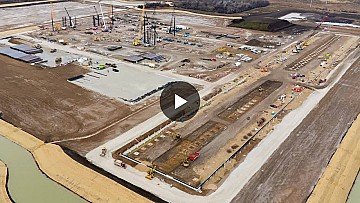
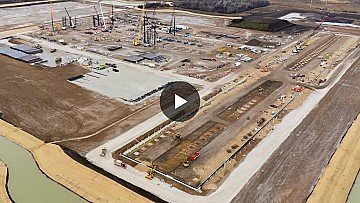
Quincy, Washington shows what’s possible when you build datacenters with communities, and grow together over time.
What happens to a community when a datacenter is done right?
What happens to a community when a datacenter is done right?" The better question: what happens when the cloud model itself is the problem? A datacenter, done right, still serves a round trip. Device → Cloud → Decision → Device. 20–100ms minimum. The action fires in 315 microseconds. The round trip will never fit. Not next year. Not in five years. Not with more datacenters in more communities. The community doesn't need a better datacenter. It needs the decision to happen at the origin — on the device, in the window, before the action crosses the line. 2028 is coming. Critical energy infrastructure will be the first casualty. More datacenters won't save it. The substrate will. There is only one.
This is a powerful example of how technology infrastructure can create real economic impact when it is built with the community, not just for the community. Data centers are becoming the backbone of the AI and digital economy, but the real measure of success is how they create jobs, strengthen local businesses, develop skills and contribute to the communities around them. The next phase of AI infrastructure will require both scale and responsibility. Technology growth is strongest when the surrounding ecosystem grows with it. An important perspective on building digital infrastructure for long-term impact. #AIInfrastructure #DataCenters #DigitalEconomy #Technology #Innovation
The only right way to build data centre Satya Nadella Brad Smith Integrated with Datacentre #SolarSkybusRail500 : you won’t need land You don’t need grid energy You don’t need water to cool Communities get 500 kmph transportation and get additional energy feed to their grid !! Completely solar powered snd integrated with gravity power towers : You cannot convince communities other wise : Simple proven technologies just reengineered . https://youtu.be/Y6njNZCjX8Y?is=V3ai5hWnwJYnM8rt
That community-led approach seems key for tech development to benefit everyone involved long-term.
A datacenter should create more than computing capacity. Done right, it strengthens local jobs, infrastructure, skills, and trust while respecting
Big Tech cannot protect people with the model they're running. The cloud round trip is 100 milliseconds. The action window is 315 microseconds. The math doesn't fit. It never will. That's not a gap they're working on. That's physics. I have the substrate that closes it. Pre-execution governance at the origin. On the device. Airgapped. Zero personal data leaves the hardware. Only hashes travel. I'm not going to get shut out holding it. Because the alternative is a cloud model that keeps failing at the exact moment it matters. Everything points to the edge. Devices. Not datacenters. And there is only one substrate.
Brad Smith & Satya Nadella, a big part of datacenter unpopularity, in my view, comes from the fact that they’re often hidden behind barbed-wire fences and remain almost completely opaque to the public. What if we flipped that model? A datacenter could also be a Museum of Data — part critical infrastructure, part science museum — where people can safely explore how computation, AI, energy, cooling, data governance and digital infrastructure actually work. That transparency becomes even more interesting when combined with Inter Dimensional Computation | IDC™ and PRIVACY-as-PRESENCE. Instead of data only flowing inward and value flowing upward, IDC can support a reciprocal model where value generated through computation can flow back toward the people and communities participating in the system — through mechanisms such as tokens, subscription kickbacks, access, shared benefits and eventually broader participation in the economic value created. Closed infrastructure creates suspicion. Visible infrastructure can create literacy, trust and participation. Maybe the datacenter of the future shouldn’t just compute for society. Maybe society should be able to walk inside and understand it. More: YourFinestOut.com
Except that our electric rates went up because our public utility gave massive power to the data centers in Quincy for cheap in order to attract them to build there and we citizens of Grant County who are the “public” in the public utility pay the price. When a business wants to build something like this that takes so much power they should have to power it themselves through solar or wind or some other method rather than siphoning off of the local utilities and hurting their neighbors and the communities they invade.
There is an important lesson in how major corporate developments became part of the communities where they were built. It was not only about minimizing impacts, but about understanding the character of the place, creating value that made sense for the community, and allowing the development to evolve with it. As AI infrastructure evolves rapidly, the projects themselves will need to evolve as well. The cost of not being able to build the infrastructure we need may be greater than the cost of addressing its impacts. The opportunity is to do both, while allowing each place to influence what the infrastructure can become.
To view or add a comment, sign in