From a Metabolite-based resistance mechanism against Malaria published in Science to the Springer Nature Editor Distinction Award: a quarterly round-up of scientific highlights from the ICGEB.
12 June 2025: Dr. Andrés Muro is among the authors of the paper published in Science entitled A metabolite-based resistance mechanism against malaria. The article finds that people with malaria inhibit bilirubin conjugation, indicating that jaundice in malaria might be advantageous. In the same issue of Science, a Perspective article discusses this finding, entitled: “Rethinking jaundice” on the possible antimalarial effects against this major devastating infectious disease.
*
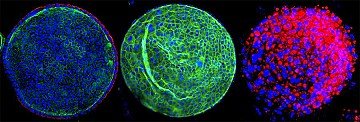
Dr. Serena Zacchigna was among the authors of a collaborative study published on the same day in Bioactive Materials. Researchers from the University of Trieste and the IRCCS Burlo Garofolo have developed an innovative strategy to preserve the fertility of paediatric cancer patients by applying integrated bioengineering and cell therapy techniques to the autologous transplantation of cryopreserved ovarian tissue: a procedure that involves harvesting part of the ovary before cancer therapies, freezing it, and then re-implanting it in the same patient once she has recovered: an approach could significantly contribute to preserving patients’ fertility.
*
18 June 2025: Latest research by Dinesh Gupta et al entitled: A Novel Three-Stage AI-Assisted Approach for Accurate Differential Diagnosis and Classification of NIFTP and Thyroid Neoplasms” has been published in Endocrine Pathology, advancing AI in precision pathology along with clinical collaborators. This research is a collaboration between ICGEB and AIIMS New Delhi, introducing a deep learning–based hierarchical diagnostic pipeline that mimics pathologists’ decision-making, aiming to enhance the accuracy of diagnosing NIFTP (Noninvasive Follicular Thyroid Neoplasm with Papillary-like Nuclear Features) and its close mimics. The results represent one of the first Artificial Intelligence frameworks to tackle the histological complexity of NIFTP, IEFVPTC, and IFSPTC using over 154,000 image patches across three AI-assisted diagnostic stages.
*
On 29 May, 2025, Dr. Neeti Sanan Mishra received the Springer Nature Editor Distinction Award for her contributions to Physiology and Molecular Biology of Plants in recognition of “meticulous assessment of submissions and rigorous management of the peer review process, safeguarding the scientific accuracy of the published record.”