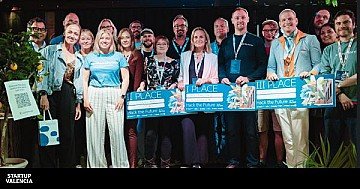
The international hackathon Hack the Future, driven by e-Residency and Startup Valencia, with the collaboration of the City Councils of Valencia and Tallinn and Garage48 in May this year, was launched with a clear mission: to develop innovative solutions that enable cities to anticipate and effectively respond to extreme weather events.
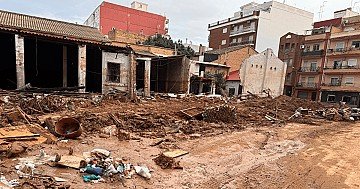
That goal is now beginning to take shape. The winning solution of this edition, developed by the startup Sol Navitas, will be applied in the recovery of homes affected by the DANA that struck the province of Valencia in October 2024. Its solar ventilation technology aims to improve air quality and combat humidity in buildings damaged by severe climate events. The rural district of La Torre will be the site where this pioneering solution is first implemented.
“At Startup Valencia, we are proud that a solution born at Hack the Future can be applied to the recovery of homes affected by the DANA. This case shows how innovation and international collaboration can become engines of real change in the face of increasingly frequent climate challenges,” said Juan Luis Hortelano, President of Startup Valencia.
“Hack the Future demonstrated what can be achieved when borders are removed and diverse communities come together to solve common challenges. Estonia may be small in size, but it is a digital powerhouse, and we are proud to collaborate with a vibrant and forward-looking city like Valencia to show that global and open cooperation is the path towards true innovation,” states Liina Vahtras, Managing Director of e-Residency.
This initiative is part of Hack the Future, a global programme focused on identifying and supporting startups that develop disruptive solutions to natural disasters. The project seeks to promote technologies that can be applied to emergency response, climate resilience, smart infrastructure, and urban sustainability, especially in a context where climate-change adaptation is increasingly urgent.
Sol Navitas was selected as the winner from among 14 competing teams at Hack the Future 2025, a hackathon that brought together over 100 international participants, particularly from Estonia and Spain. The event was supported by a top-tier group of international mentors from organizations such as Startup Valencia, Valencia Innovation Capital, the Tallinn City Strategic Management Office, and Estonian unicorn Bolt, among others.
Thanks to this initiative, one of the farmhouses most affected by the DANA storm in La Torre will serve as a testbed for this innovative technology. The system uses solar energy to heat dry outside air, which is then circulated indoors via a smart ventilation system. This expels humid air, stabilizes humidity levels, and helps prevent mold, mildew, and structural damage.
The pilot installation will feature online sensors to monitor temperature and humidity in real time, along with safety mechanisms such as flow-control valves and protective covers to prevent overheating. In addition, the Estonian team will contribute additional prototypes and assess the feasibility of implementing them in two more buildings in the district to compare results.
This pilot project in Valencia not only aims to address a local problem but also to serve as a scalable model for other regions affected by climate-related disasters in Europe and beyond.