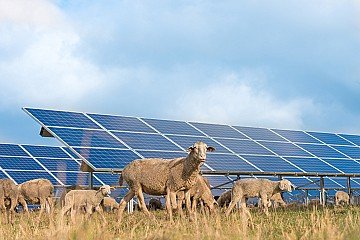
As the world transitions to a low-carbon economy, renewable energy plays a central role in climate action. But with solar farms and other clean energy infrastructure growing in number and scale, so does the responsibility to integrate them into the ecosystems where they’re located.
Biodiversity—the variety of plant and animal life in a given environment—is essential to the health of our planet. It supports everything from soil fertility to climate regulation. As renewable energy adoption becomes more widespread, biodiversity conservation is a core component of our responsible project development framework.
Best practices: Enfinity’s approach to biodiversity
At Enfinity Global, clean energy efforts must go hand-in-hand with environmental stewardship. So, we integrate biodiversity protection into every stage of our projects to ensure progress benefits both people and the planet.
This means actively promoting responsible project development and land use through the adoption of several proactive strategies, such as:
- Land suitability assessment: We ensure project land suitability, focusing on unused land to prevent desertification.
- Environmental assessment: Through Environmental Impact Assessments (EIAs), we identify our impact on the environment and implement mitigation strategies—ensuring our renewable energy solutions also contribute to the conservation of natural habitats.
- Risk mitigation: We minimize environmental impact by respecting biodiversity and enhancing landscapes. In Italy, for example, we’ve created natural ring fences with native vegetation around our plants.
- Sustainable development: We also promote agrovoltaic solutions in Italy, where conditions allow, integrating solar energy production with agriculture. This model not only supports the energy needs of rural areas but also stimulates local development by generating employment, optimizing land use, and fostering sustainable agricultural practices.
- Decommissioning planning: Although our solar power plants are built for long-term operation, we plan for their entire lifecycle. If decommissioning becomes necessary, Enfinity is committed to carrying it out responsibly—ensuring all components are treated and recycled following the environmental regulations of the country where the plant is located. We aim to leave the land in excellent condition, often more fertile after years of rest, ready to return to agricultural use if desired.
Ultimately, the goal is to reduce habitat disruption during the construction, operation, and maintenance phases while promoting regeneration and coexistence with native flora and fauna. Our efforts align with international Environmental, Social, and Governance (ESG) benchmarks, as well as local regulatory standards.
Real-world examples from real Enfinity projects
While our assets have a lower environmental footprint compared to many other energy sources, we recognize that developing new solar energy infrastructure can impact local ecosystems. That’s why we carefully consider location, design, and long-term management from the earliest stages of each project.
But we also go one step ahead—beyond project development, Enfinity supports biodiversity and ecosystem restoration through targeted environmental programs. By organizing volunteering opportunities in all the countries where we operate, we’re building a culture that celebrates ecological protection as a key value among Enfiniters. These are just some of our outreach efforts:
- In Spain, we teamed up with local nonprofit Reforesta to plant trees around Madrid, contributing to reforestation efforts in the region.
- In India, we partnered with the NGO United Way of Hyderabad on a local clean-up project to help restore Ibrahim Bagh Cheruvu, an urban lake critical to the local ecosystem.
- Meanwhile, in Japan, we formed a community association with local representatives to identify initiatives that would contribute to the area’s growth. So far, these initiatives have included infrastructure development, communal health projects, and wildlife preservation efforts.
- And in Italy and the Netherlands, Enfiniters came together to clean up vulnerable ecosystems for World Environment Day. Altogether, they managed to remove over 110 pounds of waste in just an hour.
Globally, our Enfinity Forest Initiative is part of this culture of responsibility. Developed in collaboration with Treedom, this initiative is contributing to forest regeneration in East Africa. We’ve planted over 600 trees in Tanzania, projected to absorb an estimated 94 metric tons of CO2 over their lifetime. The initiative also supports 35 local farmers, demonstrating how climate action can restore ecosystems while uplifting communities.
Our ESG commitment
In our journey to advance a net-zero carbon future, Enfinity works to mitigate any potential negative impact of our operations by focusing on three core areas:
- Net-zero carbon future: We are committed to supporting the shift to renewable energy by investing in countries dedicated to this effort. Our goal is to enhance renewable energy generation capacity and ensure better access to renewable electricity.
- Responsible projects: We’re committed to managing all our projects responsibly, focusing on sustainability and minimizing potential negative impacts.
- Respect biodiversity: We are committed to respecting local biodiversity, both in plant life and wildlife, across our project sites. In Italy, for example, we actively promote the conservation of biodiversity corridors by implementing fence designs that enable the free movement of small mammals.
By embedding sustainable practices into every stage of our projects, we aren’t just helping fight climate change—we’re also protecting the natural ecosystems that sustain life. As we continue to expand globally, Enfinity remains committed to building a clean, resilient, and biodiverse energy future.
To learn more about Sustainability at Enfinity, read the full 2023/2024 Sustainability Overview here.