Trieste, Italy – As the risk of zoonotic spillovers, the germs that spread between animals and people, continues to rise worldwide, European researchers are developing new tools to detect viral threats before they reach human populations.
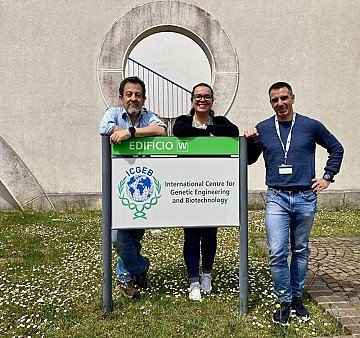
One of the most ambitious initiatives in this area is FLUFET (Fluid Detection of viruses by graphene-based Field Effect Transistor microarrays), a Horizon Europe project focused on real-time viral surveillance in animal farms. At the heart of this effort is the ICGEB, whose Molecular Virology Laboratory plays a central role in ensuring the scientific robustness of the technology.
Alessandro Marcello, who coordinates the Pandemic Preparedness and Biosecurity activities of the ICGEB, argues that “FLUFET adds to a portfolio of assays developed at ICGEB to identify pathogens with pandemic potential. Our aim is not only to validate the test, but also to make it available to collaborators in low-resources settings, where spillovers are more likely to occur”.
Addressing a Critical Gap in Pandemic Prevention
The European Parliament has repeatedly highlighted the need for continuous, harmonised surveillance of pathogens in animal production systems. Traditional diagnostic methods, however, rely on targeted testing and laboratory analysis, making them unsuitable for automated, in-situ monitoring and incapable of detecting unknown viruses.
FLUFET aims to overcome these limitations by developing an automated graphene-based biosensor capable of detecting both known and unknown emerging viral pathogens in real time.
The system is designed to operate directly on animal farms, where many zoonotic diseases originate, supporting a One Health approach that recognises the deep interconnection between animal and human health.
ICGEB’s Role: From Virology to Validation
Within the FLUFET consortium, ICGEB provides core expertise in molecular virology and virus detection methodologies. The Molecular Virology Laboratory is responsible for the entire experimental validation phase of the project, during which the FLUFET device is challenged with viral samples under biologically relevant conditions. This step is essential to rigorously assess the sensitivity, specificity, and reliability of the sensor before real-world deployment.
Tea Carletti, the researcher leading the project at ICGEB, confirms: “We are focusing on three viruses as an initial proof of principle of the assay: SARS-CoV-2, Influenza H1N1, and vesicular stomatitis virus, and each of these shares characteristics with several zoonotic viruses of importance for human health; ideally,” she concludes, “the device should be able to detect a wide range of pathogens using the same platform”.
In addition, ICGEB produces key biological reagents for the project, including virus-specific antibodies and antigens. These materials are critical for the development and optimisation of the sensing assays that allow the graphene field-effect transistor microarrays to recognise viral particles. The institute also contributes specialised know-how for data interpretation, ensuring that the signals detected by the device are translated into meaningful virological information.
A Pan-European Technological Effort
FLUFET brings together research centres, universities, and technology providers across Europe in an interdisciplinary consortium spanning computational biophysics, graphene technology, nanotechnology, microfluidics, virology, sensor design, and electronics. Partners such as the International Iberian Nanotechnology Laboratory (INL, Portugal) are advancing nanofabrication and microfluidic integration for the FLUFET sensors; industrial collaborators, such as Graphenea, contribute expertise in high-quality graphene production and scalable manufacturing. Other key academic and research partners include BCMaterials – Basque Centre for Materials, Applications and Nanostructures (Spain), and CIC biomaGUNE (Spain), both of which support materials science, sensing platforms and biosensor development. The consortium also includes the Technical Research Centre of Finland (VTT), bringing advanced engineering and system integration capabilities, which, together with ICGEB (Italy), provides essential virology expertise and virus-related reagents for assay validation. Collectively, the consortium is working to translate cutting-edge nanotechnology into a practical surveillance tool for global health protection.
Coordinated by Dr. Alejandro Criado at the CICA -Interdisciplinary Center for Chemistry and Biology (A Coruña, Spain), FLUFET exemplifies a pan-European research effort, bringing together an international consortium that integrates scientific and technological expertise from multiple European countries to strengthen preparedness for future pandemics.
Towards Continuous Viral Surveillance
By combining advanced materials science with rigorous virological validation, FLUFET represents a shift from reactive diagnostics to preventive surveillance. ICGEB’s contribution ensures that the biological foundations of the system are as robust as its technological components, reinforcing Europe’s capacity to detect viral threats early – before they can spread from farms to communities.
As zoonotic infectious diseases continue to emerge at an accelerating pace, initiatives like FLUFET demonstrate how interdisciplinary collaboration can translate scientific innovation into tangible tools for protecting global health.