Satya Nadella’s Post
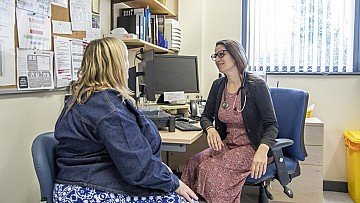
Today, I saw firsthand how Dragon Copilot will help physicians across the NHS spend more time on patient care and less on paperwork. The work at Manchester University NHS Foundation Trust is a powerful example of how tech can be used by clinicians to focus on what matters most. https://lnkd.in/g8UbcBR7
The NHS is one of the world's most complex operational environments - 1.3M employees, legacy systems everywhere, and clinicians drowning in documentation. If AI can actually give them hours back per day, that's not incremental improvement, that's system-level transformation. How long until we see this kind of workflow automation become standard across other major healthcare systems?
When AI gives clinicians time back, that’s real innovation. What early feedback are you hearing directly from physicians on daily usability?
But it hallucinates and not safe. Sathya stay away from building data centers in India, Keep third world country safe on its water, air and electricity.
Satya Nadella AI in healthcare shouldn’t be about replacing clinicians it should be about amplifying their ability to deliver better care faster. Dragon Copilot’s goal isn’t just transcription it’s elevating the quality and efficiency of clinical decisions by reducing noise, freeing cognitive capacity, and helping clinicians focus on what humans do best: context, judgment, and empathy. When AI becomes a trusted partner in complex work, it stops being a tool and starts being multiplying human impact. 👇 Healthcare leaders what’s one workflow you think AI should own first to genuinely shift patient outcomes?
When technology supports clinicians instead of distracting them, adoption follows naturally. This is the right direction.
Love seeing technology used this way. 🙌 Reducing administrative burden is one of the most meaningful ways we can support clinicians. When tools like Dragon Copilot are implemented thoughtfully within the NHS, it doesn’t just improve efficiency , it protects physician time, energy, and ultimately patient care. Kudos to you and the team at Manchester University NHS Foundation Trust for leading by example. This is the kind of innovation healthcare truly needs.
The NHS partnership is a strong signal. Healthcare is where AI's ROI becomes most tangible - paperwork is consistently the #1 burnout factor for clinicians. What makes this interesting is the ambient listening approach. Physicians don't need to change their workflow at all, the documentation just happens. That's the adoption lesson most enterprise AI tools still haven't learned.
It's fantastic to see AI streamlining clinical workflows and improving the doctor-patient connection. This digital transformation in healthcare highlights a critical, often-overlooked dependency: the hardware supply chain. Every device running this AI, from the server farms to the physician's tablet, requires a supply chain built for extreme reliability and longevity. In the medical field, you can't afford downtime or forced upgrades due to a single obsolete component. Ensuring the resilience of the physical infrastructure is just as crucial as the sophistication of the AI itself.
To view or add a comment, sign in