- The in absentia trial of Sabri Essid, a French ISIS foreign fighter, will take place from 16 to 20 March 2026 before the Paris Criminal Court.
- It will be the first trial in France relating to the genocide committed against the Yazidis, and the first time a French citizen is tried for this offense.
- The International Federation for Human Rights (FIDH), Kinyat, the Free Yezidi Foundation (FYF), Yazda, and the Ligue des droits de l’Homme (LDH) will participate in the trial as civil parties, alongside three Yazidi survivors and their children.
- The hearings will start on 16 March 2026 at the Paris Court of Appeal (8, Boulevard du Palais, 75001 Paris) and will be public. Read our dedicated Q&A for more details on the case.
Paris, 4 March 2026. Sabri Essid, also known as Abou Dojanah al-Faransi, was a central figure in the French jihadist movement. He is accused of having committed, between August 2014 and throughout 2016, serious bodily or mental harm constituting genocide, as well as acts of enslavement, imprisonment, torture, rape, persecution and other inhuman acts constituting crimes against humanity, and of complicity in these crimes, against Yazidi women and children in Syria. He will be tried in absentia before the Paris Criminal Court from 16 to 20 March 2026. Three Yazidi survivors and their children will act as civil parties during the trial, alongside FIDH, Kinyat, FYF, Yazda and the LDH.
“This trial is the result of the courage and determination of Yazidi survivors who have fought to ensure that the genocide they have suffered is recognized, and that its perpetrators are brought to justice.”, said Clémence Bectarte, lawyer of the civil parties and coordinator of FIDH’s Litigation Action Group.
This case marks a historic milestone as it is the first trial before French courts concerning the crimes committed by ISIS against the Yazidi community, and the first time a French citizen is being tried on charges of genocide.
“Beyond the individual sufferings of the survivors who will participate in the trial, this is a fight for the dignity and justice of the entire Yazidi community. It is also an opportunity to remind the international community of the suffering endured by the Yazidis at the hands of ISIS, while the fate of some 2,500 abductees remains unknown.” said Bahzad Farhan, President of Kinyat.
A case built through years of investigation
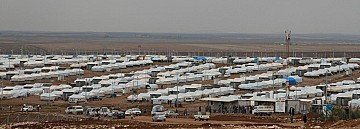
In August 2014, ISIS attacked Mount Sinjar, the homeland of the Yazidi community, forcing hundreds of thousands of Yazidis to flee to neighboring areas. Between 70,000 and 80,000 Yazidis sought refuge in the mountains, where they were besieged for several days; more than 1,700 of them died from hunger, dehydration and untreated injuries, 93% of whom were children. This assault marked the beginning of a genocidal campaign characterized by mass killings, forced conversions, sexual violence and the enslavement of women and children, systematically orchestrated and openly publicized by ISIS.
In December 2016, the French Prosecutor’s Office opened a so-called “structural” preliminary investigation aimed at establishing crimes committed by ISIS against the Yazidis and other ethnic or religious minorities in Iraq and Syria.
In order to collect testimonies from Yazidi survivors, FIDH and Kinyat conducted a documentation mission in Iraq in 2017 and published the report “Sexual and gender-based crimes against the Yazidi Community: the role of ISIL foreign fighters”.
In 2019, based on information provided by FIDH and Kinyat, as well as on the testimonies of Yazidi survivors, French authorities identified Sabri Essid and opened a judicial investigation. During the course of the investigation, which lasted five years, five Yazidi survivors, as well as their children, were identified as victims of Sabri Essid. On 8 October 2024, the investigating judges ordered that Sabri Essid be sent to trial before the Criminal Court.
“This trial is a unique opportunity for survivors’ voices to be heard and to expose the scale and systematic nature of the sexual crimes committed by ISIS fighters against Yazidi women and children,” said Pari Ibrahim, Executive Director of the Free Yezidi Foundation.
“For the Yazidi community, this trial marks an important step toward access to justice and reflects France’s growing engagement in prosecuting ISIL’s international crimes. However, in light of the scale of atrocities committed against the Yazidi community, the limited number of cases brought worldwide remains insufficient. States must adopt more coordinated and forward-looking strategies to ensure accountability, particularly in a context where instability in Syria continues to pose risks of ISIL members evading justice,” said Natia Navrouzov, Executive Director of Yazda.
Sabri Essid is presumed dead in Syria. However, in the absence of evidence certifying his death, French courts have jurisdiction to try him.
“In the absence of conclusive evidence of his death, French law allows to hold a trial in absentia – a procedure frequently applied in terrorism cases,” said Patrick Baudoin, lawyer of the LDH. “Given that, in the past, ISIS fighters previously thought dead have later resurfaced, it is essential that this trial proceed”.