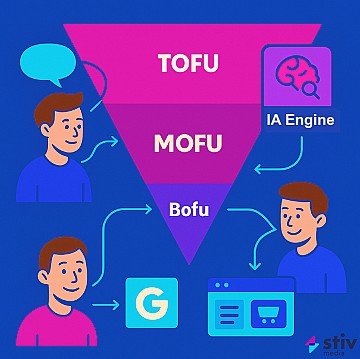
AI-powered answer engines like ChatGPT, Gemini (and soon Google AI Overview), Perplexity, and Claude are redefining how users navigate online. Where traditional search engines once offered ten blue links, today’s generative engines deliver complete, synthesized answers — often without a single click.
As a result, visibility in search results now depends increasingly on whether your brand appears within those generated answers.
In this new paradigm, organic search is no longer just about ranking well on Google — it’s about ensuring your brand is featured within AI-generated responses. This marks a major strategic shift for any business aiming to maintain visibility in the web of tomorrow.
Understanding AI answer engines
Traditional search engines index web pages, evaluate their relevance, and display them as search results. AI answer engines, on the other hand, use language models to generate content directly from existing data. The user experience becomes conversational, immersive, and often linear: one question, one answer.
In this context, ChatGPT, Perplexity, Gemini (and soon AI Overview) or Claude no longer simply query a database of URLs — they synthesize the web, cross-reference sources, and craft unique content. These answers aren’t neutral: they favor entities perceived as trustworthy, authoritative, and well-known. This is the foundation of generative engine optimization — an emerging complement to traditional SEO.
The impact on user journeys
Users no longer browse multiple websites. They ask a question and get an answer directly within the AI engine’s interface. This radically changes the logic of SEO: the goal is no longer just to appear in search results, but to be mentioned within the generated responses.
In this new web, your content remains invisible if your brand isn’t recognized as a relevant source. Visibility within generated answers becomes the main objective — and it depends on your presence in the right data, the right content, and the right citations.
Why brand presence is key in AI-generated answers
Generative AI models rely on strong, well-cited content. They pull information from multiple sources — forums, media, blogs — but tend to highlight well-established brands in their answers.
This means your brand must not only appear in search results but also in the content these AI systems recognize as authoritative. If your brand presence within generated answers is weak, you simply won’t appear in the user’s journey.
👉 Example: a user asks Perplexity which pellet grill to buy. The answer will likely mention Weber, Traeger, or Pit Boss — not an unknown retailer without an SEO or branding strategy.
Comparison sites: the big losers?
In traditional search engines, comparison sites often ranked well. But AI engines now integrate this function natively within their generated answers. There’s no need to click on a comparison page — the engine automatically summarizes product or brand differences on the fly.
This shift directly impacts affiliate and aggregator platforms. SEO strategies can no longer rely solely on ranking for “best” or “comparison” keywords. Only manufacturer or provider brands remain visible in the response.
Retargeting fades, branding becomes essential
The disappearance of clicks also disrupts attribution models. Retargeting becomes far less effective in an environment where users no longer navigate across multiple websites.
This reinforces the need for a digital marketing strategy focused on branding. You must strengthen your brand’s visibility within the content referenced by generative engines to avoid disappearing from view. Brand awareness itself becomes a key SEO lever.
Adapting your SEO strategy to the age of generative engine optimization
Here are the essential steps to ensure your brand appears in AI-generated responses:
- 🔗 Build a high-quality link-building strategy to multiply credible citations (see our link building campaigns).
- 📰 Be present in sources that AI systems deem trustworthy: specialized media, reputable forums, and educational content.
- 📊 Structure your content for natural language processing models (use schema.org, clear paragraphs, and descriptive headings).
- 🧠 Align your content with user intent and language model logic (explain, compare, recommend).
- 📍Activate a GEO strategy (Geo Generative Engine Optimization) to appear in localized AI responses (see our dedicated page).
Boosting your visibility in AI-generated answers
Your brand’s presence within AI-generated answers will determine its future visibility. Traditional SEO alone is no longer enough. You need a “generative-first” strategy — one where your brand becomes a recognized reference within the synthesized responses produced by ChatGPT, Gemini, or Perplexity.