There’s nothing more important than your health.
Our 2025 Copilot Usage Report revealed that people talk about their health, and the conditions of their loved ones, more than any other topic on mobile.
Inspired by this finding, we decided to carry out an in-depth analysis of over half a million health and wellbeing-related conversations people had with Copilot over the course of January 2026.
This research shows not only the breadth and depth of people’s engagement with AI for their health, but how AI can show up through the growing cracks in our healthcare systems. It shows people changing topics over the course of the day, how AI supports squeezed family members, and helps cut through the complexity of navigating healthcare choices. In all this, it highlights the critical importance of accuracy, reliability, and trust.
As with all our usage reports and conversation analysis, we adopt a strict privacy-preserving approach. All conversations are de-identified at source, and we rely on an automated workflow that extracts topics and intents. No human reads user conversations as part of this process.
Although this research underwrites the importance of health in AI, what we found challenged many assumptions – people aren’t just asking general health questions. In nearly 1 in 5 conversations, people describe their own symptoms, get help interpreting their own test results, or managing their own conditions. And people aren’t just asking for themselves, but for the people who depend on them. Here are some highlights:
What People Ask About
People go to Copilot above all for information. They want the facts, fast and tailored to them. Around 40% of questions focus on understanding symptoms, medical conditions, and treatments. Questions framed in general terms may well reflect a user’s own health concern rather than casual curiosity, and the true share of personal health questions may be higher. In a landscape where information asymmetry and health misinformation remain widespread, people want trusted and easy to understand explanations drawn from credible sources.
Meaningful interactions go far beyond general knowledge. One of the most common reasons people turn to Copilot (10.9% of health questions) is to interpret symptoms (often new or unexpected) and to understand laboratory or imaging results. While safe interpretation still relies on qualified clinicians, these are practical, often time‑sensitive questions where people feel they need clear, credible explanations before taking the next steps.
Personalized lifestyle and fitness coaching drive significant engagement (9% of queries), with nutrition and exercise the top two sub-categories. What stands out here is the shift from generic advice to tailored, ongoing guidance – the kind of personalized support that traditional internet search tools don’t provide.
People also use Copilot to navigate the healthcare system (5.8% of health questions touch on healthcare navigation, insurance, or benefits). Users want to find local clinicians matching their medical concerns, location, and insurance coverage. They want help understanding benefits, comparing care options, and managing medical paperwork. In these stressful moments, Copilot functions as a guide through an often-opaque system, helping people feel more prepared and confident in their decisions.
Why This Matters and How We Are Responding
As existing models of healthcare delivery struggle to keep pace with demand, more people are turning online and increasingly to AI. Until recently, many people relied on internet search for navigating health questions. The problem is this can offer limited help in distinguishing between simple explanations and alarming possibilities. With growing pressure on healthcare services, we believe people need better tools to make sense of health information when access is challenging.
Generative AI can step in to help. It delivers more tailored responses to user queries, asks specific follow up questions, and guides people towards a recommended next best action whatever the time of day. Done right, this has the potential to expand timely access to reliable guidance and make a difference at a time of need.
Across Microsoft AI’s consumer products, including Bing and Copilot, we already handle over 50 million health questions daily. We take this responsibility seriously. In November 2024, we formed a dedicated consumer health team to focus on areas that address users’ most pressing health questions including:
Credible health information
Copilot’s health answers are anchored upon thousands of credible sources, identified using principles independently published by the National Academy of Medicine. We provide clear citations for where information comes from with single-click links out to source material. Alongside generative responses we also surface expert‑written answer cards in partnership with respected organizations including Harvard Health.
Care navigation
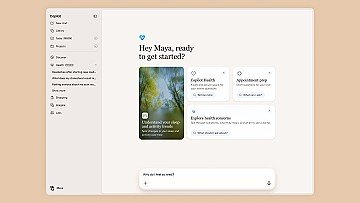
In the US, Copilot now connects to real‑time provider directories, so users can find high quality providers by specialty, location, and personal preferences. Equipped with this information, users can book appointments and continue their health journeys. We’re actively working to expand this service globally.
Our usage research supports the importance of these areas. Getting the answer right really matters when it comes to your health and wellbeing. It’s why the Microsoft AI Health team is working to deliver richer clinical context and stronger clinical reasoning into conversations that will deepen our ability to give clear, relevant, and safer answers. Richer context means Copilot can understand patterns and explain what might be going on rather than responding in isolation. Stronger reasoning means Copilot can break down complex questions step by step, highlight what’s important, and help people prepare for more productive conversations with clinicians.
AI must deliver for health. We will keep working to ensure that it does.
Copilot is not intended to diagnose, treat, or prevent diseases or other conditions and is not a substitute for professional medical advice.