Estimated reading time: 4 minutes
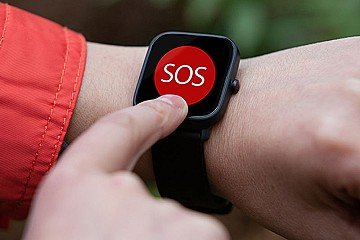
Personal emergency response systems (PERS) are electronic devices that let users alert others in an emergency. Designed as wearables, they often come in pendant or bracelet form and include a button. When pressed, the button triggers a notification to a monitoring center.
Traditional PERS were created for older adults or homebound individuals. They were only for in-home use and required a base station. Original base stations connected to the network via a landline. The base unit received signals from the wearable and linked the user to the monitoring center. It functioned much like a cable box or streaming hub.
PERS use has increased due to evolving technology and growing demand for independent living options. Interest from health care providers is expanding adoption in home settings and assisted care environments. Many of today’s solutions rely on cellular connectivity and include GPS. These PERS devices are part of the Internet of Things (IoT) and support users wherever cellular coverage is available.
PERS in Action: A Typical Emergency Scenario
A person experiencing a medical emergency, like a fall or heart attack, presses their PERS button. The device transmits a signal to a 24/7 monitoring center through a base unit or built-in wireless connection.
At the monitoring center, a trained operator receives the alert and immediately connects with the user. Because users may be unable to reach a phone, PERS devices include built-in two-way communication.
The operator speaks with the individual through the device to assess and triage the situation. Based on the conversation, they determine whether to dispatch emergency services or notify designated contacts. In some cases, they may do both. Usually, the operator remains on the line until help arrives, providing:
- Instructions
- Response updates
- Reassurance
Core Technologies of PERS
Most personal emergency response systems solutions include four key technological components.
1. Hardware
The wearable device is often a pendant, bracelet or wristband. Other models clip onto clothing. Some smartwatches come equipped with mobile PERS.
Cellular-connected devices contain communication and GPS modules, along with a SIM card. Some versions include sensors for automatic fall detection.
2. Communication Network
PERS require a reliable connection to transmit alerts to the monitoring center and support two-way communication.
Landline connection: Traditional PERS typically use a home phone line. The base unit connects to the landline. The user presses a button to speak with a monitoring center operator.
Wi-Fi and Bluetooth® wireless technology: Many mobile PERS use these technologies for reliable communication and improved indoor location accuracy.
Cellular modules: Mobile PERS and some traditional models use cellular connectivity to send alerts and connect to the monitoring center wherever service is available.
Cellular provides reliable connectivity for mobile PERS without requiring a stationary base. Among these, 4G LTE and narrowband IoT (NB-IoT) are the most popular options. They are widely available and provide dependable, robust performance.
- 4G LTE: The most common cellular technology for PERS. It delivers high-speed data transmission, low latency and broad coverage.
- NB-IoT: Useful for devices that transmit small amounts of data and run on battery power for extended periods without frequent charging or replacement.
3. GPS and Location Services
Many PERS users are remote or isolated workers who may be alone when an emergency occurs. Their work can take them from one job site to another, and their exact location may not be known.
GPS and GNSS provide precise location information to emergency services. They help first responders reach the user’s actual location rather than their registered address.
4. Cloud Technology
PERS collect vast amounts of data but have limited storage capacity. Many leading PERS solutions use the cloud to log emergency events and share important information with health professionals.
The Importance of Reliable Connectivity in PERS
Timeliness is vital during emergencies. Quick assistance depends on reliable connectivity. Without it, communication between the user and the monitoring center may fail, risking the user’s safety.
If the connection is poor or unstable, monitoring centers cannot reliably communicate with responders. This poses a particular risk for users in remote areas, as many monitoring systems are centralized to cover larger regions. The communication network must be robust enough to ensure seamless coordination, regardless of location.
To build reliable, always-on devices, PERS developers should apply the connectivity by design approach to their solutions. This strategy integrates connectivity features early in the development process, ensuring:
- Prompt signal transmission
- Clear communication
- Effective response coordination
Give Your Customers Peace of Mind with Telit Cinterion
Telit Cinterion supports remote health care with IoT solutions that strengthen the reliability of personal emergency response system devices. We offer:
- Remote SIM provisioning
- Connectivity management
- Cellular and noncellular modules
Remote provisioning eliminates the need for physical SIM replacements. It simplifies deployment and reduces ongoing device management tasks. Our LPWA modules help extend battery life for long-term field use.
Development kits, including the CMB100, let teams quickly test PERS features.
The personal safety market continues to evolve. Telit Cinterion provides flexible technology that supports dependable emergency response. Our IoT expertise helps customers build secure and trusted connected health solutions.
Speak with our team to develop a PERS solution powered by our proven IoT technology.