Customers interact with brands in many ways, browsing products online, opening emails, using apps, or engaging on social media. Each interaction is a signal of interest, intent, or need. But if these signals aren’t connected, marketers risk sending irrelevant messages, missing opportunities to engage, or frustrating their audience.
Cross-channel personalization solves this by delivering messages and experiences that are consistent, relevant, and tailored to each individual, no matter where they engage. When done effectively, it drives higher engagement, stronger conversions, and lasting loyalty.
The challenge is executing this at scale. Manual campaign coordination can’t keep up with the speed, volume, or complexity of today’s customer journeys. AI solves this by analyzing behavior, predicting intent, and automatically personalizing interactions across every channel, turning scattered touchpoints into cohesive, high-impact experiences.
Understanding customer behavior across channels
To deliver effective cross-channel personalization, marketers must understand how users engage with their brand across every touchpoint. Each interaction, from browsing a website, opening an email, clicking a push notification, to engaging on social media, provides clues about intent, preferences, and the likelihood of conversion. Ignoring these signals can lead to irrelevant messaging, missed opportunities, and inconsistent experiences that frustrate customers.
AI helps by collecting and unifying data from all channels into a comprehensive view of each customer. This allows marketers to identify meaningful patterns and anticipate future behavior. For instance, repeated product page visits can indicate high purchase intent, partial form completions may signal hesitation, and declining engagement can highlight churn risk.
Key behaviors AI tracks include:
- Purchase and browsing activity – Understanding which products or services a user is interested in and predicting what they might explore next.
- Engagement trends – Identifying which messages, content, or campaigns resonate most with different audiences.
- Multi-channel interactions – Integrating website, app, email, and social behavior to create a complete journey map.
- Churn and opportunity signals – Detecting early signs of disengagement or identifying high-value upsell and cross-sell opportunities.
By analyzing these behaviors, AI builds dynamic, evolving user profiles. These profiles enable brands to deliver messaging that is timely, relevant, and cohesive across channels.
How AI automates personalization
Once customer behavior is understood, AI goes beyond insights to automate the delivery of highly personalized experiences across multiple channels. Instead of relying on static segments or pre-scheduled campaigns, AI analyzes each user’s interactions in real time and decides what message to send, through which channel, and at what time for maximum impact.
For example:
- A customer who repeatedly browses a product category may automatically receive a personalized recommendation via email, push notification, or in-app message, tailored to their specific interests.
- Users showing signs of disengagement, such as reduced app activity or skipped emails, can be re-engaged with targeted offers or timely reminders through the channel they are most active on.
AI also ensures that personalization evolves with the user. Every interaction is monitored and fed back into the system, so the platform can adjust future communications in real time. For instance, if a user engages with a recommendation via mobile push but ignores email, the system can prioritize push for future messages, avoiding irrelevant or redundant outreach.
Additionally, AI can optimize campaigns based on patterns observed across the entire audience. It identifies which combinations of messages, timing, and channels produce the best engagement, automatically adjusting triggers and sequencing for each individual. This not only improves efficiency but also ensures that campaigns are scalable and consistent, even for large, complex customer bases.
By automating these processes, brands can deliver true cross-channel personalization at scale, creating interactions that feel human, timely, and relevant, all while freeing marketing teams to focus on strategy, content, and creative optimization rather than manual campaign management.
Designing effective cross-channel campaigns
Creating successful cross-channel campaigns requires more than sending the same message across multiple touchpoints. The goal is to deliver cohesive, personalized experiences that guide users seamlessly along their journey, from awareness to conversion and beyond.
The first step is to map the customer journey. Identify key interactions, such as website visits, product searches, app usage, email opens, and social engagement, and understand how they connect. This helps determine where personalization will have the greatest impact and which channels are most effective at each stage.
Next, define behavior-driven triggers. Not all actions require the same response. For instance:
- A user browsing multiple products without purchasing may receive personalized recommendations.
- A loyal customer who regularly engages with your app might get early access to new products or special offers.
- Someone showing inactivity could receive a timely re-engagement message through their preferred channel.
AI simplifies this process by automating the timing, channel, and content of each message, ensuring that campaigns remain relevant without constant manual oversight. It can sequence interactions logically across channels, so users experience a consistent narrative rather than disjointed messages.
Finally, incorporate testing and optimization into every campaign. AI can A/B test subject lines, creative, send times, and channel preferences, learning which combinations drive the best engagement. Over time, this continuous optimization improves both user experience and campaign ROI.
Well-designed cross-channel campaigns combine strategic journey mapping, behavior-based triggers, and AI automation, enabling marketers to deliver personalized experiences that feel effortless, intuitive, and timely for every customer.
Best practices for AI-driven personalization
Even with powerful AI tools like Insider One, successful cross-channel personalization depends on following a few key principles. These best practices ensure campaigns remain relevant, effective, and scalable:
- Prioritize high-value behaviors: Focus on actions that signal strong intent or engagement, such as repeated product views, wishlist additions, or content downloads. Targeting these behaviors ensures that personalization drives meaningful outcomes.
- Unify and clean your data: AI is only as good as the data it uses. Integrate all touchpoints; website, app, email, social, and offline interactions into a single, accurate dataset to fuel precise predictions.
- Leverage real-time insights: Personalization works best when messages respond immediately to user behavior. Ensure your AI platform can trigger actions in real time to maintain relevance.
- Maintain consistency across channels: Users expect cohesive experiences. Ensure messaging, tone, and offers are consistent whether a user interacts via email, push notifications, in-app content, or social channels.
- Continuously test and optimize: Monitor engagement metrics and campaign performance. Use AI feedback loops to adjust triggers, timing, and content dynamically, improving results over time.
- Balance automation with creativity: While AI handles timing and targeting, human oversight ensures the messaging feels authentic, compelling, and aligned with your brand voice.
By following these practices, marketers can maximize the impact of AI-driven personalization, creating cross-channel campaigns that feel intuitive, timely, and highly relevant to every individual customer.
Insider One: Making cross-channel personalization work
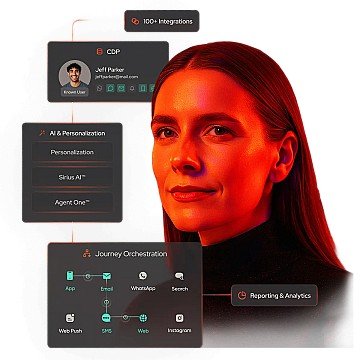
Insider One is designed to make cross-channel personalization simple, intelligent, and scalable. By combining real-time behavior tracking, predictive insights, and Architect’s automated journey orchestration, it helps brands engage users with relevant, timely messages at every touchpoint.
Key capabilities include:
- Unified customer profiles: Insider One collects data from websites, apps, email, social media, and more, creating a single, dynamic view of each user. This ensures personalization decisions are based on the full picture of customer behavior, not isolated interactions.
- Seamless multi-channel orchestration: Campaigns are coordinated across email, mobile push, in-app messages, web content, and social channels. Users experience a consistent, connected journey, no matter how they engage.
- Continuous learning and optimization: Every interaction feeds back into the platform, allowing Insider One to refine predictions, update user segments, and improve the relevance and timing of future campaigns.
By leveraging Insider One, brands can turn every engagement opportunity into a personalized, high-impact interaction. Marketing teams can focus on strategy and creativity, while the platform ensures that personalization is executed automatically, intelligently, and at scale.
Unlock the power of predictive personalization
Cross-channel personalization reaches its full potential when insights are transformed into action. Insider One enables brands to anticipate customer behavior, deliver relevant messages, and automate interactions across every channel, all from a unified platform.
See the impact for yourself: request a demo or take a platform tour to discover how Insider One can help your team engage the right customer at the right moment, turning every interaction into an opportunity for engagement, conversion, and loyalty.
FAQs
What is cross-channel personalization, and why is it important?
Cross-channel personalization ensures that each customer receives relevant, consistent messages across every touchpoint from email and push notifications to web, app, and social media. It drives engagement, improves conversions, and builds stronger customer loyalty.
How does AI automate cross-channel personalization?
AI analyzes user behavior in real time, predicts intent, and automatically determines the best message, channel, and timing for each customer. This removes manual guesswork and ensures interactions are timely, relevant, and consistent.
Which types of behaviors should brands track for personalization?
Key behaviors include product browsing, repeat visits, abandoned carts, newsletter sign-ups, content engagement, and inactivity. AI uses these signals to anticipate needs, trigger the right messages, and prioritize high-value interactions.
Can personalization be scaled for large audiences?
Yes. AI enables dynamic, automated personalization at scale, coordinating messaging across multiple channels while continuously learning from customer interactions. This allows marketers to deliver individualized experiences even for large, complex audiences.
What measurable impact does AI-driven personalization have?
AI-driven personalization increases engagement rates, conversion metrics, retention, and revenue. By delivering relevant messages at the right time, it helps brands maximize ROI and strengthen long-term customer relationships.