The ‘Cookiepocalypse’ is Here: Why It’s an Opportunity, Not a Threat
For years, the digital marketing world buzzed about the end of third-party cookies. As of 2026, that era is officially over. With Google’s phase-out complete and privacy regulations like GDPR and CCPA now the established standard, the playbook that powered a decade of digital advertising has been rewritten.
Many see this as a limitation—a wall built around the data that fueled their acquisition and retargeting engines. We see it as the single greatest opportunity for brands to forge stronger, more authentic customer relationships. The end of the cookie is not the end of personalization; it’s the beginning of consent-based, value-driven communication.
The new landscape has a clear set of winners: brands that own their customer data and cultivate direct, transparent relationships. The focus has shifted from passively tracking anonymous users across the web to actively earning first-party and zero-party data through meaningful interactions on channels you control.
This is where a true Global Omnichannel Strategy becomes non-negotiable. It’s about orchestrating seamless Customer Journeys across touchpoints like your App, Website, WhatsApp Business, and Mobile Wallet. These aren’t just messaging channels; they are the foundations of your new, privacy-first data ecosystem.
Instead of searching for a one-to-one replacement for the third-party cookie, leading marketers are building a more resilient and effective engine for growth. This guide will show you how to move beyond the old paradigm and architect a customer engagement strategy that not only survives but thrives in a cookieless world.
What is Cookieless Marketing?
In the digital landscape of 2026, cookieless marketing is not a future trend; it is the established standard. It refers to all marketing strategies that build, nurture, and convert customer relationships without relying on third-party cookies to track user behavior across different websites and applications.
This approach pivots entirely towards first-party data—information that customers consent to share directly with your brand. The focus has shifted from anonymous, large-scale tracking to personalized engagement within your own digital ecosystem.
To fully grasp this paradigm, it’s crucial to understand the fundamental difference between the cookie types that defined the previous era of digital advertising.
- First-Party Cookies: These are the good guys. They are created and stored by the website you are actively visiting. They enhance user experience by remembering login details, language preferences, and items in a shopping cart. They are a critical part of a functional and personalized web experience.
- Third-Party Cookies: These are the now-deprecated trackers that were placed on a website by a domain other than the one you were visiting. Their primary purpose was cross-site tracking, ad retargeting, and building behavioral profiles, often without the user’s explicit or informed consent.
The transition to a cookieless world was driven by an irreversible shift in both consumer expectations and global policy. Today’s users demand transparency and control over their personal data, and regulations have solidified these rights into law. The final phase-out of third-party cookies by all major browsers simply sealed a future that was already in motion.
This reality elevates the importance of a Global Omnichannel Strategy. With cross-site tracking gone, the most valuable interactions happen on channels you own. Direct, consent-based channels like App Push Notifications, Web Push, and WhatsApp Business are no longer just supplementary tools; they are the core of a resilient and effective Customer Journey, allowing you to build lasting relationships on a foundation of trust and first-party data.
Winning Strategies for a Cookieless Future
The dust has settled on the third-party cookie era. For marketers in 2026, success is no longer defined by retargeting prowess but by the strength and depth of direct customer relationships. This section is your playbook for mastering the new digital landscape.
The fundamental shift is moving from renting audiences through volatile ad platforms to owning direct connections with your customers. This approach builds loyalty, increases lifetime value (LTV), and creates a sustainable, privacy-first marketing ecosystem. Here are the core strategies leading brands are implementing today.
- Prioritize Value-Driven Data Collection: First-party and zero-party data are the new gold. Go beyond simple newsletter sign-ups and create a clear value exchange. Use interactive quizzes, preference centers within your app, and conversational surveys via WhatsApp to collect insights directly from your audience in return for hyper-personalized experiences, exclusive content, or early access to sales.
- Master Your Owned Channels: Your app, website, and direct messaging channels are now your primary communication hubs. An effective Global Omnichannel Strategy leverages App Push Notifications, Web Push, and WhatsApp Business not as separate tools, but as interconnected touchpoints. These direct lines of communication are immune to ad-blocking and algorithmic shifts, giving you unparalleled access to your most engaged users.
- Orchestrate Intelligent Customer Journeys: The true power lies in connecting your owned channels into a single, cohesive narrative. A modern Customer Journey can start with a user browsing on your website, trigger a follow-up web push, and later send a personalized WhatsApp message with an offer related to their interest. This level of orchestration ensures a seamless, relevant, and timely conversation with your customer, no matter where they are.
- Embrace Predictive AI and Automation: With rich first-party data, the potential for AI becomes transformative. Use predictive models to identify customers at risk of churn, recommend the next best product, or determine the optimal time to send a push notification. Marketing automation powered by generative AI can then execute these complex, personalized campaigns at scale, ensuring every user feels understood.
Executing these strategies effectively requires a platform capable of unifying customer data and orchestrating actions across every channel. A fragmented tech stack creates data silos and disjointed experiences, which are the primary pitfalls in today’s privacy-centric world. The goal is a single customer view that powers every interaction.
Strategy 1: Build Your First-Party Data Flywheel
In 2026, the marketing landscape is fundamentally rebuilt on a foundation of trust and direct relationships. The brands that are not just surviving but thriving are those that have mastered the art of building a first-party data flywheel. This isn’t just about replacing third-party cookies; it’s about creating a sustainable, self-perpetuating cycle of value for both you and your customers.
Let’s clarify the two most critical assets in this new ecosystem: First-Party Data and Zero-Party Data. First-party data is the information you collect directly from your audience through their interactions with your digital properties. This includes behavioral data like pages viewed, products added to a cart, or features used within your app.
Zero-Party Data is the gold standard. This is information a customer intentionally and proactively shares with you. Think of preference center selections, survey answers, or direct feedback provided to an AI Agent. It’s the data they want you to have to personalize their experience, and it’s the most powerful fuel for your engagement engine.
The core principle of this strategy is the value exchange. Customers will willingly provide their data when they believe they will receive a tangible benefit in return, such as hyper-personalized offers, relevant content, or a more seamless Customer Journey. This consensual data collection is the bedrock of modern, privacy-first marketing.
So, how do you build this flywheel? By leveraging every direct touchpoint as a data collection opportunity within a Global Omnichannel Strategy. Your goal is to make gathering this data a natural part of the customer experience.
- Web and App Opt-Ins: Every time a user agrees to receive Push Notifications on your app or website, they are providing a direct, consensual communication channel. This initial opt-in is a powerful first-party signal of engagement that can be nurtured over time.
- Conversational Interactions: Channels like WhatsApp Business and AI-powered chatbots are zero-party data goldmines. A simple query like, “What are you looking for today?” can capture intent, while post-purchase follow-ups can gather preferences and satisfaction data directly within the conversation.
- Interactive Content: Engage users with quizzes, polls, and interactive stories. A “Find Your Perfect Style” quiz in retail or a “Plan Your Ideal Vacation” tool in travel not only boosts engagement but also collects invaluable zero-party data on user preferences and needs.
- Preference Centers & Mobile Wallet: Give users control. A clear, accessible preference center allows them to tell you exactly what, when, and how they want to hear from you. Integrating loyalty cards and offers into a Mobile Wallet provides another direct channel and captures transactional data.
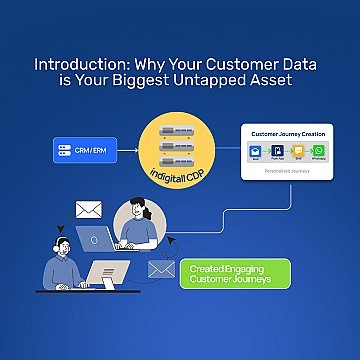
Orchestrating these disparate signals is the primary challenge. Using an integrated platform like indigitall allows you to unify these data points into a single, coherent customer profile. This enables you to stop seeing fragmented interactions and start seeing a complete Customer Journey, powering a truly intelligent and responsive marketing ecosystem.
Strategy 2: Unify Engagement with an Omnichannel Platform
In today’s cookieless landscape, the old model of using separate, siloed tools for email, push notifications, and SMS is not just inefficient—it’s a critical liability. This fragmented approach creates data islands, making it impossible to build a cohesive, privacy-compliant view of your customer. The result is a disjointed experience for users and a compliance headache for your team.
The solution is to centralize your communications within a single, unified engagement platform. This technology acts as the central nervous system for your entire customer lifecycle, orchestrating interactions across every touchpoint—from your mobile app and website to WhatsApp and digital wallets. It’s the foundational layer for building durable, first-party data relationships.
What truly sets a modern platform apart is its ability to unify both inbound and outbound communication. While many solutions focus solely on outbound marketing campaigns, the indigitall ecosystem is designed to manage the full spectrum of customer dialogue. This creates a continuous, two-way conversation rather than a one-way marketing broadcast.
Imagine this seamless Customer Journey:
- Inbound Signal: A customer uses a generative AI Agent powered by indigitall within WhatsApp to ask about the warranty on a recent purchase.
- Intelligent Orchestration: The indigitall platform logs this service interaction against the user’s unified profile.
- Outbound Action: Thirty days later, a highly relevant push notification is automatically triggered, offering an extended warranty plan.
This level of contextual orchestration is something platforms focused purely on marketing automation struggle to achieve. By connecting a support query to a future marketing message, you transform a simple transaction into a long-term, valuable relationship. This is the power of a truly unified, omnichannel strategy designed for the demands of 2026.
Strategy 3: Master Conversational Marketing with WhatsApp
In the fully established cookieless landscape of 2026, one-way marketing broadcasts have been replaced by two-way digital dialogues. The brands that are thriving are those that have mastered conversational marketing, and the undisputed king of this domain is WhatsApp. It has evolved from a simple messaging app into a primary channel for building direct, trust-based customer relationships.
This direct line of communication is a goldmine for collecting consented, high-value zero-party data. Unlike inferred behavioral data, this is information your customers willingly and explicitly share with you. Through interactive WhatsApp conversations, you can directly ask about their preferences, run polls on new product ideas, or gather feedback post-purchase, all within a channel they already use and trust daily.
Orchestrating these interactions is where the right technology partner becomes critical. The indigitall platform features a native, direct integration with the WhatsApp Business API. This is a crucial differentiator that many marketers overlook. While other providers often rely on third-party aggregators or “wrappers,” our native connection provides a more robust and efficient solution.
What does this mean for your team? It translates to tangible business advantages:
- Superior Reliability: By eliminating the intermediary layer, we reduce potential points of failure, ensuring your critical messages are delivered without interruption.
- Enhanced Performance: Direct integration means lower latency and faster delivery speeds for both transactional alerts and marketing campaigns.
- Immediate Feature Access: You get first-hand access to the latest WhatsApp features, like advanced interactive messages and in-app payment flows, as soon as they are released.
Ultimately, WhatsApp isn’t an island. It’s a powerful touchpoint within a Global Omnichannel Strategy. A conversation started on WhatsApp can be triggered by a web push notification and can use data collected from an in-app interaction. From the indigitall console, you can seamlessly integrate these dialogues into a larger Customer Journey, using the zero-party data gathered to personalize the next communication, whether it’s an email, an SMS, or an update to a mobile wallet pass.
Strategy 4: Leverage Contextual & Privacy-Centric Advertising
In the digital landscape of 2026, top-of-funnel acquisition looks fundamentally different. With third-party cookies firmly in the rearview mirror, marketers have successfully re-embraced contextual advertising, now powered by sophisticated AI and machine learning, as a core pillar for brand awareness.
Contextual advertising places your message alongside content that is thematically relevant to your product or service. Instead of targeting a user based on their past browsing history, you target the environment itself—an ad for sustainable cookware appears on a vegan recipe blog, or a fintech app is promoted in an article about investment strategies. It’s effective, privacy-compliant by design, and a powerful way to introduce your brand to new, relevant audiences.
Alongside this, the advertising ecosystem has matured around privacy-preserving frameworks like Google’s Privacy Sandbox. Technologies such as the Topics API allow for a degree of interest-based targeting without compromising individual user identity. The browser groups a user’s activity into broad interest categories, enabling advertisers to reach relevant cohorts anonymously.
- Top-of-Funnel Strength: Use these methods to build brand visibility and drive initial traffic from audiences showing in-the-moment interest.
- Inherent Limitation: These tools are designed for anonymous, broad-stroke targeting. They lack the precision required for deep personalization, sophisticated retargeting, or nurturing a specific user through a complex Customer Journey.
The most effective Global Omnichannel Strategy uses contextual advertising to fill the funnel, then immediately transitions users into a first-party data ecosystem. Once a user clicks an ad and lands on your site or app, the goal is to earn their trust and an opt-in for direct communication. This is where the real relationship-building begins.
This is precisely where an integrated platform like indigitall demonstrates its power. We empower you to capture that initial interest and seamlessly continue the conversation on high-impact owned channels like App Push, Web Push, and WhatsApp Business. While advertising builds awareness, your first-party strategy—orchestrated from a single console—is what drives conversion, loyalty, and lifetime value.
How indigitall Future-Proofs Your Marketing Strategy
Navigating the privacy-first landscape of 2026 requires more than just a collection of disparate tools. It demands a unified, intelligent platform designed from the ground up for the post-cookie era. The indigitall platform provides the technology and strategic framework to turn first-party data into your most powerful growth engine.
We empower brands to move beyond theory and into execution, orchestrating the winning strategies discussed in this guide from a single, intuitive ecosystem. Instead of struggling with complex integrations, your team can focus on what truly matters: building valuable customer relationships.
Unify and Activate Your First-Party Data
At the heart of any successful cookieless strategy is a robust first-party data foundation. Our platform acts as your central hub for consolidating user information, preferences, and consent collected across all your digital properties. This creates a rich, unified customer profile that is both privacy-compliant and incredibly p