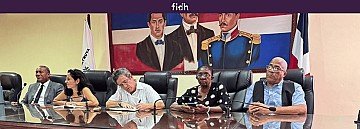
- In this report, civil society organisations in Latin America bring visibility to victims of corruption and analyse the link between specific cases of corruption and human rights violations.
- FIDH—together with 10 human rights and anti-corruption organisations from Brazil, Colombia, Guatemala, the Dominican Republic, and Venezuela—proposes a roadmap to address the corruption crisis.
Paris, 16 April 2026. A new report published by the International Federation for Human Rights (FIDH), in collaboration with Transparency International Brazil; Transparencia por Colombia and the Colectivo de Abogados y Abogadas José Alvear Restrepo (CAJAR) of Colombia; Acción Ciudadana and the Centro Para la Acción Legal en Derechos Humanos (CALDH) in Guatemala; INSAPROMA, CNLCC, and CNDH-RD in the Dominican Republic; Transparency Venezuela and PROVEA in Venezuela, illustrates how, in many Latin American countries, corruption is becoming systemic through the capture of state institutions.
This phenomenon arises from corruption generated by organised crime, which seeks to buy off law enforcement, local governments, and judges to control territory, but also from kleptocratic elites who seek to attain and maintain power to divert funds for their own benefit; as well as from companies that, through bribes, fail to comply with their legal obligations or improperly obtain public contracts or concessions.
The report provides a detailed account of some of the most high-profile corruption cases in these countries, which were publicly presented at a hearing before the Inter-American Commission on Human Rights in 2025. The analysis of these cases aims to highlight the negative impact that corruption has on human rights, give visibility to the victims, and tell their stories in order to refute the notion that corruption has no direct human consequences.
Corruption is not a victimless crime
By addressing corruption from a human rights perspective, the report emphasises that corruption has tangible and direct human consequences by exacerbating social inequalities in the region with the world’s highest rate of socioeconomic disparity. The authors of the report warn that this situation—in addition to being a clear economic burden for the countries in the region—significantly impacts the most disadvantaged sectors of the population by increasing costs and limiting access to essential public services, such as health care, education, and housing.
This is the situation in the Dominican Republic, where the right to decent housing was violated due to a scam in the Tres Brazos neighborhood; in Venezuela, where the emergency legal framework fostered corruption in social food programs such as the CLAP; or in Guatemala, with the opaque and failed purchase of Sputnik V vaccines during the pandemic, which exposed likely state corruption that resulted in thousands of preventable deaths and a serious violation of the right to health.
Furthermore, corruption has a negative impact on the right to a healthy environment. In the case of the Punta Catalina coal-fired power plant in the Dominican Republic, bribery practices—by diverting decision-making from the public interest toward private interests—have resulted in the contamination of ecosystems due to poor construction and inadequate management of toxic waste, which caused air pollution and affected rights such as the right to life, health, access to water, and the comprehensive development of children in the Dominican Republic. In addition to corruption in the strict sense, these rights can also be affected when companies in the food and extractive sectors manipulate regulations and public policies through legal loopholes and the co-optation of leaders, as described in the case of Colombia.
The long shadow of Odebrecht
A significant number of the cases analysed in the report are related to corrupt practices carried out by Odebrecht, a company that secured irregular contracts with several Latin American countries through bribes over an extended period. Odebrecht’s bribes have had disastrous consequences, and not only for public trust in politics; they have also led to a shortage of basic public services, such as access to energy and transportation.
One example is the unfinished infrastructure projects the company left behind in Venezuela, where politicians were bribed to maintain state concessions. Another is the Ruta del Sol II case in Colombia, where affected communities have been unable to obtain redress. In Brazil, the authors highlight the alarming destruction of evidence in the Odebrecht case, which halted many international investigations and turned the country into an exporter of impunity in the region.
The numerous instances of potential corruption described in this report are merely the tip of the iceberg of a far-reaching crisis affecting every country on the continent.
Cross-cutting recommendations
The joint report condemns the structural impunity associated with corruption cases. It outlines a roadmap for preventing such acts and ensuring an effective fight against this scourge. In this regard, FIDH, together with its signatory member organisations and in collaboration with several chapters of Transparency International in the region, urges States to prioritise the fight against impunity in corruption cases that affect human rights; to protect whistleblowers and witnesses of corruption, as well as to ensure—in compliance with States’ obligation to prevent and regulate—that companies do not engage in corrupt practices.
Case analyses, as well as more detailed recommendations, can be found in the report.