Summary
- Zero-party data marketing means acting on explicitly stated customer preferences the moment they are shared, not weeks after a campaign brief is written
- Zero-party data vs first-party data is a false either/or: declared preferences plus observed behavior together give AI agents enough context to personalize without guessing
- Programs stall when preference capture and activation live in separate systems, turning stated intent into a spreadsheet instead of a live customer attribute
- A value-exchange framework, matched channel by channel, turns zero-party data collection into measurable lifts in conversion, average order value, and retention
- Evaluate any customer data management platform on whether it can merge declared and behavioral data into one profile that agents can act on in real time
We asked a customer what she wanted in a fit quiz, and the answer sat in a spreadsheet until the next campaign brief went out three weeks later. That gap is the whole problem with zero-party data marketing today.
Zero-party data is information a customer deliberately and voluntarily shares, things like stated size preference, purchase intent, or content interest, as opposed to first-party data inferred from clicks and purchases.
This article is for lifecycle, customer relationship management (CRM), and martech leaders at mid-market and enterprise consumer brands who have already run a preference quiz or two and want more than a definition.
You’ll get a value-exchange collection framework, a channel-by-channel activation model, and the reason AI agents make explicit customer preferences more valuable in 2026 than they have ever been. The goal isn’t collecting more answers. It’s closing the loop between what a customer tells you and what happens next.
What zero-party data marketing looks like when it actually works
Zero-party data marketing works when a stated preference changes what the customer sees within the same session, not in the next campaign cycle.
A shopper who tells you she wears a size 8 and prefers sustainable materials should see that reflected in her next three product recommendations, not in a segment update that runs on Thursdays.
Zero-party data vs first-party data isn’t a competition; it’s a division of labor. First-party data tells you what someone did. Zero-party data tells you what someone wants, which is the one thing behavioral tracking can never fully infer.
Together, they give a personalization engine both the evidence and the intent it needs to act with confidence rather than probability.
The execution standard is simple to state and hard to hit consistently:
- The preference is captured with a timestamp and a clear source, not buried in a free-text field
- It updates the customer’s live profile immediately, not on the next batch sync
- It triggers a visible, relevant action within the same channel or the next touchpoint
- It gets reconfirmed periodically, since stated preferences change and stale ones erode trust
Where execution breaks down for zero-party data marketing
Execution breaks down when the form that collects a preference and the system that acts on it belong to different teams. Marketing owns the quiz.
Engineering or information technology owns the schema. By the time the two are reconciled, the customer has already moved past the moment where that preference mattered most.
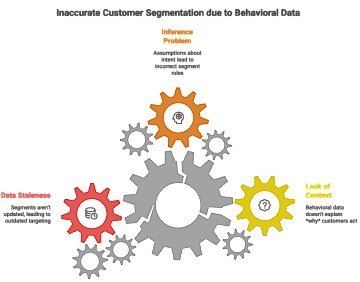
This is the same structural gap covered in our zero-party data segmentation analysis: segmentation logic built on stale or disconnected declared data produces audiences that look precise but behave inconsistently, because the underlying signal was never truly live.
Complexity compounds as channels multiply. A retail brand might collect style preferences on-site, urgency signals over SMS, and service preferences over WhatsApp, each stored in a separate tool with its own definition of “preference.”
The customer experiences one brand; the backend holds three contradictory profiles of them.
Every additional channel added without a shared data layer makes the contradiction worse, not better, which is exactly why channel-by-channel proliferation without orchestration tends to erode the trust these programs are meant to build.
The data and orchestration layer teams usually miss
The layer most teams miss is the one that merges declared preferences with behavioral history into a single, continuously updated profile that an AI agent can query in real time.
Our customer data management approach exists specifically to close this gap, unifying zero-party inputs from forms, quizzes, and preference centers with first-party signals like browsing and purchase history into one addressable record.
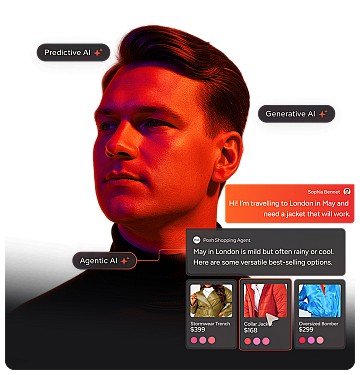
This matters more in 2026 because AI agents, including Agent One™, don’t have the luxury of inferring intent from a lagging behavioral model when a customer is actively interacting with them.
An agent handling a live chat or a next-best-offer decision needs the customer’s stated preference available instantly, not reconciled overnight in a nightly batch job.
Without that real-time write-back, the agent either ignores the stated preference or acts on outdated behavioral data, and both outcomes look the same to the customer: a brand that didn’t listen.
The customer impact is direct and measurable. A subscriber who tells your fintech app she wants savings tips, not investment pitches, and still receives an investment push the next morning has just taught herself that the preference center is decorative.
That’s the trust cost competitor guides describe in the abstract; it’s really a systems problem with a specific, fixable cause.
How to fix zero-party data marketing without adding more channel chaos
The fix is a value-exchange framework applied consistently at the channel level, not a new tool bolted onto an already fragmented stack. Customers share explicit preferences when the exchange is clear and the payoff is immediate, and each channel has a natural exchange it does best.
A channel-by-channel activation model
• On-site quizzes and gamified flows exchange a style, size, or budget preference for a discount or early product access, the same mechanic behind our gamification in marketing approach
• SMS and short message service opt-ins exchange stated restock or urgency preferences for priority alerts, as outlined in how SMS powers zero-party data collection
- App push and in-app preference centers exchange stated content or category interest for a visibly curated feed rather than a generic one
- WhatsApp and conversational channels exchange stated service or product preference for faster, more relevant resolution
- Email preference centers exchange stated frequency and topic choices for fewer, more relevant sends instead of a blanket unsubscribe
Puma turned onsite engagement into a structured preference-capture mechanic and saw a 231% uplift in lead submission rate using gamified, on-site personalization, proof that a well-designed value exchange converts curiosity into usable data rather than abandoned forms.
Tying the fix to measurable outcomes is what separates a preference center from a genuine program. OTTO combined stated and behavioral signals into a single onsite personalization strategy and achieved a 5% lift in average order value, while HP used personalized targeting built on richer customer profiles to boost engagement and sales across its funnel. Neither result came from collecting more data; both came from activating it faster.
What to evaluate before choosing a platform
Evaluate a platform on whether it can merge declared and behavioral data into one profile an agent can act on immediately, not on how many forms it can render. That single capability determines whether zero-party data becomes a live asset or a dead archive.
Beyond that core requirement, weigh these criteria against how the brand plans to scale:
- Real-time activation across every channel the brand actually uses, not just email and on-site
- Native governance and consent handling built into the profile layer, not bolted on as a compliance afterthought
- Agent-ready architecture that supports journey orchestration decisions without manual data hand-offs between teams
- A clear path from stated preference to measurable outcome, tracked through reporting and analytics rather than assumed
As a brand adds channels, sources, and AI-driven decisioning, the platform has to hold one coherent customer view without requiring a data team to reconcile it by hand every quarter.
That’s the scale test competitor comparisons rarely mention, and it’s the one that decides whether the program still works two years from now.
Conclusion
Zero-party data earns its trust when it changes what happens next, not when it fills a database. The brands getting real return have stopped treating declared preferences as a compliance-friendly nice-to-have and started treating them as the input their AI agents need to act correctly.
Build the value exchange, close the activation gap, and the trust follows the outcome.
To evaluate the fit of Insider One for your use case, book a personalized demo to review your goals, data requirements, and implementation constraints with the Insider One team.
FAQs
What is zero-party data marketing?
Zero-party data marketing means collecting information a customer deliberately shares, like stated preferences or intent, and acting on it immediately across channels. It differs from passive data collection because the customer is an active participant, which raises both the accuracy of the signal and the customer’s expectation that you’ll use it right away.
How is zero-party data different from first-party data?
Zero-party data is explicitly declared, like a stated size preference. First-party data is observed, like browsing or purchase history. Neither replaces the other; combined into one profile, they give personalization engines and AI agents both stated intent and behavioral evidence, reducing the guesswork either signal produces alone.
Why does zero-party data matter more with AI agents in the mix?
AI agents making real-time decisions, whether in chat, on-site, or in an app, need explicit context to act correctly instead of inferring intent from lagging behavioral data. Zero-party data gives agents that context instantly, so a stated preference can shape the very next interaction rather than a future campaign.
What are some practical zero-party data collection strategies?
Effective collection strategies pair a clear value exchange with the right channel: gamified on-site quizzes for style or budget preferences, SMS opt-ins for urgency alerts, app preference centers for content interest, and WhatsApp for service preferences. Each exchange should deliver a visible, near-immediate benefit back to the customer.
Can zero-party data actually improve ROI, or does it just build trust?
Both, when activation is fast and consistent. Brands that combine declared and behavioral signals into one profile have shown measurable lifts in average order value and lead conversion, not just qualitative trust gains, because the data directly informs what a customer sees next rather than sitting unused.