Wendy Craig, Regulatory Science Group Leader, mission in China has expanded cooperation in biosafety regulation, capacity building, biodiversity, and governance of emerging biotechnologies.
Dr. Craig engaged with leading Chinese research institutes, regulatory authorities, and scientific organisations across several provinces, promoting international dialogue on the safe and responsible application of biotechnology.
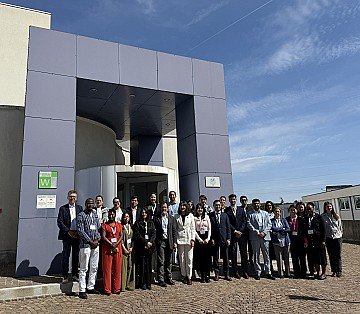
A key event was her participation in the International Academic Exchange Symposium on Sorghum Gene Editing and Biosafety in Hebei Province. The symposium brought together experts from China, Europe, and Australia to discuss biosafety management, gene-edited crops, and advances in crop breeding. Dr. Craig contributed to international cooperation and discussions on sustainable agricultural innovation.
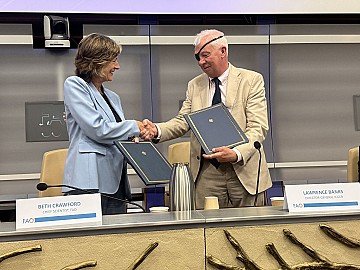
The mission reinforced collaboration with the International Institute of Tropical Breeding (IITB), Chinese Academy of Tropical Agricultural Sciences (CATAS), where discussions focused on establishing a Joint Partnership on Biodiversity and Biosafety and developing new mechanisms for scientific exchange and capacity building under an existing Memorandum of Understanding.
A major area of collaboration centres on Hainan Province, home to China’s rapidly developing “Nanfan Silicon Valley” agricultural innovation hub. Working closely with Chinese counterparts, Dr. Craig contributed to the development of recommendations aimed at aligning local biosafety practices with internationally recognised standards for confined field trials and environmental risk assessment. “Discussions highlighted the importance of strengthening local regulatory capacity and knowledge-sharing to support the safe deployment of innovative breeding technologies”, stated Dr. Craig.
Building on this, Dr. Craig prepared a draft Joint Capacity Building Initiative to provide training opportunities for regulators, researchers, and policymakers, while facilitating the exchange of expertise between China, ICGEB Member States, and all countries across the ASEAN region. Funding opportunities through Chinese government programmes are currently being explored.
Further collaboration emerged during meetings with the Nanjing Institute for Environmental Science (NIES), one of China’s leading centres for biosafety and biodiversity research. NIES expressed strong interest in partnering on regional training activities, including workshops on regulating emerging biotechnologies and environmental risk assessment. These initiatives would support the implementation of the Convention on Biological Diversity and the Kunming-Montreal Global Biodiversity Framework.
The visit concluded at the ICGEB Regional Research Centre in Taizhou, where discussions explored the growing importance of regulatory science in ensuring advances in biotechnology are translated into societal benefits in a safe, ethical, and responsible manner.
The mission underscores ICGEB’s commitment to fostering international partnerships that strengthen biosafety governance, support innovation, and build scientific capacity.