A circular farming demonstration and FAO recognition explained by Dr. Fernando Cantao
A circular farming demonstration and FAO recognition for enset researcher Dr Addisu Fekadu Andeta highlight how biotechnology can support food security and rural livelihoods.
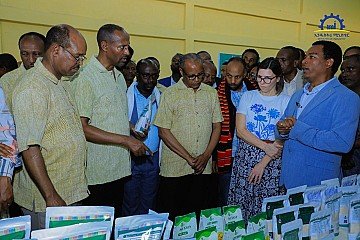
What if agricultural waste could become a resource for producing more food at lower cost? ICGEB explored this question at the FAO Science & Innovation Forum 2026 in Rome on 12 October, presenting a scale model of an integrated, sustainable farm.
Developed in collaboration with BETin, Arba Minch University and Lucy Enset through the B-INOC Africa initiative, the model demonstrated how biotechnology and nature-based solutions can connect different farming activities, turning residues from one process into useful inputs for another.
Black soldier fly larvae transform agricultural residues into protein-rich animal feed. Azolla, a fast-growing aquatic fern, supplies additional feed and natural fertiliser. Nutrients returned to the soil support crops including enset, coffee, beans and vegetables.
For smallholder farmers, these connections offer opportunities to reduce reliance on purchased feed and fertiliser, minimise agricultural waste and improve soil health. The model illustrates how locally available biological resources could help farmers produce more food from the same land and build more resilient livelihoods.
The demonstration reflected the themes of FAO’s From Seeds to Foods exhibition, held at Rome’s Circo Massimo from 8 to 12 October. By tracing the links between production, processing, markets and consumption, the exhibition showed how innovation and knowledge shape the food that reaches our communities.
FAO recognition for innovation in enset processing
On 16 October, Dr Addisu Fekadu Andeta of Arba Minch University received the 2026 FAO Award for Achievement, presented by FAO Director-General QU Dongyu in Rome. The award recognises his innovations transforming the processing of enset, a staple for more than 20 million Ethiopians. His work has shortened fermentation, reduced labour and food losses, and created opportunities for farmers, particularly women. FAO’s award announcement
Supported through an ICGEB Collaborative Research Programme grant, Addisu’s research helped introduce improved fermentation techniques and processing equipment. The women-led enterprise Lucy Enset translates these advances into enset flour and baked products, connecting research with local food production and entrepreneurship. Read the ICGEB story
Together, the circular farming demonstration and Addisu’s recognition show how research partnerships can address practical challenges across agrifood systems: making better use of resources, improving food processing and creating economic opportunities for rural communities.