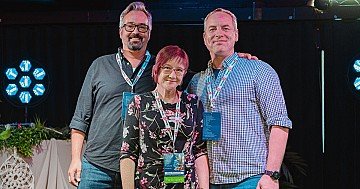
The international hackathon Hack the Future, a joint initiative by Valencia and Estonia, took place in Tallinn on 20 and 21 May, establishing itself as a key event in urban innovation and climate resilience. The hackathon was held as an official side event of Latitude59, Northern Europe’s premier startup and technology conference.
This initiative is co-organised by e-Residency, the Government of Estonia’s programme for global entrepreneurs, and Startup Valencia, the organisation connecting startups and scaleups from Valencia to the world. It is supported by the City Councils of Tallinn and Valencia, Valencia Innovation Capital, and Garage48.
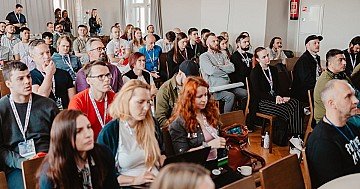
Hack the Future 2025 had 100+ carefully selected participants who formed 14 teams. The hackathon brought together participants worldwide, with exceptional representation from Estonia and Spain. The common goal: designing disruptive technological solutions focused on tackling climate change and managing natural disasters—solutions that are viable and scalable within the urban context of Valencia and with potential for application in other cities worldwide.
The Sol Navitas project has won first prize at Hack the Future. The second prize went to Remote Resilience Hub, and Narracity received the third award. The prize for the three winning projects is a total fund of €50,000 to turn the ideas into real pilots between June and October 2025. The awards are distributed as follows: a first prize of €20,000, and two second prizes of €15,000.
The three winning projects stood out for their innovative and scalable approaches to climate resilience and urban sustainability.
– Sol Navitas, a project by Estonians Elis Tootsman, Ingrid Kullerkupp, Margus Kullerkupp, and Veiko Parts presented SolarDry: a smart, solar-powered ventilation system that combats hidden moisture and mold in buildings, especially in humid climates like Valencia. Using Solar Air Heating and real-time humidity sensors, SolarDry keeps walls and spaces dry: naturally, sustainably, and without electricity.
– Remote Resilience Hub is a joint initiative by Britons Jim Christian and James Leonard, and Estonian e-resident Maya Middlemiss, originally from the UK and based in Valencia for the past 15 years. To provide Valencia with a smarter remote work infrastructure, this team proposed a AI-driven platform that helps cities adapt by providing real-time data, policy insights, and resource planning. With input from workers and decision-makers, they aim to build a more resilient, flexible, and future-ready workforce.
– Narracity is an interactive urban exploration app that allows visitors to discover hidden cultural and historical gems through community-generated routes and stories, offering a more authentic and personalised travel experience. It is a project by the Estonian team of Paul Silm, Hando-Laur Habicht, Martin McLean, and Aleksander Traks.
A key element of the hackathon’s success was the involvement of a distinguished group of top-level international mentors from Startup Valencia, Valencia Innovation Capital, the Strategic Management Office of the City of Tallinn, and the Estonian unicorn Bolt, among others. The mentors and special guests shared with the participants their advice and strategic vision in areas such as the real challenges of climate change-related disasters, technical architecture, product design, UX, the creation of sustainable business models, market strategies, customer validation, and international scalability.
Next stop: Valencia
The winning projects Sol Navitas, Remote Resilience Hub, and Narracity will have the opportunity to implement their solutions in Valencia’s urban sandbox between June and October 2025, with the support of local institutions and the city’s entrepreneurial ecosystem. This test period will allow for assessing the feasibility and effectiveness of the solutions in a real environment, with the possibility of scaling the applications globally.
Additionally, the winner will be able to present their project at the eighth edition of VDS, one of Europe’s most influential tech events, on 22 and 23 October. This annual international meeting, already a strategic meeting point where the world’s most disruptive startups connect with investors and corporations, will offer the winners an exceptional platform to showcase their innovative solution before a global audience of over 12,000 professionals from 120 countries.
Valencia and Estonia: a long-term collaboration
Hack the Future is part of the collaboration agreement signed in mid-2024 between Startup Valencia and e-Residency, which aims to promote global entrepreneurship and encourage cross-border innovation.
The international hackathon was born as a response to the devastating effects of the floods in Valencia and its surroundings in October 2024. The floods left over 200 victims and forced nearly a million people to leave their homes. The catastrophe highlighted the urgent need for technological solutions to strengthen urban infrastructures and prepare for extreme weather events like DANAs.
This initiative is part of the Intercity Sandbox Programme, included in the strategic agreement signed by the Deputy Mayor of Tallinn, Margot Roose, and Paula Llobet, Councillor for Tourism, Innovation and Investment Attraction at the City Council of Valencia. The agreement establishes an annual cross-testing programme for innovative urban solutions, with access to public resources, institutional backing, and technical support from both cities.
“This hackathon not only enhances young European talent, but also positions Valencia as the epicentre of technological innovation, collaboration and urban sustainability in Europe. Our city has established itself as a reference tech hub, and this type of connection with other European cities reinforces this positioning,” said Nacho Mas, CEO of Startup Valencia and VDS.
Paula Llobet, Councillor for Tourism, Innovation, and Investment Attraction at the Valencia City Council, stated that “Hack the Future is not just a hackathon; it’s a statement of intent. Cities need to collaborate, share knowledge, and attract talent to tackle major global challenges. Valencia aims to lead that transformation with a strong commitment to open innovation, sustainability, and international connectivity.” She also highlighted the role of Valencia Innovation Capital “as the driving force behind this strategy. Thanks to our alliance with Tallinn and the involvement of private stakeholders, we have succeeded in placing our city on the European map of urban innovation. These kinds of collaborations not only inspire solutions, they also generate jobs, investment, and new opportunities for our entrepreneurial ecosystem.”
According to Margot Roose, Deputy Mayor of Tallinn, “Hack the Future showcases Tallinn’s commitment to innovation and sustainability by bringing together talented international teams to generate practical solutions to climate change and disaster preparedness. The winning projects will benefit Valencia and serve as models of urban resilience globally. Tallinn is proud to be part of this initiative, demonstrating that we can increase cities’ resilience through collaboration.”
Liina Vahtras, Managing Director of e-Residency, states: “Hack the Future demonstrates what can be achieved when borders are removed and diverse communities come together to solve common challenges. Estonia may be small in size, but it is a digital powerhouse – strengthened by 125,000 e-residents from 185 nationalities – and is proud to collaborate with a vibrant and forward-looking city like Valencia to show that global and open cooperation is the path towards true innovation.”