Rainbow Map highlights how rollbacks on LGBTI human rights are part of a broader erosion of democratic protections
Hungary has dropped seven places to 37th on ILGA-Europe’s Rainbow Map with the first Pride ban in the European Union, closely followed by the United Kingdom dropping six places to 22nd after a Supreme Court ruling in its wording defined a woman strictly by ”biological sex” (see reasoning here). Georgia has also dropped seven places following a sweeping anti-LGBTI law package that mirrors the Russian anti-democratic playbook.
With LGBTI people being targeted and made vulnerable to attack, too few countries are adopting laws that advance LGBTI rights. Even in countries where progress has been made, the influence of the far right continues to grow.
Explore this year’s Rainbow Map.
“The big headlines about the UK and Hungary draw attention, but democracy is being eroded quietly across Europe, like a thousand paper cuts. Centre and far-right actors in the EU are targeting NGO funding to weaken organisations that defend rights, while at the national level we are seeing laws introduced that do not address any genuine societal need but are designed purely to marginalise. Hungary’s constitutional amendment stating that ‘the mother is a woman and the father is a man’ and that ‘gender is defined by birth’ is a clear example.”
Katrin Hugendubel, ILGA-Europe’s Advocacy Director
What this means for the future of Europe
In the new episode of The Frontline podcast, with expert insights from ILGA-Europe’s advocacy leads, Katrin Hugendubel, Belinda Dear, and Cianán Russell, we explore the most significant collective decline in the Rainbow Map’s history.
ILGA-Europe news
Bringing to light research on LGBTI homelessness in Europe
Join our online event on 4 June to hear from LGBTI organisations across Europe about their research projects on LGBTI homelessness.
What the infringement case against Hungary mean for LGBTI equality
Join our session on 12 June to discuss the CJEU Advocate General’s Opinion to be rendered on 5 June. This Opinion will be a crucial step in this infringement case initiated by the European Commission over anti-LGBTI legislation Act introduced by Hungary.
We’re looking for a consultant to create a database of case-law
ILGA-Europe is seeking a consultant to build an online database of SOGIESC case law at ECtHR and CJEU. Help advance LGBTI rights by making key cases accessible for legal and civil society actors.
Tickets are on sale for the Equality Fundraiser 2025
Join us on 26 June in Brussels and show your support for vital work for LGBTI equality!
Latest news
FAMILY
Italy constitutional court affirms parental rights of same-sex mothers
The Italian Constitutional Court’s made a ruling affirming the right of children born through medically assisted reproduction abroad to have both mothers legally recognised. From now on, same-sex female couples in Italy can both be legally recognised as mothers of their child.
FREEDOM FROM TORTURE
New UN findings of torture against LGBTI people
The United Nations Committee against Torture (CAT) issued its findings on Armenia, France, Monaco, Turkmenistan and Ukraine. The Committee was particularly disturbed by the targeted abuse of individuals perceived to be homosexual in Turkmenistan, highlighting the discriminatory and systemic nature of such treatment.
LEGAL GENDER RECOGNITION
CJEU to rule on landmark case regarding ban on legal gender recognition in Bulgaria
The European Court of Justice has held a pivotal hearing in the Shipov case, challenging Bulgaria’s de facto ban on legal gender recognition and whether it violates fundamental EU rights.
PRIDE
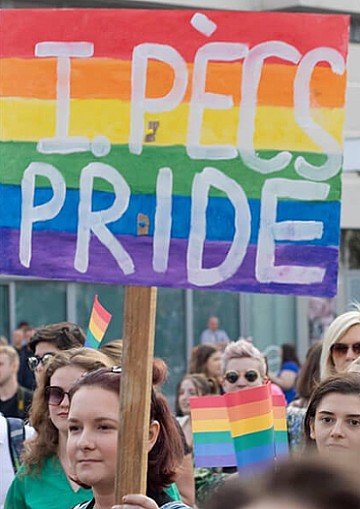
“More than ever, Prides are important. With all the anti-trans, anti-LGBTI, anti-women attacks we’re facing, Prides are spaces of revolutionary anger. They are not just celebrations; they’re spaces where we bring forward the struggles that are furthest from centres of power.”
Gilliane, Pride des Banlieues
Banning Pride is a fundamental threat to democracy: Why the EU cannot look away from Hungary
As Hungary becomes the first EU country to ban and criminalise a Pride march, the European Commission’s failure to respond signals a deeper crisis for democracy and human rights across the Union.
Pride as a force of collective power
Born from the fight against police violence and rooted in the struggles of marginalised communities, Pride des Banlieues is reclaiming Pride as a space of radical resistance, collective care, and strength in solidarity.
New resource for Pride organisers
We recently worked with Aleanca LGBT in Tirana and Pride des Banlieues in the suburbs of Paris, two organisations navigating different landscapes but facing similar challenges, to create a learning resource for Pride organisers. It offers practical lessons from both organisation’s experiences: how to centre underrepresented voices, organise sustainable campaigns, build allyship and strengthen movements year-round.
Resources for activists
LGBTQI Inclusive Education Index
IGLYO released the Third Edition of their LGBTQI Inclusive Education Index, Map & Report, which scores 49 European countries based on how inclusive their education systems are for LGBTQI learners and students.
Trans Rights Index and Map
TGEU published their 2025 edition of the Trans Rights Index and Map that documents the legal situation of trans people in Europe and Central Asia.
Good Practices Map on intersex human rights
OII Europe launched their new version of the Good Practices Map that highlights some key advancements achieved in 2024 towards the better protection of intersex human rights across Europe.
Notice board
- The Digital Freedom Fund is opening a new cycle of grant applications for strategic litigation projects that contribute to advancing human rights in the digital context and the use of technology. Read more and apply from 2 June.
- ENAR is seeking 14 national researchers in Austria, Finland, Germany, Ireland, Poland, Spain, Sweden, France, Denmark, Italy, Greece, Slovenia, Croatia, and Portugal to contribute to the 2025 edition of their Anti-Racism Map. Apply by 1 June.
- On 9 and 10 June, the scholars at the Dublin City University are organising the Intersex Insights, an event dedicated to advancing interdisciplinary conversations on intersex studies and the social, cultural, medical and ethical approaches to Variations of Sex Characteristics (VSC). Register now for your online participation.