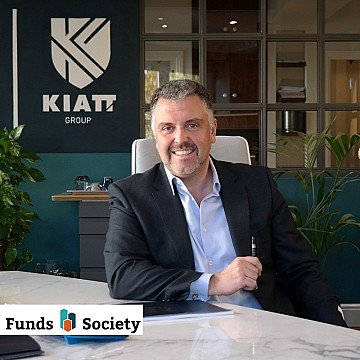
By Manuel Fuertes, CEO of Kiatt
Throughout history, knowledge, science and technology have transformed our understanding of the world. From the accidental discovery of fire to the steam engine, the internet or the invention of synthetic cardiac tissue, science has been the driving force behind the major advances that define our civilisation and vastly improve our quality of life.
The future is undoubtedly linked to this triumvirate, but there will be no such tomorrow without the transformative power of capital —public or private— that creates new innovation ecosystems, boosts research, and accelerates technology transfer. This was the central theme of the Science Summit, recently held in Seville as part of the 4th United Nations International Conference on Financing for Development.
The main objective of the summit was to close the gap between science and development finance, ensuring that cutting-edge scientific knowledge guides the development and implementation of sustainable and inclusive global policies. Notably, all participants agreed that science and technology are the key to tackling complex global challenges.
From my experience transforming scientific research into socially impactful and profitable ventures, I believe we need deep reflection and debate on how to channel capital and redefine new models of action —especially in developing countries.
If we look at the public sector, we need policies and financial mechanisms that help drive technology transfer ecosystems. It’s not just about creating better tax incentives —although those are important— but about building long-term trust-based partnerships between governments, private investors and scientists. Capital is important, of course, but so is the ecosystem that enables its flow and diffusion.
Take Chile, for example: a tax incentive law allows companies to deduct up to 52% of R&D expenditure. In just five years, this law certified more than 1,200 research projects with a strong focus on technology transfer. Closer to home, Spain also promotes research through measures like social security discounts for researchers.
Other useful tools include fast-tracks —seen in Canada and Singapore— for emerging technologies, which speed up the validation or approval of projects, saving both time and costs. There are also non-repayable co-financing programmes for high-tech initiatives and public procurement of innovation, where the state acts as a client for high-risk technological developments.
China also offers a telling example. The country has introduced strong incentives for talented professionals who studied or launched careers abroad to return home and contribute to the Asian economy with their knowledge.
Public and Private Investment: Key to Avoiding the “Valley of Death”
Though it may sound like a Western movie, the “Valley of Death” refers to the gap between a promising scientific idea and its practical application. At this stage, hybrid and private financing instruments —like angel investors or public seed capital funds— become crucial. One example is The Engine, a fund promoted by MIT that supports technologies typically excluded from conventional venture capital. Europe also offers promising programmes like EIC Accelerator, which combines grants and equity to support science-based startups.
Some initiatives also aim to foster collaboration between universities and businesses, promoting the transfer of knowledge. The Canary Islands’ Free Trade Zone is one such case, designed to boost investment, trade and economic activity —with universities playing a major role.
Private Investment, Yes —But with Values and Respect for Cultures
If we want to unlock private investment in the scientific ecosystems of the Global South, we need to bring capital closer to science and align both with society’s real needs —without threatening local cultures and values.
Southeast Asia, Africa and Latin America have the potential to lead the way by developing new, more agile and inclusive forms of science-finance collaboration that are deeply rooted in local values. Emerging markets often have the energy, talent and flexibility to experiment with models that more established economies tend to resist.
It will be essential for governments in developed countries to understand that the growth of other economies is not a threat, but an opportunity. Agreements with tax authorities in developed nations are needed so that incentives offered by developing countries are not seen as threats. In my experience, this perception has often been a key barrier for investors like us when trying to benefit from fiscal advantages in countries where we don’t have a legal base.
And a crucial point for private investors —one I would like to especially highlight— is the long-term impact analysis of deploying certain technologies in populations that may not be ready to adopt them at the same speed as the countries where those technologies originated. We must help these societies write their future in line with their own values. It’s not just about funding projects, but about investing with awareness and responsibility.
If we achieve this, science, technology and finance can come together to build a more resilient, dignified and sustainable future. True progress is not measured by breakthroughs alone, but by how those breakthroughs align with the values that define us as a society.