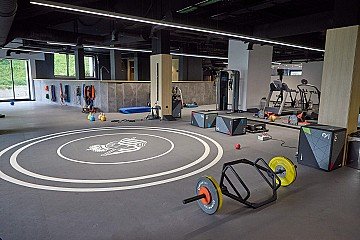
The Power of colour: How customisation is shaping the future of fitness spaces
In a sector where experience is everything, fitness brands are redefining how their spaces look and feel. A new era of gym design is here — one where colour, texture and personalisation are at the heart of how we train, move and connect.
To understand this evolution and how Pavigym is helping operators adapt, we sat down with our in-house team of architects, the creative minds who guide our clients through the journey of turning their gym concept into a compelling, on-brand, high-performance environment.
This article explores the latest trends in gym design for 2025 and beyond, focusing on the growing importance of colour psychology, branded interiors, and how Pavigym’s new colour range is leading the change.
Customisation and Identity: The New Standard
Forget cookie-cutter layouts and standard flooring. Today’s fitness spaces are all about brand differentiation. Whether it’s a boutique yoga studio or a national gym chain, owners now seek to reflect their unique identity and values through every detail — especially the floor.
“We’re seeing a clear shift towards more personalised spaces,” our architects explained. “Clients want environments that align visually with their brand. The goal isn’t just functional — it’s emotional and experiential.”
This aligns with the rise of experiential fitness, where the workout is only part of the value proposition. The look, the feel, the mood — it all matters. Colour, therefore, has become a strategic design tool.
The Psychology of Colour in Fitness Environments
It’s no secret that colour affects mood and behaviour. But in fitness design, this goes further — colours define zones, influence performance, and communicate brand values.
“Colour has a direct emotional and functional impact,” the team told us. “Warm or vibrant tones energise users — ideal for high-intensity areas. Cooler or neutral tones promote calm, perfect for stretching or meditation.”
But there’s also a practical side. Colour is crucial for spatial zoning. Operators can use it to intuitively guide users through the space — from reception to free weights to recovery — without the need for physical barriers.
Explore our custom flooring solutions to see how colour enhances both form and function.
What’s Trending in Gym Colour Palettes?
The clean, minimalist tones of the 2010s are giving way to earthy, natural, and textural hues in 2025.
“We’re seeing a move towards sophisticated neutrals, mineral shades and stone-like textures,” explained the design team. “These tones feel timeless, elegant, and more connected to nature — which aligns with sustainability trends too.”
Pavigym’s new veined colour finishes draw inspiration from materials like stone, marble and wood — bringing visual depth, warmth, and sophistication to gym floors. And there’s a bonus: these textures help mask wear and dirt, enhancing day-to-day maintenance and durability.
Zone-Specific Colour Strategies
Designing a fitness space is never one-size-fits-all. Each zone — from high-impact areas to peaceful retreats — demands its own energy, and colour plays a defining role:
- Strength areas: Intense or dark shades like charcoal or black convey power and focus. They also hide scuffs from weights and equipment.
- Cardio zones: Bright, dynamic colours (red, orange, electric blue) stimulate energy and movement.
- Functional training areas: Mid-tones or contrasting pops of colour help mark circuits, lanes or stations.
- Relaxation/stretch zones: Soft, natural colours (sage, beige, muted blues) create a sense of calm and reset.
“Colour is a zoning tool,” said our architects. “It helps organise the space without walls. This creates flow, logic and identity across the gym floor.”
A Shift Towards Sustainable and Conscious Design
As sustainability becomes a core value in the industry, it’s not only materials that matter — aesthetics and colour are evolving to reflect more natural, grounded choices.
“Operators now seek not only performance and durability, but also eco-consciousness and emotional connection,” our team explained. “Earth tones, organic greens, and stone-like textures align perfectly with this shift.”
Pavigym’s product development reflects this approach. Our sustainable flooring solutions combine technical excellence with timeless design — reducing environmental impact without compromising on quality or appearance.
A 2025 study by HFA reported that over 70% of gym-goers consider sustainability an important factor in choosing a fitness facility — reinforcing the need for both substance and style in modern gym design.
Why Personalisation Is No Longer Optional
In a saturated fitness market, brand experience is everything — and colour is one of the most powerful branding tools.
“More and more, clients request bespoke colours and finishes,” said the Pavigym design team. “It’s not just about having a logo on the wall — the entire space, including the floor, must reflect the brand’s DNA.”
Our team collaborates closely with gym owners, designers and architects to create fully personalised solutions. Whether it’s a subtle twist on a neutral base or a bold custom hue, our flooring becomes a canvas for the brand story.
Take Iron & Soul in Germany — a recent client who chose Pavigym specifically for our colour variety. “They couldn’t find this level of choice elsewhere,” explained our team. “The outcome was a gym that truly stood out — not just visually, but in brand impact.”
The New Colour Range by Pavigym: Designed for Today’s Fitness Industry
In response to these insights, Pavigym has launched a brand-new range of colours and textures, tailored to the needs of today’s operators.
These veined finishes:
- Reflect the natural, elegant aesthetics dominating interior design
- Offer functional benefits like better stain concealment and wear resistance
- Help clients create immersive, on-brand environments that resonate with users
“This collection is a direct response to what the market is asking for: design, durability and personality,” the team concluded.
Final Thoughts: Design with Purpose
Designing a gym today goes beyond layout and equipment. It’s about crafting an experience — and colour is central to that vision.
If you’re planning to refresh your space, our architects recommend thinking holistically:
“Combine functionality with aesthetics. Listen to your users. Choose colours and materials that tell your story, reinforce your brand, and deliver long-term value.”