Ever tried ordering pizza for a group of friends where everyone wants something different?
One wants more cheese, another wants vegan-friendly, and someone else is all about the meat. Suddenly, what seemed simple turns into a juggling act of trying to please everyone.
If you’re an email marketer, you’ve quite likely experienced this while personalizing content for every subscriber.
If you’re not personalizing your emails in 2025, you’re technically invisible to them. Because consumers expect relevance, and relevance demands data.
That’s where segmentation becomes your secret weapon, as brands that segment score 14.31% more open rates and 101% more click-through rates compared to non-segmented ones.
In this guide, we’ll walk you through advanced audience segmentation examples and best practices to integrate into your email marketing strategy.
Before we dive into tactics, let’s talk about the key filters to help you identify engaged audiences to maximize the benefits of advanced segmentation.
The groundwork for effective email list segmentation
Refine your email list to help you gain a clearer understanding of your truly engaged audience. But how should you define “engaged?”
A good rule of thumb is to create your segment based on the criteria “has clicked at least one text” within two to four weeks. But to nail this down, apply conditions to both qualify and disqualify a subscriber as an email engager. This process will help you tap into the potential of an active, engaged audience.
Here are some ideas to get you started:
- Conditions that qualify a subscriber as an engaged audience:
- Consistently opens and interacts with your emails
- Occasionally replies to emails or shows direct interest in your content
- Request more information, respond to offers, and click through your links
These behaviors show that the subscriber is not just passively receiving your emails but is invested in what you’re offering.
- Conditions that don’t qualify a subscriber as an engaged audience:
- Simply subscribing to your email list doesn’t guarantee interest in your emails
- Double-opt-in does not automatically mean they’re engaging with your emails
- A one-time purchase doesn’t translate to email engagement, even with deals
- Just visiting your site or social media doesn’t make someone an email engager, even if they’re subscribed
These signals indicate you’ve passive subscribers, not an engaged audience. So be intentional when segmenting this particular group of subscribers.
7 advanced email segmentation strategies
There are many different ways you can segment your email audience to reach and engage different groups of subscribers. Among them, 1) Demographic, 2) Geographic, and 3) Psychographic are the most common ones.
For this guide, we’ve interviewed highly experienced email marketers across industries who’ve shared practical insights and advanced segmentation strategies you can adopt today. Let’s get into it.
1. Segmentation based on purchase history
Segmenting customers by purchase history allows you to deliver highly personalized campaigns tailored to their preferences and buying behavior. Think of it as having a personal shopper who knows exactly what products your customers are likely to love. Whether it’s recommending related items, offering upsells, OR sending timely reminders to repurchase.
Understanding what customers have bought in the past enables you to create campaigns that speak directly to their interests. This level of personalization not only builds trust but also encourages repeat purchases, driving long-term customer loyalty.
Briana Torres, Senior Email Marketing Strategist at Injectco, finds that behavior-based segmentation is one of her most effective strategies. She segments by course interest, page view recency, and whether subscribers engage with medical training content or treatment-related material.
Subscribers who are heavy clickers receive more frequent emails, while those with lower engagement are placed in a slower nurture track. This approach ensures the sender’s reputation remains strong and helps maintain balanced open rates across lists.
“Segmentation alone boosted our average open rate by 12% year-over-year,” Briana shares.
Example:
Lululemon Athletica’s Father’s Day email is a great example of segmentation based on purchase history. It features grooming kits likely tailored to what the customer bought before, making the message feel timely and personal. Bold visuals, a clear “Shop Now” CTA, and shipping reminders help drive quick repeat purchases. This kind of personalization builds trust and boosts loyalty.
2. Customer life cycle stage
Whether you’re engaging new leads, nurturing paying customers, or re-engaging lapsed users, lifecycle stage segmentation is key to delivering relevant content.
New leads require introductory, educational content to build trust, while repeat customers are more likely to engage with advanced features or exclusive offers. This ensures that users receive content tailored to their specific needs. This also prevents overwhelm and guides them smoothly through the sales funnel.
Adrian Nikolov from MobiSystems, Inc. says, “Tailored messaging makes a big difference, especially when aligned with user lifecycle stages. This segmentation approach boosts our open rates by at least 20% compared to batch-and-blast campaigns.”
Deepak Shukla adds, “We segment our audience based on lifecycle stages (new leads, engaged clients, and repeat customers), interactions (such as email opens or link clicks), and, most importantly, intent.
For example, someone who downloaded an SEO guide receives a different email than someone who signed up for a webinar on conversion optimization. This intent-based strategy has increased our open rates by 20-25%, as the content resonates more with what the audience is interested in.”
Example:
Prada’s Timecapsule Drop email is a sharp example of lifecycle stage segmentation aimed at loyal or repeat customers. The exclusive, limited-edition drop feels tailored to subscribers already familiar with the brand’s value.
3. Engagement history and pattern
To personalize your marketing campaigns, it’s crucial to understand how users interact with your content, dividing users based on engagement patterns, like frequent openers or clickers. This lets you send relevant content tailored to each user’s behavior. The goal? Keep your most engaged users coming back and re-engage inactive ones.
Ethan Dempsey, the founder of D2C agency Homestead Studio, highlighted how he uses this segmentation strategy for his clients – “We split multiple segments by how often someone has placed an order – zero, one, or multiple times. This helps us scale engagement differently depending on the user’s activity.”
4. Abandoned cart value
Cart abandonment is a chronic issue in ecommerce, but it’s not insurmountable.
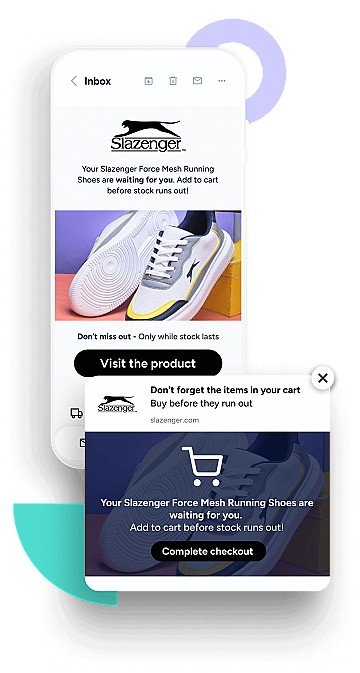
By targeting abandoned carts with segmented campaigns, you can recover revenue and drive customer loyalty. Cart abandonment emails are effective because they tap into urgency and the psychological concept of loss aversion. And people dislike losing what they’ve already committed to purchasing.
For low-value carts, a gentle reminder with a strong call to action can work wonders. While high-value carts benefit from the added incentive of a discount or special offer, which makes the purchase feel even more rewarding.
To maximize the effectiveness of abandoned cart recovery, segment your strategy based on key variables:
- Time since abandonment: Timing is everything. Send an immediate reminder for fresh abandonments, then follow up at intervals (e.g., 24 hours, 72 hours) to keep the purchase top-of-mind without overwhelming your customer.
- Cart value: Customize your offer. For lower-value carts, a reminder message with a clear call to action might suffice. But for higher-value carts, offering a discount or free shipping can help tip the scale in your favor.
- Product category: Tailor your messaging. Highlight specific benefits or solve problems associated with the abandoned products. For instance, if a customer abandoned a high-end pair of shoes, remind them of their durability or style.
- Abandonment frequency: Create separate flows for one-time abandoners and repeat offenders. Frequent abandoners may need more compelling incentives. In contrast, one-time abandoners might respond better to subtle reminders.
- Device used: Optimize your emails for the device where the abandonment occurred. If a shopper left items in their cart on mobile, ensure your email is mobile-friendly. Additionally, include a one-click return to the cart.
Example:
Whisky Loot’s cart abandonment email is a clever example of cart recovery done right. With a playful subject line, “Your cart is sobering up”, it gently nudges recent abandoners to return. The tone is casual, the imagery bold, and the CTA, “Take Me Back”, is clear and inviting. This kind of targeted follow-up taps into urgency and loss aversion, commonly through abandoned carts.
5. Gifting history
Analyzing customers’ gifting habits can unlock new opportunities for personalized marketing. “Gift explorers” and “bulk gift planners” each have distinct motivations. Understanding these differences enables your business to deliver messages that resonate on a deeper level.
Gift Explorers are casual buyers who enjoy finding unique or personalized gifts, often making purchases for special occasions or last-minute needs.
Bulk Gift Planners are strategic buyers who frequently purchase gifts in larger quantities, typically for corporate events, recurring celebrations, or holidays.
Segmenting these two groups allows you to tailor your messaging, offers, and timing to meet their specific needs.
Gift explorers respond well to inspiration, urgency, and discovery. While bulk planners value efficiency, bulk discounts, and early access. This approach engages customers more effectively, eliminates irrelevant messaging, and drives higher conversion rates.
Example:
Misc. Goods Co’s re-engagement email, “Still need a gift? We got you?”, is a strong example of targeting “gift explorers”. The message acknowledges hesitation without pressure, offering last-minute gift solutions that still feel thoughtful. Clear CTAs and flexible delivery options meet the needs of spontaneous customers, whether “gift explorers” or “bulk gift planners”, turning potential drop-offs into conversions.
6. Separate the savvy savers from the luxury splurgers
Segmenting based on spending habits allows for more relevant messaging that resonates with each customer group. Budget-friendly shoppers and luxury buyers have different preferences, so crafting tailored messages for each segment can drive greater engagement and conversions.
By focusing on each group’s specific needs and budget, you can increase the relevance of your offers and promotions.
This further makes sure that each segment receives content that aligns with their preferences. The targeted approach, ultimately, boosts customer satisfaction and maximizes the effectiveness of your campaigns.
7. Loyalty program status
Loyalty programs leverage transactional data to foster repeat purchases and increase customer lifetime value. Analyzing past behaviors, i.e., what, when, and how often customers buy. This reveals invaluable insights into their preferences.
These insights allow you to deliver highly personalized offers that resonate with individual buying patterns. Moving away from generic promotions, this segmentation enables businesses to create customized experiences. The experiences align with each customer’s personalized needs and motivations. Thus, customer engagement and retention are higher than before.
Example:
Fleet Feet’s loyalty program launch email, “Our New Loyalty Program Launches Soon”, uses past purchase behavior to tease personalized perks that feel truly earned. The message highlights upcoming tailored rewards, making frequent customers feel seen and valued. It’s a strong example of turning transactional data into a personalized retention strategy.
6 email segmentation best practices to implement
Here are some not-so-common segmentation best practices you can use to engage different groups of subscribers.
1. Suppression lists to improve deliverability
Effective suppression list management ensures your messages land in inboxes, not spam folders. Most email platforms will automate this process. But it’s crucial to have clear guidelines for manual updates.
So, prioritize clean and engaged lists to protect your sender reputation. Regularly update suppression lists to remove unsubscribes, spam complaints, and hard/soft bounces. This is essential for maintaining high deliverability. Your emails also reach only those who are engaged and want to hear from you. Follow these three easy steps for higher deliverability:
- Exclude dead subscribers to safeguard reputation. Don’t waste resources or damage your reputation by sending emails to users who haven’t interacted in a defined period (e.g., 60-120 days). By filtering out inactive subscribers, you enhance deliverability and safeguard your sender reputation.
- Keep your segments clean. Not everyone who unsubscribes from one communication type wants to stop hearing from you altogether. Use topic-specific suppression lists to allow users to opt out of specific content without affecting their overall subscription. That is, you don’t unintentionally exclude valuable customers from future engagement.
- Suppress segments’ temporality for campaign efficiency. Advanced marketers often use temporary suppression segments to avoid over-mailing the same contacts across multiple campaigns. This keeps lists fresh, reducing fatigue, and boosting