Estimated reading time: 8 minutes
Grid and metering infrastructures are a priority for forward-looking utility companies. The framework includes an integrated system of highly connected:
- Grid components
- Smart meters
- Communication networks
- Data management platforms
Utilities that utilize this smart architecture can:
- Reduce power outages and electrical spikes
- Help consumers lower their monthly energy bills
- Give access to gas, electric and water readouts through remote mobile devices
Across Europe and the U.S., smart grids and a vast sensor network pave the way for a cost-effective, eco-friendly future.
It’s often believed that smart utilities are a low-data-rate and latency-tolerant space. However, 5G uses operation models to advance smart grids for:
- Teleprotection
- Real-time energy spike control
- Load balancing
- Fast energy rerouting
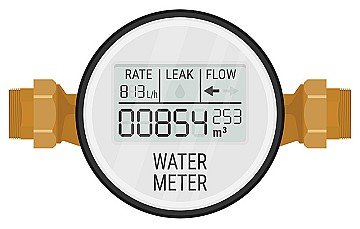
The smart metering dimension of smart utilities features cross-network connection capability for 4G LTE and unlicensed spectrum networks. Currently, the go-to technology for smart meters is cellular low-power wide-area network (LPWA).
The 3rd Generation Partnership Project (3GPP) defined these technologies — LTE-M and narrowband IoT (NB-IoT) — as part of the 4G LTE standard. However, they have merged under the 5G umbrella to evolve into a more effective spectrum. They will power users in 5G New Radio (NR) beyond 3GPP Release (Rel) 16.
A future smart grid framework equipped with 5G-enabled IoT solutions will transform smart utilities worldwide. 5G-Advanced (3GPP Rel 18) brings more intelligence and energy efficiency to the network. 5G Advanced allows utilities to meet sustainability goals, including CO2 reduction and water use.
Build Your Smart Energy Solution
Table of Contents
- How Do Smart Grids and Smart Metering Work?
- Capabilities of Smart Utilities
- How Will 5G Change Smart Energy Solutions?
- 5G Applications and Opportunities for Smart Utilities and Consumers
- How Artificial Intelligence and 5G Will Enhance Smart Power Grids
- 5G-Advanced: The Future of 5G
- The Future of Smart Utilities with 5G Energy Solutions
- Key Takeaways
How Do Smart Grids and Smart Metering Work?
Smart grids are an evolution of the traditional power grid. They cover a variety of operational and energy measures, including:
- Smart appliances
- Renewable energy resources
- Energy efficiency resources
- Smart meters
Smart metering enables devices to connect to smart utilities. Power companies and first responders gain real-time wireless control with a 5G-enabled grid network. This control is achieved by analyzing data lakes populated by an infrastructure of meters and sensors that monitor consumption and variables (e.g., water and power quality).
These meters and sensors send readouts to data lakes operated by utility companies. The data is analyzed and expressed in alerts and diagnostics to help users understand their consumption patterns and behaviors. The era of utility companies dispatching technicians to read meters on private properties is over.
Instant access to usage data via an app helps households better understand their consumption habits and save money through more accurate billing.
Another industrial application of smart utilities involves using sensors to regulate pipelines and equipment in the oil industry. These smart devices detect gas leaks and toxins in mining operations, as well as in other applications where safety is crucial.
Capabilities of Smart Utilities
Solution providers and utilities utilize smart sensors and other emerging technologies to develop IoT innovations, like:
- Automatic and instant measuring of electricity usage
- Connecting or disconnecting service
- Detection of energy theft or water and gas leaks
- Identifying and isolating outages
- Enabling time-based rate programs and incentives from power companies
The quicker the communication between device and server, the faster the action.
How Will 5G Change Smart Energy Solutions?
Many infrastructures are upgrading to 4G LTE solutions. As more devices stretch bandwidth to peak capacity, what advantages will 5G offer over 4G networks?
As 5G rolls out more IoT-focused features — like ultrareliable low-latency communication (URLLC) — we will see:
- Faster power reconnection after outages
- More cost-effective measures across 5G-connected homes and facilities
Metering frameworks would be difficult to access and costly to maintain if they required frequent battery replacement. 5G connectivity composed of LTE-M and NB-IoT addresses this with:
- Longer battery life for devices using cellular LPWA modules
- Expanded geographic coverage for connected devices
5G standards connect multiple devices for longer durations than 3G and 4G. This is essential for IoT devices used in smart grids. 5G can support over 1,000 more devices per unit area than 4G.
5G’s network slicing allows a single network to handle smart energy use cases. Applications with diverse transmission needs — from image monitoring to power distribution management — are accommodated.
5G Applications and Opportunities for Smart Utilities and Consumers
5G technology unlocks use cases for smart utilities and consumers. It enhances communication, connectivity and computation. Four major opportunities include:
- Renewables
- Distributed energy resources (DERs)
- Demand-side management
- Enhanced security
Renewables
5G’s high bandwidth capacity enables power grids to integrate renewable sources while providing grid reliability. Renewable energy systems have presented challenges for grid stability. They generate power intermittently, making them unreliable.
Operators harness advanced predictive algorithms and machine learning models with 5G-enabled smart grids. They predict renewable energy output and respond to changing conditions to adjust grid configurations or reroute energy flows.
DERs
5G technology facilitates the seamless integration of DERs into the grid ecosystem. DERs include diverse decentralized energy assets, like:
- Rooftop solar panels
- Battery storage systems
- Electric vehicles (EVs)
With 5G connectivity, DERs can communicate with grid infrastructure in real time to support bidirectional energy flows. This results in a more decentralized, flexible energy landscape. For example, EVs with 5G-enabled vehicle-to-grid technology can serve as mobile energy storage units. They provide grid services such as load balancing and peak shaving during periods of high demand.
Demand-Side Management
Smart utilities with 5G technology enable demand-side management and energy optimization within the grid ecosystem. Consumers can use IoT devices and 5G smart appliances to control their energy consumption patterns to save money and ease strain on the grid during peak usage.
Enhanced Security
As power grids digitize and interconnect, they become more susceptible to cyberattacks and malicious intrusions. 5G technology enhances the security of smart grids. Security features — including encryption, authentication and network slicing — fortify grid infrastructure against cyberthreats. This safeguards the integrity and confidentiality of utilities’ and consumers’ critical data transmissions.
How Artificial Intelligence and 5G Will Enhance Smart Power Grids
When combined with artificial intelligence (AI), 5G technology makes power grids more intelligent and efficient.
Integrating AI with the high-speed, low-latency connectivity of 5G networks provides new capabilities, including:
- Real-time monitoring and predictive maintenance
- Dynamic grid optimization
- Grid resilience and cybersecurity
- Demand-side management and energy efficiency
- Autonomous grid operation
- AI-driven insights for better decision-making
5G-Advanced: The Future of 5G
The next evolution of 5G technology is 5G-Advanced (5G-A). It will build upon existing 5G infrastructure to deliver improved capabilities and address new use cases. 3GPP Rel 18, the first release of 5G-A, represents a significant milestone in the evolution of cellular technology. While Rel 18 specifications may not directly target smart grids, the underlying network improvements could benefit them.
Expanded Reach of Cellular Networks
3GPP Rel 18 introduces enhancements to cellular connectivity, including improvements in:
- Coverage
- Reliability
- Spectral efficiency
These advancements extend the reach of cellular networks to remote or challenging environments. Smart grids can be deployed in areas with limited traditional communication infrastructure.
URLLC Support
3GPP Rel 18 supports URLLC. This enables communication with low-latency and high-reliability applications that require real-time responsiveness, such as smart grid control and automation.
With URLLC support, smart grids can:
- Execute time-sensitive commands
- Monitor grid conditions
- Respond to events with minimal delay
With 5G-enabled sensors and smart meters, power grid operators use advanced analytics to quickly receive and process data. This allows swift responses to changes in demand and potential faults or outages, minimizing downtime and improving energy distribution.
Highly Accurate Timing
Smart utility applications require reliable connectivity and positioning and need precise timing. Substations serve as some of the most vital links in the utility chain. They regulate:
- Power plants
- Renewable energy sources
- Consumers
As grids become smarter and allow two-way communication and energy distribution, substations will require time synchronization to millisecond accuracy. 5G-A promises to provide this. It will enable smart grids to embrace automation and manage diverse power sources, including renewables.