01 October 2025
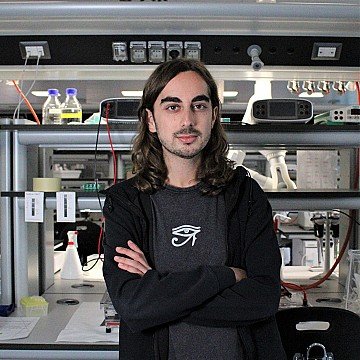
Meet Emily Georgiades, Postdoc in the Bienko Group (Genomics), who has been awarded a prestigious Marie Skłodowska-Curie Actions Postdoctoral Fellowship from the European Union for her project “GRADMAP: Multi-dimensional mapping of lineage-specific transcription factors through time and space”. The grant will cover a two-year period with 193.643 euros.
By combining cutting-edge genomics and imaging technologies, Emily aims to create the first detailed atlas of how transcription factors are organised in the cell nucleus during blood cell differentiation. Her work promises to shed new light on the mechanisms driving cell fate decisions and provide valuable insights into diseases such as cancer.
Emily, can you explain the project’s main objective?
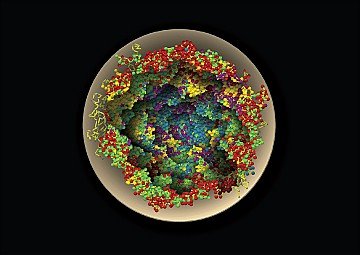
The project aims to uncover how transcription factors (TFs) and DNA are arranged inside the cell nucleus in 3D space, and how this arrangement influences which genes are turned on or off during cell differentiation. By combining advanced genomics and imaging methods, I aim to create the first detailed “map” of the spatial organisation of TFs bound to chromatin in blood cell lineages, with a focus on the TFs arrangement along the periphery-center axis of the nucleus.
When do you expect to see the first results?
The first results are expected within the first 9-12 months. Early work will involve generating and banking cell populations and producing the first genome-wide maps of chromatin radiality and transcription factor binding.
Who are your collaborators on this project?
I will work closely with other members of the Bienko Group who are experts in GPSeq technology, as well as other Research Groups at Human Technopole such as Domínguez-Conde (haematopoietic differentiation), Carninci, Calviello and Legnini (RNA technologies). Externally, I will work with members of our sister lab at the Karolinska Institute and the Jachowicz lab at IMBA Vienna, providing expertise in computational modelling and RNA mapping.
What impact do you hope to achieve with this project?
I hope that this project will pave the way for a new way of thinking about gene regulation by showing how 3D nuclear organisation of TFs influences cell fate. The datasets, tools and methods will be shared openly, supporting other researchers, and laying groundwork for future applications in areas like cancer biology.
How can this project improve research on human health and diseases?
Cell differentiation often goes awry in diseases such as cancer. By uncovering how TFs and chromatin are spatially arranged to regulate cell fate, this project may provide fresh insights into disease mechanisms and therefore reveal novel ways in which diseases such as cancer could be therapeutically combatted.
How does this advance your field of research? Are there any broader trends in your field that it relates to?
The project advances genome biology by adding the radial, 3D nuclear dimension to our understanding of TF binding and gene regulation, something not previously explored. It ties into broader trends of bringing together and integrating a unique combination of multi-omic datasets and developing spatial genomics approaches to understand cell identity and disease.
What are the most interesting or exciting aspects of the project?
I am excited about this fellowship because it offers the opportunity to explore uncharted territory in gene regulation by applying cutting-edge technologies within a highly collaborative environment. Creating a pioneering atlas of transcription factor radial organisation and linking it to transcription not only fuels my scientific curiosity but is also deeply rewarding, as I hope these findings will serve as a valuable resource for future research and discoveries
What are the main challenges or difficulties, and how do you plan to overcome them?
A key challenge will be integrating large, complex multi-omic datasets to extract meaningful biological insights. To address this, I will use established pipelines, collaborate with computational experts, and validate findings with complementary imaging and experimental approaches.
How does this project build on your previous work? Are there any interesting backstories about how this research began?
I have always been fascinated by the process of differentiation: how cells, despite sharing the same instruction manual (DNA), can interpret it in different ways to become highly specialised cell types. During my PhD, I explored the role of cohesin in shaping tissue-specific 3D genome structures that bring enhancers into proximity with their target promoters during erythropoiesis. In this project, I build on those experiences by combining the techniques I learnt during my PhD with GPSeq, a method from the Bienko Group that revealed how chromatin is radially organised. This fellowship takes those insights further by applying them to lineage differentiation, inspired by preliminary findings suggesting that transcription factors may also follow radial patterns.
What inspired you to pursue this particular research direction?
The inspiration came from intriguing early observation by the Bienko Group that TFs are not randomly distributed in the nucleus, but may follow radial gradients linked to their function. This suggested an entirely new layer of gene regulation, motivating me to develop a systematic study of TF radiality and its impact on differentiation.
What are the main steps in the project’s development?
The project is divided into three main steps:
- mapping the 3D genome landscape during blood cell lineage bifurcation;
- characterising TF binding and radial arrangements;
- integrating multi-omic data to link spatial TF organisation to gene expression.
These steps are supported by training, communication, and dissemination activities.
Funded by the European Union (Horizon Europe MSCA GRADMAP, GA n. 101207874). Views and opinions expressed are however those of the author(s) only and do not necessarily reflect those of the European Union or the European Research Executive Agency. Neither the European Union nor the granting authority can be held responsible for them