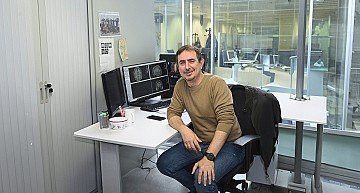
José Vicente Manjón, a researcher at the Medical Image Analysis Lab (MIA-LAB) group at the ITACA Institute of the Universitat Politècnica de València (UPV), has been included for the sixth consecutive year in the prestigious Ranking of the World Scientists: World’s Top 2% Scientists, compiled by Stanford University.
This ranking identifies the most internationally cited scientists in their respective disciplines and is divided in two main categories: one assessing the cumulative scientific impact over the course of a career, and another evaluating relevance during the most recent year. It is in this latter category that José Vicente Manjón has once again been recognised, highlighting the global visibility and impact of the work undertaken by his research group over the past year.
Specifically, the ITACA-UPV researcher has appeared on this distinguished list every year since 2020, reflecting the consistency, excellence, and international impact of his scientific career in recent years.
“This recognition reflects the effort and dedication of our group to advance biomedical image processing, aiming to better understand the evolution of the human brain and its application in the diagnosis of neurological diseases,” states José Vicente Manjón, head of the Medical Image Analysis Lab (MIA-LAB).
About the MIA-LAB Group — ITACA
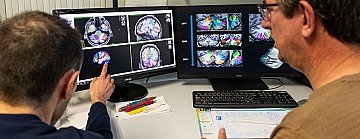
The MIA-LAB group, part of the ITACA Institute at the Universitat Politècnica de València, specialises in the development of advanced technologies for biomedical image processing, with a particular focus on data obtained through brain magnetic resonance imaging (MRI).
«Our objective is to contribute to the advancement of the field through innovative tools that enable tasks such as noise reduction, super-resolution, data harmonisation, image synthesis, and automatic segmentation and classification», highlights the ITACA researcher.
The group combines the design of classical algorithms with the application of state-of-the-art deep learning methods. Its research also focuses on improving the understanding of pathologies such as Alzheimer’s disease, multiple sclerosis, and Parkinson’s disease, with the aim of optimising both diagnoses and potential treatments.