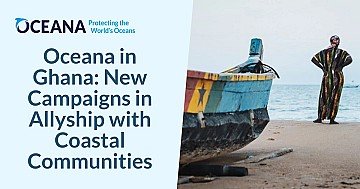
Every day, millions of small-scale fishers set out to sea with simple gear and big purpose. These local fishers sustain coastal communities — casting nets not for large profits, but for meals, livelihoods, and survival. While the definition of a “small-scale fisher” differs across countries, these fishers typically use relatively small fishing vessels (if any) and fish close to shore using artisanal fishing methods and gears.
Small-scale fishers are a cornerstone of coastal communities, contributing 40% of global wild fish catch — a staggering 37 million metric tons of fish every year. Their work directly helps support livelihoods, to improve gender equality, and increase nutrition.
The importance of small-scale fishers cannot be ignored. Here are five ways small-scale fishers are shaping a healthier and more sustainable future.
FEEDING COMMUNITIES NUTRIENT-RICH FOODS
Small-scale fishers play a key role in ensuring entire communities have healthy meals to eat. Their catch supplies essential nutrients for healthy growth and development. In fact, they help meet about 20% of the daily requirements for key micronutrients for up to 2.3 billion people living in coastal communities around the world. For many, small-scale fishers provide about half of the individual recommended intake of omega–3 fatty acids and significant percentages of other micronutrients, such as calcium, iron, zinc, and vitamins A and B12.
To advance nutrition equity, Oceana partners with small-scale fishing communities to help protect and strengthen their livelihoods, increase local access to fish, and support their voices in national policy decisions and on global stages.
LOWERING THE CARBON FOOTPRINT OF SEAFOOD
Small-scale fishers not only provide food that is nutrient-dense, but also climate-friendly. Compared to industrial fisheries that rely on large boats and fuel-intensive gear, small-scale fisheries are likely to have lower carbon emissions per kilo of fish caught than their industrial counterparts. Wild-caught fish already rank among the lowest-emission animal proteins.
Unfortunately, the changing climate and natural disasters, often intensified by human-caused emissions, are putting small-scale fisheries at risk.
In the Philippines, an area highly vulnerable to climate change, Oceana is campaigning to reduce fish loss and boost livelihoods. By providing safe and clean storage for fresh caught fish (extending their shelf life), fishers can better adapt to the changing climate and boost community resilience.
ADVANCING GENDER EQUALITY
Women play critical roles across small-scale fisheries along the value-chain. Of the 60 million people employed from when a fish is caught until it arrives to the consumer’s plate, 21 million are women. When you add informal or unpaid positions, that number jumps to almost 45 million women engaged in small-scale fisheries. Yet, because so much of their work is seen as informal, women often have less influence on how fisheries are managed and governed.
Oceana strives to change that. In Brazil, Oceana provides platforms for women to directly engage in the policies that impacts their lives. In the Philippines, Oceana helps women’s associations submit funding requests to the government for new equipment to process fish and facilities to store them.
Formally recognizing and empowering women in the small-scale fishing economy is key to building well-nourished, equitable communities.
IMPROVING DATA COLLECTION THROUGH COLLABORATION
Managing fisheries well requires reliable data. But in many cases, small-scale fishing communities and local governments don’t have the money, staff, or technology to track what or how much is being caught in the water, limiting their ability to manage their fishery.
This data gap can lead to overfishing, poor enforcement, inequitable resource distribution, and policies that don’t reflect reality. It also hides the contributions of women and other typically marginalized groups — undermining their efforts and putting up barriers to inclusive policies.
To address this limitation, Oceana champions data collection by partnering with scientists, local experts, governments, and other stakeholders to capture small-scale fisheries’ hidden dimensions of nutrition, livelihoods, and gender.
In Chile, for example, Oceana campaigned hand in hand with fishers from the Juan Fernández Islands to develop a protected area management plan based on their practices and needs. Today, thanks in large part to this plan, the rock lobster fishery, which supports most of the archipelago’s economy, continues to thrive and sustain the community.
BUILDING INCLUSIVE POLICIES
Filling data gaps is just the beginning. Nearly two-thirds of small-scale catch comes from fisheries where local fishers lack formally recognized rights to fish, leaving their livelihoods and contributions defenseless. They are overlooked or excluded from governance decisions and oftentimes fish, not under fishing regulations, but customary practices. Small-scale fishers need to be an integral part of management and decision-making.
Oceana is campaigning to improve fisher representation at all levels of governance. In Peru, Oceana successfully campaigned to reserve the nearshore five-mile coastline for small-scale fishers and amplified the voices of impacted fishers.
SUPPORTING SMALL-SCALE FISHERS
At the global level, small-scale fishers’ influence on policy agendas is slowly improving, although there is still a long way to go toward full participation. Oceana supports the Small-Scale Fishers’ Call to Action, developed by fishers, to recognize and safeguard their contributions.
Working alongside small-scale fishers and coastal communities is central to Oceana’s mission. Together, we can protect the oceans and rebuild fisheries so that those who depend on them can continue to thrive for generations to come.