An international study led by researchers from the Biomedical Data Science Lab (BDSLab) at the ITACA Institute of the Universitat Politècnica de València (UPV) has developed an innovative microsimulation model based on artificial intelligence (AI) capable of predicting how factors such as quality of life, access to healthcare or personal empowerment influence the health of people experiencing homelessness.
The study, published in the journal Computer Methods and Programs in Biomedicine, is part of the European project CANCERLESS, funded by the Horizon 2020 programme, and it enables the design of more effective strategies for cancer prevention and other chronic diseases in vulnerable populations.
“People living on the streets face a higher risk of developing cancer due to social exclusion, lack of housing and difficulties accessing healthcare. This study seeks to improve cancer prevention and support decision-making in health policy,” explains Juan Miguel García-Gómez, head of the BDSLab-ITACA group and participant in the research.
Artificial intelligence to simulate health scenarios
The model uses advanced machine learning techniques to generate synthetic populations—virtual representations of individuals with characteristics similar to real people. Thanks to this technology, it becomes possible to predict how different groups might respond to a healthcare intervention before it is implemented, optimising decision-making and the use of available resources.
For training, data from 652 people experiencing homelessness in Spain, Greece, Austria and the United Kingdom were analysed. All participants took part in an 18-month programme based on the Health Navigator model, centred on health support and personal empowerment.
“Our algorithm demonstrates the potential of AI to simulate the impact of interventions and assist healthcare professionals in resource planning. Furthermore, it allows us to anticipate the effect of an intervention even when data are limited, while safeguarding participant privacy,” highlights Antonio Blasco-Calafat, main researcher of the study.
Consequently, the ITACA-UPV researchers believe the tool offers a new way to virtually assess health and prevention programmes before their real-world implementation, improving efficiency and equity in resource allocation.
An interactive online demonstrator has also been created to allow users to visualise the simulation process and model outcomes.
“Artificial intelligence helps us design more precise and sustainable interventions for the most vulnerable populations,” adds Vicent Blanes, researcher at the ITACA Institute and participant in the study.
Impact and next steps
This work opens the door to applying the same methodology in other areas of public health and social policy, particularly in chronic disease prevention programmes and in the evaluation of inclusion and wellbeing strategies.
“AI-based microsimulation allows us to better understand how structural inequalities influence health and to design more effective interventions grounded in scientific evidence,” concludes Ascensión Doñate, researcher at ITACA.
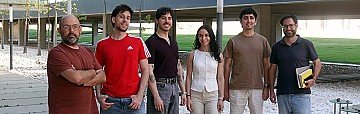
Researchers from BDSLab-ITACA who took part in the study include Antonio Blasco-Calafat, Vicent Blanes-Selva, Ascensión Doñate-Martínez and Juan Miguel García-Gómez.
The article forms part of the European project CANCERLESS, coordinated by the Medical University of Vienna, with the participation of institutions from the United Kingdom, Greece, Austria and Spain, and funded by the European Commission.