Insights from 1,119 corporate mentors supporting 460 entrepreneurs across 58 countries
Across industries, 2025 was a challenging year for employee engagement. Participation stalled, internal teams were overstretched, and short-term activities failed to inspire meaningful development. Working with partners such as TMF Group, Swiss Re, VISA, and EDP, we observed clear patterns in what didn’t and did work.
Below are the four hard truths from this year and the strategic moves companies must make.
1. Engagement fatigue hit hard in 2025
Employees were saturated by internal messaging, overwhelmed by competing priorities, and disengaged from “yet another email for a workshop.” Many CSR and HR teams found that internal comms alone weren’t enough to generate momentum.
What can be done instead
Companies that saw strong participation activated the right internal people to champion programs. For example, with Bridge for Billions’ support, our partners identified, recruited, and empowered mentor ambassadors, who became the real drivers of mentor engagement from within.
This ambassador model unlocked new departments, new markets, and first-time mentors: contributing to 1,119 applications and 92% first-timers.
2026 Move: Build an ambassador-driven recruitment model. Peer influence always outperforms corporate messaging.
2. CSR & HR teams operated beyond capacity
Restructuring, reduced headcount, and expanding mandates left internal teams stretched thin. This lack of capacity quietly undermined the ability to deliver meaningful programs.
What can be done instead
High-performing companies partnered with external experts to handle program design, operations, mentor support, and reporting.
In practice, Bridge for Billions acted as an extension of corporate teams, both for employee engagement & social impact. This enabled global delivery, across Europe, LATAM, Africa, and Asia, without internal overloading.
2026 Move: Protect internal bandwidth by outsourcing operational delivery, so your team can focus on strategy, visibility, and stakeholder management.
3. One-off activities failed to create real engagement
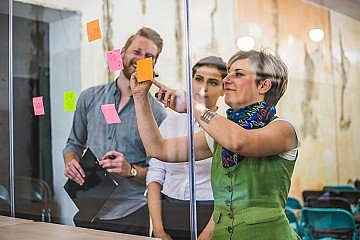
Short volunteer events and one-off brainstorming sessions generated low retention, low development, and low emotional connection. To put it into perspective, another post-it activity on brainstorming cannot be compared to personally getting to know the life and story of a woman in Indonesia starting her first business. Employees want human connection, purpose, and contemporary relevance.
What can be done instead
Structured, multi-week mentoring journeys created deeper engagement and far stronger results for both employees and entrepreneurs. In our employee engagement programs, for instance, mentors contributed 25,000+ hours to 460 founders, whose ventures created 500+ jobs.
2026 Move: Shift from one-off activations to consistent, transformative efforts that build capability and measurable impact with a clear purpose.
4. L&D was failing at fostering skill growth
Employees sought real-world learning but were offered mostly static, one-directional training formats. Many Learning & Development activities felt disconnected from an internal growth pathway, making it irrelevant to engage with.
What can be done instead
Skill-based mentoring created verifiable, experience-based development:
- Hard skills: entrepreneurship, innovation, strategic thinking, market analysis.
- Soft skills: leadership, coaching, active listening, cross-cultural communication.
We know it is possible, as 84% of our corporate mentors reported feeling more inspired and connected to their company’s mission.
2026 Move: Integrate programs into leadership pathways, talent development, and experiential learning programs.
For successful employee engagement
✓ Focus on a skill based, clear development pathway
✓ Leverage external partners to expand internal capacity in HR and CSR
✓ Replace one-off activities with structured ones
✓ Build ambassador networks
✓ Aligned engagement with purpose
Programs built around real challenges and real entrepreneurs consistently outperform traditional engagement initiatives in satisfaction, retention, and perceived value.
A Final Word: From a Mentor’s POV
“My experience as a mentor in the TMF Beyond Boundaries program was truly exceptional. The dedication and skill of my mentee reminded me that real innovation often happens beyond the beaten path. I am grateful for the chance to witness the impact of mentorship on global entrepreneurship.”
— TMF employee.
At Bridge for Billions, we empower organizations to engage their teams in this type of purpose-driven mentorship experiences that build talent capabilities while generating measurable economic and social outcomes.
As you shape next year’s strategy, we hope these insights serve as a practical roadmap for creating programs that employees value and that continue to grow over time.