From ESG fatigue to competitive advantage: Lundquist research published in collaboration with Il Sole/24 Ore newspaper shows Italian blue chips hold €33.5 billion in hidden sustainability value
With Brussels aggressively rolling back sustainability reporting obligations and ESG investing under political pressure for being “woke”, sustainability may sound like yesterday’s story. Yet our new research tells a different tale: Italy’s top companies are sitting on billions of euros in untapped value thanks to their sustainability performance.
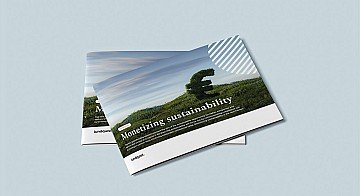
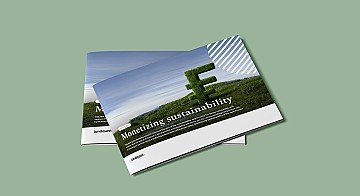
The stock market has yet to recognise the competitive benefits of strong environmental and social performance, our new study “Monetising sustainability” finds. The research was covered exclusively in Italian financial daily Il Sole/24 Ore, which has published all our sustainability research since 2008.
The newspaper’s coverage featured an interview with Sasja Beslik, Lundquist’s senior advisor and a 25-year veteran of sustainable investing internationally, in which he explained how leading investors are re-thinking their approach to sustainability, saying they are looking for opportunities where ESG factors can create measurable value and drive investment returns.
The upside potential of sustainability
In our new research, we estimated the potential upside as totalling € 33.5 billion in potential sustainablity value for members of the FTSE MIB 40 index – suggesting that sustainability is not the regulatory cost it is often accused of being but a strategic asset for value creation. According to our analysis, 95.6% of the 40 companies in Italy’s leading index trade at a discount relative to their sustainability-adjusted potential, the value these companies should have if their ESG efforts were fully accounted for.
Companies like Moncler (9,2%), STMicroelectronics (8,0%) and Pirelli (7,9%) show some of the biggest hidden premiums, according to the research, while Intesa Sanpaolo alone has €5.2 billion in unpriced sustainability value.
What can companies do to close the gap?
How to thrive in the new, commercial phase of sustainability’s evolution? One thing is clear: the hidden value of sustainability lies not in corporate-level management of ESG issues and in compliance but rather in the environmental and social benefits of companies’ products and services, the sustainability they enable for customers. The first step in seizing the opportunity is to build competitive advantage out of sustainability actions and then establish a unique positioning in the market with a clear Sustainability Value Proposition (SVP). The way companies talk about sustainability will need to shift radically as a consequence.
Transforming sustainability communications
An SVP articulates how a business creates tangible, positive environmental and social impact, and why this matters to customers, employees, investors and other stakeholders. It’s the bridge between the dry, technical world of sustainability management and the way value is perceived by the market, the key to getting paid for sustainability.
A well formulated SVP can transform the way companies approach sustainability – re-positioned around commercial benefits – and re-frame communications, improving employee engagement, investor relations and reporting, branding and marketing.
Through this research, we have formulated a clear process to developing and deploying an SVP.