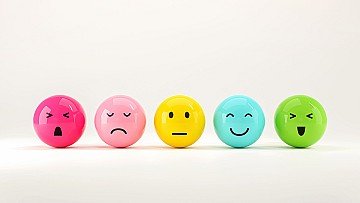
Is it really bad to hide your feelings?
The following article comes from Psychology Today and is written by Holly Parker, Ph.D., a professor at Harvard University, where she teaches the psychology of close relationships, and a psychologist in private practice. She earned her doctorate in Experimental Psychopathology from Harvard University, where she was a Karen Stone Fellow and a Sackler Fellow. She completed her residency in Clinical Psychology at the University of Massachusetts Amherst. In her clinical practice, Dr. Parker has worked with people on a wide range of issues, including relationships, self-esteem, trauma, mood, anxiety, emotional regulation, health and lifestyle, addictions, grief, and loss.
Key Points
Studies show that people who try to hide their emotions tend to have lower emotional well-being.
There is evidence that the relationship between hiding emotions and lower psychological well-being is not so clear.
People who are authentic and determined to suppress their feelings do not show lower emotional well-being.
Have you ever hidden how you felt inside?
Being human, the answer is very likely «Yes.» No, it’s overwhelmingly likely. The abundance of moments life throws at us doesn’t always allow, or even help, us to reveal how we truly feel.
For example, suppose you’re feeling extremely angry, for whatever reason, before entering the supermarket. Do you feel like frowning at the world at that moment? Probably. Does that mean you’re going to glare angrily at the cashier? Probably not. A smile, a neutral expression, or something with a hint of sadness is more likely to appear. Regardless of the emotion we’re talking about, we’ve all hidden our emotions. This is also known as «expressive suppression.»
Some people show their emotions more than others.
At the same time, as with so many other behaviors, qualities, preferences, and tendencies, some of us mask our emotions more than others, and research shows a relationship between greater expressive suppression and lower emotional well-being. That said, other researchers have found that this relationship isn’t so simple.
Use of Expressive Suppression and Life Satisfaction
In a new study designed to clarify the connection between suppressing emotional expression and lower psychological well-being, researchers asked participants about their use of expressive suppression and their life satisfaction, as well as inquiring about indicators of depression and anxiety.
The research team conducted this study twice: at the beginning of the study and 14 weeks later.
At the beginning, the researchers also measured how authentic people felt—that is, the extent to which a person’s inner world influences their behavior and what they show to others. In addition, the research team measured what is known as «ambivalence about emotional expression (EEA).»
This refers to a feeling of (you know what I mean) ambivalence when it comes to revealing an emotion; there is a tendency to show what one feels and another, conversely, to hide it.
More specifically, the research team analyzed two types of EEA. The first type is «competence ambivalence,» which refers to a person’s insecurity about their ability to reveal their emotions.
The second type is «effect ambivalence,» which involves a person’s concern about what might go wrong if they reveal their emotions.
Researchers found a connection between inhibiting emotional expression and feeling less satisfied with life,
as well as with greater anxiety and depression 14 weeks later. However, this was not the case for people who felt authentic. In other words, those who felt authentic by containing their emotional expression were no more likely to experience lower emotional well-being afterward.
The research team also discovered that those who felt ambivalent and hid their emotions were more likely to struggle with anxiety and feel less satisfied with their lives 14 weeks later. That is, those who repressed their feelings, but did not confront what might go wrong if they expressed them, were no more susceptible to feeling more anxious or enjoying their lives less afterward.
This study highlights the inherent complexity of our relationship with expressing our feelings.
The meaning we give to the decision to show or mask our emotions is relevant. For example, reflecting on their findings and research in this area, the researchers noted that authenticity and concealment of emotions can likely coexist if a person has a reason for hiding their emotions and it doesn’t contradict their individual identity. The researchers gave examples such as trying to foster peace and stability or attempting to resolve an emergency productively.
The researchers rightly pointed out the need to replicate this study in different cultures (it was conducted in the United States), noting the evidence of cultural variation in the relationship between concealing feelings and emotional well-being.
They also noted the need to repeat the study with various groups; the participants were university students. Furthermore, they recommended analyzing how different aspects of relationships might influence the connection between expressive suppression and psychological well-being, such as emotional intimacy, power dynamics, and the type of relationship people have.
That said, what conclusions can we draw from this research?
Perhaps, when we all make the decision to conceal or reveal an emotion, we should pause to reflect at some point and kindly and curiously ask ourselves: What did this mean for me?
When Do Your Secrets Harm Your Well-being?
The following contribution comes from Greater Good Magazine (Science Based Insights for a Meaningful Life) and is authored by Jill Suttie, Psy.D., who was Greater Good’s book review editor and is now a contributing writer and editor for the magazine. She earned her PhD in psychology from the University of San Francisco in 1998 and worked as a psychologist in private practice before joining Greater Good.
A new book explains why we keep secrets and offers helpful advice on whether or not to reveal them.
We all keep secrets, at least occasionally. This is because we all have inner thoughts and feelings that aren’t worth sharing with others or that would harm us or someone else if revealed.
But does keeping secrets affect our well-being? Researcher Michael Slepian, author of the new book «The Secret Life of Secrets,» explores this question in depth and offers some thought-provoking answers. She uses an illustrative example from her own life—discovering as an adult that her father wasn’t actually her biological father—to illustrate how keeping secrets can sometimes cause distress or profoundly affect our relationships. By summarizing her own and others’ research on secrets, she helps readers better understand why people keep secrets, how this affects their well-being, and when it’s best to reveal them.
The Secrets People Keep and Why
According to Slepian, a secret is something about oneself or something one has done that one deliberately withholds from one or more people, distinguishing it from something one simply wishes to keep private.
For example, we might keep secret that we love having the house to ourselves when our partners are out of town—something fairly innocuous, but personal. But we might keep secret that we went to a hookup bar and had a drink with a stranger when they left town last week—something we wouldn’t want them (or possibly anyone else) to know.
Slepian asked hundreds of people about their secrets and created a kind of secret taxonomy
ranging from hurting another person (emotionally or physically) to past drug use, unusual sexual preferences, personal qualifications for a job, and more (34 more categories, to be precise).
He then surveyed more than 50,000 people worldwide to find out where their own secrets fit in and discovered that 97% had at least one secret from the list. Common sources of secrets included lies, romantic desire, infidelity, and finances, while less common ones were sexual orientation, pregnancy, a marriage proposal, and abortion.
“Far from being what sets us apart from one another, secrets are what we have in common,” Slepian writes.
The average number of secrets kept was 13; most people had five secrets they had never told anyone and eight they had confided in at least one person (but intended to keep hidden). While our culture influences whether or not we keep secrets, Slepian says, the nature of our secret is more important in deciding, as is how much we suffer because of it.
One of the main reasons we keep a secret is that we feel ashamed and fear judgment if it comes to light. The more immoral we consider our secrets, the less likely we are to share them. However, shame is a difficult emotion to live with, so sometimes people reveal even their most shameful secrets.
“The more immoral you consider your own secret, the more shame it will produce and the more it will be associated with a greater tendency to think about it repeatedly and feel less able to deal with it,” Slepian writes.
People also keep secrets to avoid conflict and protect their relationships, she says. For example, you might not reveal that you voted for Biden when having Thanksgiving dinner with your conservative family; or you might not tell your partner that you were sexually abused as a child and don’t enjoy sex.
When professional or personal interests are harmed
Another reason to keep secrets is that revealing one could harm our personal or professional goals. After exaggerating the truth on a résumé, we probably wouldn’t confess it to a prospective employer who questioned our qualifications. Similarly, if we have a secret ambition to become poets, we might not want to share it with others, for fear of being belittled or discouraged.
Why reveal a secret? While there’s nothing inherently wrong with having secrets—it largely depends on the secret and what revealing it entails—the harder it is for you to keep, the more likely it is to affect your well-being. If a secret makes you feel a lot of shame or causes you to dwell on negative aspects of yourself, it’s probably a good idea to pay attention and figure out what you can do differently to deal with it. The Secret Life of Secrets: How Our Inner Worlds Shape Well-being, Relationships, and Who We Are. Crown, 2022, 256 pages.
On the other hand, people who keep secrets often choose to reflect on them because they want to understand what happened and what they can learn about themselves. Similar to dealing with trauma, expressive journaling can be a good way to explore the experience, gain perspective, and help you move forward emotionally.
But if that doesn’t solve the problem, it might be a good idea to tell someone you trust.
People usually think better of us than we expect, says Slepian, and are more likely to empathize than judge. Plus, a trusted person can offer a helpful outside perspective, whether it’s a close friend, your partner, or a therapist.
“People don’t like being alone with their thoughts, and having a secret can evoke feelings of shame, isolation, and uncertainty,” Slepian writes.
“The more people tend to withdraw into themselves during difficult times, the more likely they are to ruminate, and both of these unhealthy tendencies are associated with secrets causing more harm as people try to cope with them.”
Hide any physical evidence or watch yourself carefully in case you miss something. For example, someone who has decided not to reveal their homosexuality to friends might date people of the opposite sex or conceal their identity in other ways to avoid giving themselves away.
However, the act of hiding isn’t necessarily what causes psychological harm, says Slepian.
Rather, it’s how keeping a secret from others can make you feel isolated and less connected to them. Especially among close friends and romantic partners, being secretive can create emotional distance and also make you feel inauthentic.
«Often, when we keep something from a partner, we think we’re doing it for the good of the relationship, to avoid conflict, or to avoid hurting the other person’s feelings,» she writes. «But while keeping a secret from your partner might prevent any imaginable reaction you expect from them, it has the potential to do more harm than good.»
So, is there a foolproof rule to help us know when to keep a secret and when not to? Not exactly, though Slepian advises revealing secrets that are likely to come out anyway, and the sooner the better. Your reputation could be ruined by a secret, and it might be better to simply disclose it and apologize for past behavior rather than trying to hide it.
Why Keep a Secret?
However, there are situations where it might be better to keep a secret. Slepian offers some guidelines:
Let go of past mistakes. If you did something morally wrong in the past, there’s no need to confess unless not doing so would hurt someone else, such as if you gave false testimony and got someone imprisoned. You can still feel guilty about what you did, no matter what. But it’s better to focus on how you’ve grown since your mistake (the lessons you’ve learned from the experience) and promise not to repeat the same error than to punish yourself for past mistakes.
Look for ways your secret can benefit others. Keeping a secret can actually be an act of kindness toward someone else. So, before revealing a secret, Slepian suggests asking yourself, «What impact would revealing your secret have on those around you? Could someone get hurt?» If you think sharing a secret would cause unnecessary harm to someone, that’s a good reason to keep it to yourself. You might have to bear it, but it’s better than causing others to suffer as well.
There are always good reasons.
Acknowledge your reasons. Although living with a secret is difficult, you may have good reasons for keeping it, and it’s important to recognize them. As an example, Slepian mentions the case of Edward Snowden, who kept his plans to reveal government surveillance programs to the world secret to expose what he considered immoral. Knowing why he was doing it and the good it could bring him helped him bear the burden.
Sometimes, keeping a secret is the noblest path, Slepian writes: “If the secret affects your well-being, even occasionally, take a hard look at that pain and do your best to understand it. Now consider that perhaps keeping the secret doesn’t harm anyone else. Perhaps your secret protects someone you care about. Or maybe you have your reasons for keeping it. If any of these seem closer to your situation, then that is your coping mechanism, your lifeline.”
And ultimately, the decision is, and always should be, yours.
Does Venting Really Help?
The following contribution comes from Greater Good Magazine (Science Based Insights for a Meaningful Life) and is authored by Jill Suttie, Psy.D., who was Greater Good’s book review editor and is now a contributing writer and editor for the magazine. She earned her PhD in psychology from the University of San Francisco in 1998 and worked as a psychologist in private practice before joining Greater Good.
While expressing negative emotions can be comforting in the moment, science suggests it could make things worse in the long run.
We all get angry from time to time, some more than others. Whether we’re saddened by the loss of a loved one, angry at friends or family, or fearful about the state of the world, we often feel good after expressing it all.
This is because sharing our emotions reduces stress, makes us feel closer to those who share them, and gives us a sense of belonging. When we open up and people respond with empathy, we feel seen, understood, and supported.
But «sharing» encompasses many different modes of communication.
Are some healthier than others in the long run? Science suggests it depends, in part, on how you share and how people respond. Expressing our emotions frequently to others can actu