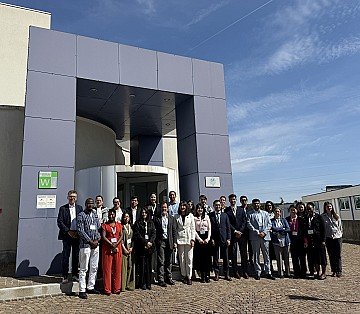
ICGEB has delivered its latest international training course on pandemic preparedness and biosecurity, held from 4 to 8 May 2026 at its headquarters in Trieste, Italy.
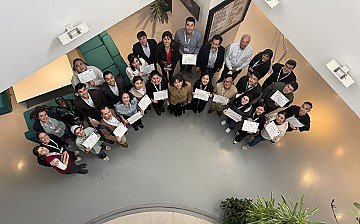
Organised in collaboration with the Biological Weapons Convention Implementation Support Unit (BWC ISU) of the United Nations Office for Disarmament Affairs (UNODA), and funded by the Government of Norway, the course brought together 16 professionals from the human health, animal health, agriculture, research, and public health sectors for an intensive, hands-on learning experience.
Strengthening Global Capacity
The training forms part of ICGEB’s broader BIO-GUARD capacity-building programme in infectious diseases and pandemic preparedness, which has to date delivered five international training courses, involving participants from more than 30 nationalities. Organised under Article X of the Biological Weapons Convention (BWC), the initiative contributes to strengthening international cooperation and capacity-building in biosafety, biosecurity, disease surveillance, and outbreak preparedness.
Comprehensive and Practical Training
The programme featured contributions from experts representing organizations including the World Health Organization (WHO), UNODA, ICGEB, the University of Ljubljana, Area Science Park, the Istituto Zooprofilattico Sperimentale dell’Abruzzo e del Molise (IZSAM), Dow University of Health Sciences, and Operation Outbreak Inc.
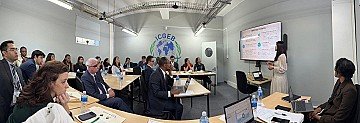
The week-long course combined lectures, laboratory training, group discussions, and simulation exercises, covering key aspects of pandemic preparedness and biosecurity. Topics included global biosecurity frameworks, biosafety and risk assessment, dual-use research and responsible science, molecular diagnostic tools such as qPCR and LAMP, sequencing technologies, bioinformatics, and the growing role of artificial intelligence in pathogen detection and surveillance.
Participants also engaged in practical laboratory activities, including a BSL-3 laboratory visit and a donning and doffing demonstration of personal protective equipment, as well as interactive scenario-based discussions and outbreak simulation exercises designed to strengthen decision-making, coordination, and risk assessment capacities within a One Health and biosecurity framework.
Focus on Collaboration and Preparedness
Participants highly appreciated the practical and collaborative nature of the course, particularly the opportunity to exchange experiences with peers and experts from different regions and institutional backgrounds. The programme also provided an important platform for strengthening international networks and fostering future collaboration in biosafety and biosecurity.
Building a Resilient Global Network
As the global community continues to face evolving pandemic risks, ICGEB’s BIO-GUARD training initiatives remain an important contribution to advancing preparedness, resilience, and international cooperation in global health security.