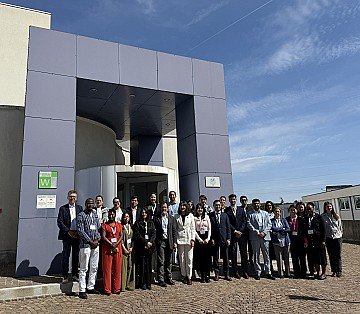
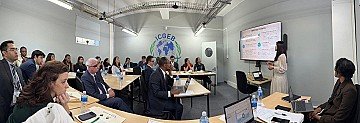
ICGEB has delivered its latest international training course on pandemic preparedness and biosecurity, held from 4-8 May 2026 at its headquarters in Trieste, Italy.
Organised in collaboration with the United Nations Office for Disarmament Affairs (UNODA) under the framework of the Biological Weapons Convention (BWC), and funded by Norway, the course brought together a diverse group of scientists and public health professionals for an intensive, hands-on learning experience.
Strengthening Global Capacity
This course forms part of ICGEB’s broader capacity-building programme in infectious diseases and pandemic preparedness, which has to date delivered more than 5 courses, training over 150 participants from more than 30 nationalities. These initiatives continue to play a key role in strengthening international cooperation and scientific preparedness against emerging biological threats.
Comprehensive and Practical Training
The week-long programme combined lectures, laboratory work, and simulation exercises, covering the full spectrum of pandemic preparedness. As outlined in the course agenda, participants explored topics such as:
- Global biosecurity frameworks and the Biological Weapons Convention
- Laboratory biosafety and risk assessment practices
- Molecular detection tools, including qPCR and LAMP techniques
- Emerging technologies, such as artificial intelligence and genomic surveillance
- Applied bioinformatics for pathogen detection
- Integrated outbreak response through tabletop simulation exercises
Hands-on components – including laboratory sessions and sequencing demonstrations – enabled participants to apply theoretical knowledge in real-world scenarios, enhancing their technical and analytical skills.
Focus on Collaboration and Preparedness
A central objective of the course was to equip participants with the expertise needed to detect, assess, and respond to biological threats, while promoting the responsible use of life sciences. Emphasis was also placed on strengthening national and regional biosecurity systems, improving early warning capabilities, and fostering cross-border collaboration.
Participants also contributed case studies from their own countries, encouraging knowledge exchange and the development of context-specific solutions to biosecurity challenges.
Building a Resilient Global Network
Beyond technical training, the programme provided a platform for building lasting professional networks among experts from different regions and disciplines. This aligns with ICGEB’s mission to support sustainable scientific development, particularly in low- and middle-income countries.
As the global community continues to face evolving pandemic risks, ICGEB’s training initiatives remain a cornerstone in advancing preparedness, resilience, and international cooperation in global health security.