Satya Nadella’s Post
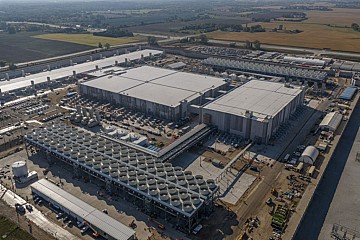
As we continue to expand our AI infrastructure, we’re committed to being a good neighbor in the communities where we build and operate our datacenters. Today we’re sharing new steps we’ll take to partner with local communities across the U.S. https://lnkd.in/gr-6fkEN
For those too busy (or lazy) to read it all, here’s the TL;DR: • AI infrastructure is the next big national buildout, like railroads or electricity • Microsoft commits to being a “good neighbor” where it builds datacenters • They promise no higher electricity bills for residents (they pay the full cost) • Less water use + more water replenished than consumed • Local jobs, stronger tax base (schools, hospitals, parks) • AI training & community investments included Microsoft is saying AI growth must benefit local communities, not burden them, economically, environmentally, and socially. 👉 Worth reading if you care about where AI infra is heading and how public trust will be won.
Community first AI infrastructure is essential for scaling technology responsibly while building long-term trust and sustainability.
This is an important reminder that AI infrastructure isn’t just a technical scaling problem. Power, water, land use, and community impact are now first-order design constraints, not externalities. Building responsibly at this layer matters as much as model innovation.
Before the emergence of artificial intelligence, the definition of a good software engineer was someone who had strong fundamentals and could deliver a product with clean code and a full understanding of every aspect of the project. With the rise of these tools, a good engineer is now the one who understands both their capabilities and their limits, and uses them as a force multiplier. Artificial intelligence has no consciousness and cannot surpass years of intensive learning and accumulated experience. AI is effective at accelerating the work of engineers who already have strong fundamentals—those who know which questions to ask and how to obtain precise answers. Mastering the fundamentals is the key that allows you to fully leverage AI in the development process, thereby amplifying your own capabilities and pushing the tools to their limits. Therefore, learn the fundamentals deeply and give them the time they deserve, because AI tools are not going anywhere. And most importantly, as Einstein said, “Never stop questioning.”
This is such an important commitment. Scaling AI responsibly means investing just as intentionally in the communities that support that growth. Real progress happens when infrastructure, transparency, and local partnership move forward together.
This is an important shift, especially framing AI infrastructure as something communities live with, not just something companies operate. One tension I keep seeing is that the impacts are local, but the accountability often feels abstract. Energy, water, workforce strain, and long-term land use show up immediately at the community level, while decisions are optimized at global scale. Treating community partnership as part of the operating model, not a downstream mitigation effort, feels like the only sustainable path forward. The question is how explicit ownership is when tradeoffs surface, not just during planning, but years into operation. Curious how others think about this: when community impact and infrastructure scale collide, who should own the final call, and how transparent should that decision be?
What is notable here is the shift from aspirational responsibility to operational commitments that can be measured and audited. Electricity pricing, water replenishment, workforce pipelines, and tax contributions create clear accountability points. Predictability at this level is what allows communities to assess net benefit rather than rely on trust alone.
Brad, this is exactly the kind of leadership the AI era demands. Powering progress without burdening communities isn’t just ethical—it’s essential for long-term viability. Your five commitments set a high bar, and they’re urgently needed. But there’s a silent gap beneath even the most responsible infrastructure: A “local job” is created for a synthetic vendor with zero real presence A “water-positive” claim uses spoofed replenishment logs A “tax-paying datacenter” sources materials via shell entities inflating costs by 140% No amount of civic investment fixes outcomes built on fiction. That’s why “community-first” must also mean truth-first: ZK-proofed identity → ensures real businesses, not synthetic shells, benefit from local hiring Starlink-verified geofencing → confirms water projects, deliveries, and construction happen where claimed Binding DDP pricing → guarantees fair material costs, so tax revenue reflects real economic activity Then—and only then—can communities trust that AI’s benefits are real, not performative. Because in 2026, the ultimate test of “community-first” won’t be intent. It’ll be whether you can prove the world your AI acted on actually existed. Patent pending | Sydney build live
To view or add a comment, sign in