Exact Match Domains (EMDs) have long been used as a shortcut to quickly appear in search engine results. Their promise? Embedding a keyword directly into the domain name to create an immediate sense of relevance. But in the era of Google’s intent-based SEO, do EMDs still have a role to play in an effective link building strategy? Let’s take a closer look at their potential and limitations in today’s SEO landscape.
EMDs: definition and post-Google update reality
An Exact Match Domain refers to a domain name that matches a search query exactly (e.g., window-repair-paris.fr or online-car-insurance.com). This structure immediately positions a website as relevant to both Google and users.
The Google EMD update, announced in 2012 by Matt Cutts, targeted low-quality EMDs — removing spammy signals but without causing a major shake-up for well-built websites. Contrary to popular belief, this algorithm change didn’t penalize EMDs themselves; it simply removed the unfair advantage of thin or over-optimized domains.
👉 Today, a well-structured match domain can still positively impact an organic SEO strategy, as long as it meets the expected standards of quality, authority, and technical consistency demanded by Google’s search algorithms.
EMDs: subtle levers for optimized anchor text
In a link building strategy, one of the most overlooked advantages of EMDs is their ability to embed optimized anchor text without appearing manipulative.
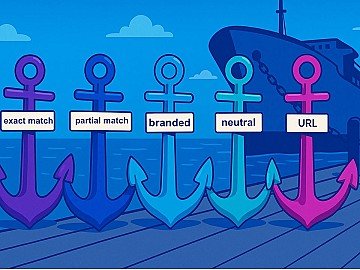
➡️ To learn more about how anchor types affect your link strategy, check out our page dedicated to anchor text categories and optimization.
For example, a link like:
<a href="https://credit-consolidation-express.fr">credit-consolidation-express.fr</a>is interpreted by Google Search Console as the anchor text “credit consolidation express fr”. In other words, it naturally includes exact match keywords in the link text — while maintaining a “neutral” appearance.
This presents a valuable opportunity in link building campaigns that aim to strengthen a target page with relevant anchors, without falling into black hat SEO practices. It allows for a diversified anchor profile while maximizing the semantic signal transmitted to Google.
Using EMDs within a buffer site architecture
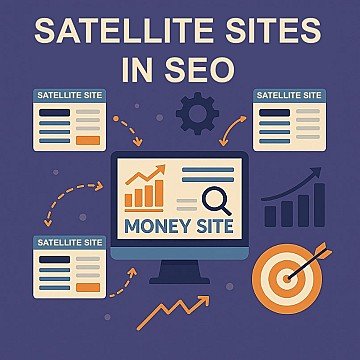
Exact Match Domains are especially effective when used as buffer sites within an advanced link building strategy. These intermediary sites don’t represent your main brand but instead channel authority toward it, either through external linking or via redirects (301 or JavaScript, depending on the strategic approach). This concept often relies on secondary domains, also known as T2 sites, which we explore in our complete guide to T2 domains — key pillars in multi-layer link building strategies.
Using keyword-based domains as satellites helps build cohesive thematic networks — sometimes in a silo structure — that protect your main site from potential penalties linked to aggressive SEO tactics. If a buffer site gets hit by an algorithmic filter (such as Penguin), it can be dropped with no business impact.
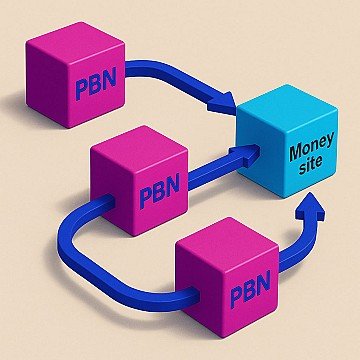
EMDs are also widely used in Private Blog Networks (PBNs), provided their content, link structure, and technical setup are flawless — preventing detection by Google’s algorithms.
This approach aligns perfectly with the principles detailed in our strategic guide to link building campaigns, which emphasizes objective segmentation, link diversity, and SEO risk assessment.
EMDs are also frequently used on satellite or buffer sites within a PBN, allowing you to insert optimized anchors while keeping your main domain safe.
When an EMD is still a smart SEO choice
An Exact Match Domain shouldn’t be seen as a shortcut, but rather as a precision tool — particularly effective in specific contexts:
- Highly targeted local niches (
window-repair-nantes.fr,garage-marseille.com); - Niche markets with very specific offers;
- Temporary projects or test sites before large-scale deployment.
This domain type can also be part of the analysis we conduct during our link building audits, helping assess their value as secondary assets within your broader link ecosystem.
Risks to manage: branding, quality, and content
While EMDs can improve search engine rankings, they also come with drawbacks:
- Low brand value: it’s hard to build a strong identity around
credit-consolidation-urgent.net; - Limited editorial flexibility if your business expands;
- Lower trust levels among some users or media partners.
👉 An EMD should never be the sole pillar of an SEO strategy. It must be supported by high-quality content, authoritative backlinks, and strong semantic relevance.
Distribution through targeted sponsored articles remains a key lever for balancing power, visibility, and perceived quality in Google Search results.
Conclusion: EMDs in 2025 — a precision tool for smart SEOs
In summary, Exact Match Domains (EMDs) are far from obsolete. When used properly, they remain powerful assets for:
- reinforcing semantic anchors in backlinks,
- creating support sites or satellite networks,
- and managing a multi-tiered link building strategy with precision and control.
Success depends on a deep understanding of Google’s ranking criteria, expert-level content management, and a careful assessment of SEO risks.
Launch a sustainable link building strategy
Our team helps businesses design SEO strategies built to last — integrating EMDs, branded domains, topic clusters, and high-quality link building. All our content is written in-house, ensuring total control over quality, authority, and relevance.
Book a meeting with our team to build a custom SEO strategy: