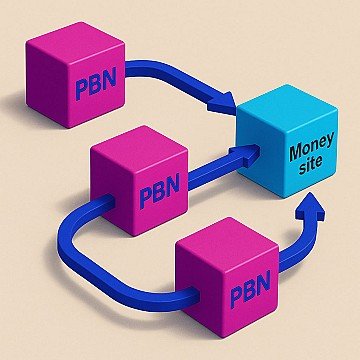
In advanced SEO, private blog networks (PBNs) are often seen as powerful — yet risky — levers. When used properly, however, they enable structured, segmented, and measurable link building strategies, particularly through the use of satellite, buffer, or shield sites. These secondary websites don’t replace a main site — they support its visibility, channel link authority, and isolate SEO risk.
What are satellite, buffer, and shield sites?
- A satellite site is a secondary, topic-focused website that publishes SEO-oriented content to send backlinks to one or several money sites.
- A buffer site plays an intermediary role: it receives backlinks (from forums, comments, or lower-quality sources) and redirects or passes link juice to the main site.
- A shield site (also called a “burner site”) is designed to be expendable. It’s used to test more aggressive tactics and can be discarded in case of penalties or performance drops.
All three are essential components of a well-built PBN. For more details on network architecture, see our dedicated page on PBNs and private site networks.
Why include these sites in your SEO strategy?
Satellite and buffer sites allow you to:
- Boost your money site without directly exposing it to risky backlinks;
- Control the backlink profile pointing to your main site;
- Segment your link strategy semantically (each satellite targets a specific subtopic or product);
- Expand your presence on commercial keywords beyond what your main domain can achieve.
In a carefully managed SEO strategy, these sites become tactical assets that can push pages without risking your brand’s reputation.
The structure of a PBN using buffer or satellite sites
The following pyramid structure is often applied:
Level 3: third-party blogs, forums, low-quality platforms
 ↓
Level 2: buffer / satellite sites (EMD, T2, niche blogs)
 ↓
Level 1: money site (main brand or commercial website)
This setup helps filter SEO link juice while maintaining control over the perceived quality of backlinks pointing to your primary site.
Exact Match Domains (EMDs) are often used at Level 2. By including a keyword in the domain name, they allow optimized anchor injection without over-optimization. For more, check our article on EMDs in SEO link building.
Editorial freedom and SERP domination: the strategic edge
Satellite sites don’t just send backlinks — they offer valuable editorial freedom that’s often impossible on a brand site:
- ✅ You can mention competitors in comparison articles.
- ✅ You can include affiliate links to generate revenue without impacting brand image.
- ✅ You can publish frequently, without internal editorial constraints — ideal for large-scale or long-tail content strategies.
And most importantly, a well-optimized satellite site ranking in Google’s top 10 for a key query allows you to practice SERP domination — occupying multiple positions and capturing more clicks than a single domain could.
Example: your main site ranks #3, and a satellite ranks #7. Combined, they can capture up to 50% of user attention.
Best practices to follow
To ensure your network remains effective (and discreet):
- Never reuse identical content or site structures.
- Separate hosting, IPs, CMS, and tracking tools.
- Ensure high-quality content on satellite sites — they must appear credible, useful, and engaging.
- Don’t point all backlinks to the same site — diversify your linking patterns to remain natural.
- Build a realistic publishing schedule with pages that can actually rank.
These principles align with those outlined in our guide on SEO anchor text types, where optimized, branded, and generic anchors are balanced for a natural profile.
Build an ecosystem of sites to boost your visibility
Satellite, buffer, and shield sites are powerful tools to:
- Isolate SEO risk from your main site;
- Channel link juice according to semantic logic;
- Occupy more positions in the SERP through SERP domination;
- And leverage indirect optimized anchor strategies with EMDs.
As with any technical SEO strategy, experience, risk management, and common sense remain your best allies.
Need help structuring your SEO network?
Our team designs, audits, and deploys secure and high-performing link building architectures, including PBNs, satellite sites, and authority relays.
Get in touch for a personalized link building audit: