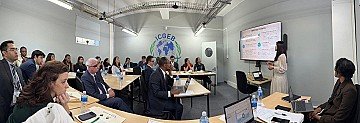
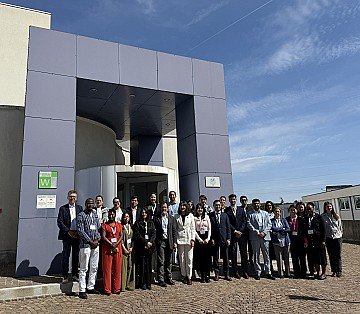
From 23 to 27 February 2026, ICGEB hosted a Training Course on Pathogen Detection and Biosecurity at its Headquarters in Trieste, Italy.
The course was co-organised by the Implementation Support Unit (ISU) of the Biological Weapons Convention (BWC), within the United Nations Office for Disarmament Affairs (UNODA), and ICGEB, with financial support from Norway and the United Kingdom of Great Britain and Northern Ireland.
The five-day programme was designed for early- and mid-career scientists working in virology, microbiology, and related biological sciences in the fields of human, animal, and plant health. Eighteen participants from Kazakhstan, Mongolia, Tajikistan, and Uzbekistan attended the course, strengthening regional engagement in biosecurity and pathogen detection.
In addition to ISU representatives, experts from Italy, Pakistan, and Slovenia, as well as representatives from Area Science Park, ICGEB, Operation Outbreak, The World Academy of Sciences (TWAS), and the World Health Organization (WHO), contributed to the training sessions.
The course aimed to enhance capacity for the peaceful use of biological sciences in line with Article X of the BWC. It also focused on strengthening participants’ knowledge of biosecurity, governance of dual-use research of concern, and preparedness for biological events within the BWC framework.
Participants received hands-on laboratory training at ICGEB in molecular detection tools, including qRT-PCR and Loop-Mediated Isothermal Amplification (LAMP), as well as sequencing technologies and bioinformatic data analysis. A scenario-based tabletop exercise simulated outbreak response and decision-making processes in situations involving potential biosecurity risks, fostering practical understanding of coordination and risk assessment.
On the opening day, Dr. Alessandro Marcello, Head of the Virology Laboratory at ICGEB Trieste, introduced the Centre’s role in pandemic preparedness and biosecurity. Prof. Silvio Brusaferro, Full Professor of Hygiene and Public Health at the University of Udine, Italy, and Prof. Miroslav Petrovec, Director of the Institute for Microbiology and Immunology at the University of Ljubljana, Slovenia, shared insights from their experience in outbreak response operations during the COVID-19 pandemic, highlighting lessons learned and the importance of international cooperation.
A post-course feedback survey indicated that the training successfully met its objectives. Participants particularly valued the intensive laboratory sessions and the opportunity to exchange experiences and perspectives at a regional level.
A second training course for experts from BWC States Parties on Pathogen Detection and Biosecurity is scheduled to take place at ICGEB in Trieste in May 2026, continuing the Centre’s commitment to strengthening global biosecurity and pandemic preparedness capacity.