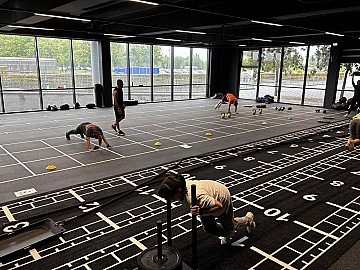
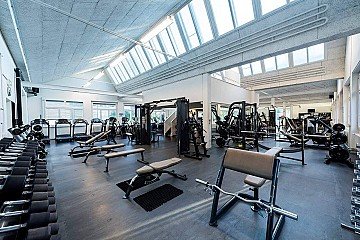
Rubber gym tile flooring: The perfect mix of durability and comfort
When people talk about gym design, flooring is often treated as a practical detail rather than a performance decision. But in a professional fitness space, what sits underfoot directly affects safety, maintenance, member experience and long-term operating costs. That is exactly why rubber gym tile flooring has become such a strong choice for modern sport facilities.
In high-traffic environments, flooring needs to do more than simply “hold up”. It must absorb repeated impact, remain stable under load, support hygiene routines and stay comfortable enough for daily use. If it fails in any of those areas, the consequences appear quickly: visible wear, more maintenance, higher replacement costs and a poorer training experience.
That is where rubber gym tile flooring stands apart. Rubber is naturally resilient, so it absorbs force instead of sending all of it straight back into the body or the building. At the same time, quality rubber tiles provide a more forgiving feel underfoot than harder alternatives such as laminate, standard PVC or concrete-like finishes.
Why gym flooring is never just a background choice
A gym floor is under constant pressure. Members run, jump, lunge, drag equipment and drop weights on it every day. In strength and functional areas especially, repeated impact does not only affect the surface. It can also place stress on the subfloor, the surrounding structure and even the equipment itself.
That is where rubber gym tile flooring stands apart. Rubber is naturally resilient, which means it absorbs force instead of sending all of it straight back into the body or the building. At the same time, quality rubber tiles provide a more forgiving feel underfoot than harder alternatives such as laminate, standard PVC or concrete-like finishes.
One material, different performance needs
It is also important to remember that “rubber” is not one single solution. Different zones place different demands on the floor, so tile construction tends to be designed around the loads and movement patterns you expect in that space. In Pavigym’s portfolio, solutions such as Extreme and Endurance are designed around those demands.
The real advantage: durability without sacrificing comfort
One of the biggest advantages of rubber gym tile flooring is that it solves a common trade-off. Many surfaces are either durable but uncomfortable, or comfortable but too fragile for daily commercial use. Rubber tiles provide a more balanced solution.
On the durability side, dense rubber construction is designed to withstand footfall, equipment loads and repeated impact far better than softer or more decorative finishes. In a busy gym, that means better resistance to wear, fewer visible marks and more consistent performance over time.
On the comfort side, the floor still provides enough cushioning to improve the day-to-day training feel. A well-designed rubber tile floor helps soften harsh impact underfoot during dynamic movement and creates a more stable, confidence-inspiring surface. That matters not only in free weight areas, but also in mixed-use spaces where members move constantly between exercises and equipment.
How rubber gym tile flooring compares with common alternatives
The value of rubber gym tile flooring becomes even clearer when you compare it with other common surfaces used in fitness spaces.
- Compared with carpet, rubber is easier to keep clean, more hygienic, and far better suited to heavy traffic and equipment load.
- Compared with laminate, wood or standard PVC, rubber offers better impact resistance and a more appropriate surface for active training zones.
- Compared with harder finishes, rubber provides a more comfortable feel underfoot during repeated daily use.
- Compared with lighter-duty soft surfaces, rubber delivers the density and resilience needed for long-term performance.
This matters because gym flooring is not just about how it looks on day one. It is about how it performs after months of classes, cleaning cycles, equipment movement and constant footfall. The more demanding the facility, the more important the difference becomes.
Why tile format makes such a difference
Not all rubber flooring formats offer the same operational benefits. One of the most practical strengths of rubber gym tile flooring is the tile format itself.
For many operators, this is not a minor detail. It can directly affect installation planning, maintenance routines and future repairs. That is why tiles can be such a smart choice for commercial gyms.
Key operational advantages include:
- Faster installation, especially compared with solutions that require full adhesive application.
- Less disruption, because individual sections can often be replaced without closing the whole area.
- Simpler maintenance, as a damaged tile can be swapped without replacing the full floor.
- Greater flexibility, making it easier to adapt layouts as equipment or training zones change.
Over time, that modularity gives operators more control over upkeep and helps protect the total cost of ownership. It also makes rubber gym tile flooring a more future-ready solution for facilities that need to evolve.
Final thought
In a gym, flooring should never be chosen on looks alone. The right surface has to work hard every day while still supporting the comfort and confidence of the people training on it. That is exactly where rubber gym tile flooring stands out.
It offers the mix that matters most: resilience without harshness, comfort without fragility, and long-term practicality without unnecessary complexity. For gym operators who want a floor that performs as well as the rest of their facility, it remains one of the smartest and most dependable options available.